Key Takeaways
- Stainless steel’s corrosion resistance extends the lifespan of infrastructure.
- Innovations like stainless steel-clad rebar are transforming bridge construction.
- 3D printing with stainless steel introduces new possibilities for design and repairs.
- Stainless steel supports sustainability in construction due to its durability and recyclability.
Stainless steel has become fundamental to modern infrastructure development, favored for its durable nature, resistance to corrosion, and adaptability in a variety of applications. From the skeletal frameworks of towering skyscrapers to the structural support systems of vital bridges, stainless steel plays a pivotal role in ensuring the safety and longevity of diverse projects. Its properties not only secure the integrity of iconic urban landscapes but also contribute to the ongoing evolution of building practices. Whether confronting harsh coastal climates or bustling urban environments, stainless steel delivers consistent performance that developers and engineers trust worldwide. For a more in-depth look at specialty steel products used in these essential projects, visit https://www.specialtysteel.com/.
The versatility of stainless steel goes beyond basic construction. It is equally valued in infrastructure that endures constant exposure to water, chemicals, or weathering. Bridges subjected to deicing salts or marine atmospheres benefit significantly from stainless steel, which stands up to threats that would quickly degrade conventional materials. The initial investment in stainless steel pays off over time by drastically reducing maintenance requirements and repair cycles, ultimately leading to considerable long-term savings for municipalities and developers. Its broad adoption reflects both immediate engineering advantages and the universal drive towards resilient, low-maintenance infrastructure.
Besides the practical advantages, the use of stainless steel has led to creative architectural expressions and engineered solutions that define modern skylines and transportation corridors. The ability to mold, polish, or machine this material with precision has given rise to construction feats that blend form with function. Its presence is noted not just in bridges and buildings but in tunnels, waste treatment plants, and various transport facilities, all benefiting from its unique combination of strength and resistance to the elements.
Stainless steel is also at the forefront as engineers explore innovative ways to integrate smart technologies and modular building practices. As construction trends emphasize both efficiency and aesthetic appeal, stainless steel enables bold yet enduring designs that withstand the test of time and technology shifts.
The Role of Stainless Steel in Infrastructure
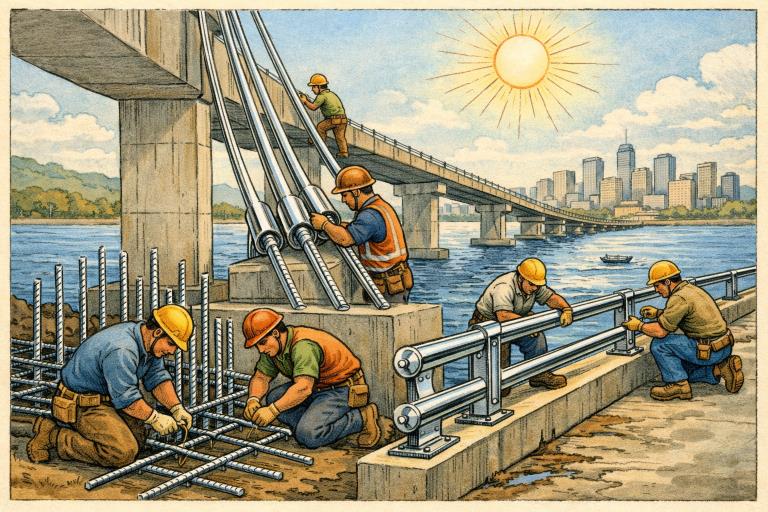
Stainless steel’s value in construction arises from its innate resistance to rust and corrosion. Designed for settings where exposure to moisture, salt, and chemicals is unavoidable, stainless steel reduces the frequency and severity of repairs. In bridge construction, elements like guardrails, cables, and supports rely on stainless steel to maintain structural integrity in both urban and coastal regions. The metal’s performance in these demanding environments has led to its endorsement in numerous codes and best practice guidelines.
Innovations in Bridge Construction
The development of stainless steel-clad rebar marks a significant leap forward for civil engineering. While traditional steel rebar is strong, it is vulnerable to corrosion when exposed to moisture and road salts, eventually leading to cracking and spalling of concrete over time. Stainless steel-clad rebar merges the resilience of stainless steel with the tensile strength of a steel core, delivering a product that can potentially extend bridge lifespans from the industry standard of about 30 years up to a century. This transformational approach to bridge reinforcement not only increases safety for the commuting public but also reduces life-cycle costs associated with frequent rehabilitations. Notably, MIT News has featured startups focused on developing this next-generation rebar, signaling a new era for public infrastructure durability.
3D Printing and Stainless Steel
Recent advancements in additive manufacturing have introduced game-changing solutions for infrastructure repair and customization. The application of 3D printing techniques using stainless steel has enabled engineers to swiftly produce replacement parts or reinforce deteriorating sections with high accuracy. This is particularly valuable when legacy structures require components that are difficult or expensive to source through conventional means. In one notable project, MIT engineers used 3D-printed stainless steel to restore a corroded bridge, highlighting the method’s cost-effectiveness and potential for broader adoption in maintaining aging infrastructure. The flexibility and speed offered by 3D printing pave the way for bespoke repairs, minimizing downtime and associated traffic disruptions.
Sustainability and Environmental Impact
The inherent longevity and recyclability of stainless steel strongly support sustainable development objectives. By lasting significantly longer than many alternatives, stainless steel reduces resource depletion and waste generation. When a structure finally reaches the end of its use phase, stainless steel can be reclaimed, remelted, and reused in new applications with minimal loss of quality. These factors contribute to the growing role of stainless steel in green infrastructure, providing a material solution that aligns with both industry and environmental priorities.
Challenges and Considerations
Despite its myriad advantages, selecting stainless steel for a project involves important trade-offs. The initial material cost is higher compared to traditional steel. However, the return on investment becomes apparent over the lifecycle of the structure, thanks to significantly reduced maintenance and fewer replacements. Careful planning is necessary to weigh upfront expenditures against long-term benefits. It is also crucial to choose the right grade and quality of stainless steel for each application and use skilled fabrication and installation teams. This approach ensures the material’s superior properties are fully realized, and potential issues related to improper handling or incompatibility are avoided.
Future Prospects
The future for stainless steel in infrastructure is bright,striving to enhance its capabilities and develop advanced applications. Emerging technologies include ultrathin protective coatings and advanced alloy formulas tailored for even more challenging environments. As building codes continue to incorporate sustainability standards and cities grow more complex, stainless steel is set to become even more indispensable. Its compatibility with digital fabrication methods, modular construction, and smart sensors will drive innovation in both design and maintenance, shaping the infrastructure landscape in the decades to come.
Conclusion
Stainless steel stands as a foundational material in modern construction and engineering, combining unmatched durability, resilience to the elements, and environmental responsibility. Its technological possibilities and practical benefits ensure it will remain at the core of future infrastructure advancements, supporting safer, greener, and more reliable built environments for generations to come.