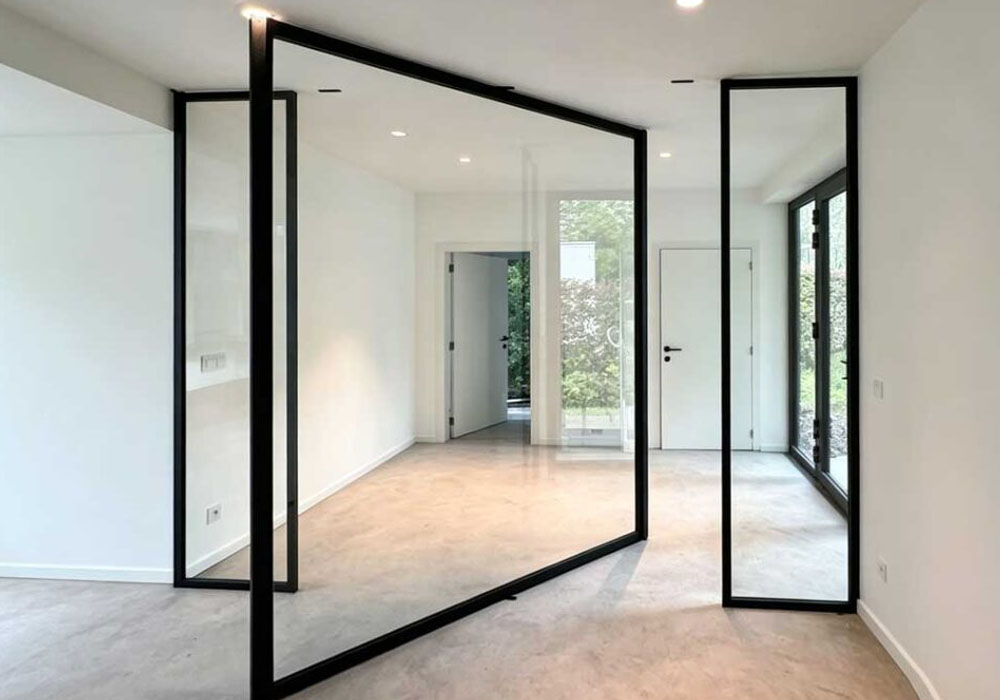
Pivot doors have become an increasingly popular choice in modern architectural design due to their unique functionality and aesthetic appeal. Unlike traditional hinged doors, pivot doors operate on a central or offset pivot point, allowing for a seamless opening and closing mechanism that can dramatically enhance the entrance experience.
Understanding Pivot Door Mechanism
A pivot door swings on a spindle mounted at the top and bottom of the door, rather than on hinges attached to the side of a door frame. This subtle yet significant design difference enables the door to rotate on a fixed axis, often allowing for larger and heavier doors than those supported by traditional hinges. The pivot mechanism provides greater design flexibility, making it suitable for a variety of building types and architectural styles.
Design Variations of Pivot Doors
There are numerous pivot door designs available, each catering to different aesthetic preferences and functional requirements. The key variations include fully centred pivot doors where the pivot point is at the exact middle of the door, and offset pivot doors where the pivot point is closer to one edge. This offset position can create a striking visual effect and alter the way the door opens within the frame.
Materials also vary widely, with options including timber, glass, steel, and aluminium. These materials can be combined or finished in various ways to suit both interior and exterior applications, offering a truly customised solution for architects and homeowners alike.
Advantages of Pivot Doors
One of the most notable benefits of pivot doors is their ability to facilitate larger door sizes. The pivot mechanism can support weight more effectively than conventional hinges, allowing the installation of substantially larger panels which can create dramatic and grand entrances.
The operational smoothness of pivot doors is another advantage. Their central or offset pivot mechanism affords a fluid, balanced swing that requires less effort to open or close, enhancing the user experience. Additionally, this movement tends to be quieter, which is an important consideration in many commercial and residential settings.
Aesthetic Impact of Pivot Doors
The aesthetic appeal of pivot doors lies in their minimalist and modern appearance. Without visible hinges, these doors maintain clean, uninterrupted lines that contribute to contemporary architectural styles. Their ability to accommodate oversized glass panels also enhances natural light penetration and views, blending indoor and outdoor spaces effectively.
Architects often utilise pivot doors as statement features that complement and enhance the overall design of a building. Whether in a residential setting or commercial environment, pivot doors lend a sense of sophistication and innovation.
Space Efficiency and Functionality
Pivot doors offer greater flexibility in terms of space utilisation. Since the door swings on a vertical axis rather than a side hinge, it can often be positioned to maximise available space. This makes pivot doors particularly advantageous in areas where traditional swing doors would be impractical or obstructive.
Moreover, some pivot door designs allow for both inward and outward opening, adding to their versatility in various settings. This dual swing capability can improve traffic flow and accessibility, which is vital in commercial properties such as offices and retail spaces.
Installation Considerations
While pivot doors provide numerous benefits, their installation requires careful planning and expertise. The door frame and surrounding structure need to support the additional weight and maintain precise alignment of the pivot mechanism. Professional installation is essential to ensure the door operates smoothly and safely over time.
Additionally, because the pivot point is not on the edge of the door, weatherproofing and sealing details can differ from those used in conventional doors. This necessitates specialised designs to maintain energy efficiency and protect against drafts and moisture ingress, especially in external installations.
Security Features
Contemporary pivot doors are equipped with advanced locking systems to ensure security is not compromised. Multi-point locking mechanisms integrated with pivot hardware can provide a high level of protection, making these doors suitable for residential and commercial applications where security is a priority.
Maintenance Requirements
Maintenance of pivot doors generally involves regular inspection of the pivot points to ensure lubrication and alignment. The hardware used in these doors is designed for durability but periodic checks are advisable to address any wear over time. Cleaning schedules depend on the door material, with timber requiring more frequent attention compared to metal or glass finishes.
Where to Find High-Quality Pivot Doors
Choosing the right supplier can affect the overall quality and lifespan of a pivot door installation. Businesses and homeowners seeking premium designs and reliable mechanism should consider specialised providers. For instance, pivot door collections from dedicated manufacturers offer a wide range of options that combine craftsmanship with modern technology.
Conclusion
Pivot doors represent an innovative departure from traditional door designs by offering enhanced functionality, aesthetic versatility, and dramatic impact. Their ability to support large, heavy door panels with ease, combined with their smooth operation and minimalist appearance, make them an excellent choice for both contemporary homes and commercial projects.
When considering a pivot door, it is important to weigh the benefits against installation complexities and maintenance needs. Engaging professional services and selecting high-quality products ensures that the potential of pivot doors can be fully realised, providing elegance and practicality for years to come.