The Evolving Story of Outdoor Design
Outdoor life is experiencing a revolution. Gardens and patios are no longer only decorative. Spaces should provide comfort, preserve resources, and accommodate nature’s rhythms. Once a pleasure spot, it now shows how humans develop with understanding and respect.
This transformation is based on stonework, terraces, and pathways. Through careful construction and material selection, they become more than pretty frames. Balanced systems guide water, support soil health, and honor underground life.
Designing sustainably is a dialog between intent and environment. Each decision whispers to the land, asking not how much can be built but how softly the structure can stand.
Material Mindfulness and the Spirit of Longevity
Durability is key to eco-friendly hardscaping. Longer-lasting materials reduce waste, resource use, and harmonize made and natural forms. The art of permanence through integration, not opposition.
Natural stone and eco-friendly composites age well. Their surfaces deepen in color and texture over time, telling stories. Stone blends into the earth with dignity, unlike synthetic materials that fade and break.
To build with longevity is to create with foresight. Choices should anticipate wear, weather, and future maintenance. Sustainability thrives in patience—investing once in quality rather than repeatedly in replacements. It is a stewardship of resources that continues far beyond the moment of installation.
Pathways That Breathe With the Land
Paths shape emotion and motion. How a garden feels depends on how one walks through it—hurried or serene, thoughtful or inactive. Sustainable pathway design emphasizes connection over control.
Permeable materials such as gravel, spaced pavers, or porous stone enable rainwater to seep gently into the soil. Rather than redirecting it into drains, they invite nature’s rhythm back into the earth. This protects root systems and prevents erosion while replenishing groundwater.
Such pathways become an extension of natural flow. They contour around trees instead of cutting them down. They encourage wandering and discovery rather than quick passage. When designed to align with topography, they transform walking into a meditative act—an encounter between structure and terrain.
Patios as Ecosystems of Comfort
The modern patio is now a sanctuary. Its design requires ecological empathy: cool surfaces in the sun, non-toxic materials, and layouts that don’t overwhelm vegetation.
Choosing stone with natural insulation helps regulate heat. Pale shades reflect sunlight rather than absorb it, decreasing temperature and retaining comfort without artificial aid. Nearby plants thrive where space allows proper drainage, receiving both moisture and shade.
Every edge and joint contributes to a balanced ecosystem. When the hard and soft elements interact seamlessly, the patio ceases to be a platform—it becomes a living stage for growth, sound, and reflection. Sustainability meets serenity here, under open skies and rooted stone.
The Precision Behind Professional Hardscaping
Sustainable design is as much about craftsmanship as concept. The unseen geometry of foundations, slopes, and water channels determines the durability of every elegant patio.
Sustainable hardscaping experts know how a single grade misalignment can change drainage patterns. Stone buildings last over seasons of shifting soil with proper base stacking.
This attention to invisible detail demonstrates the unity of aesthetics and mechanics. True sustainability does not happen by improvisation. It is engineered thoughtfully, where expertise prevents costly or environmentally damaging repairs later. The strength lies not in what meets the eye but in how deeply the design respects the forces beneath it.
Nature as Co-Designer
In sustainable spaces, nature is never an obstacle; it is a partner. Instead of forcing linear uniformity, eco-conscious design follows the contours of existing landscapes. The slope of a hill, the curve of a stream, or the placement of mature trees becomes inspiration rather than inconvenience.
Ecosystems that take decades to form are conserved. Native plants go unharmed. Without disruption, microhabitats evolve. Among preserved foliage, birds and insects dance delicately.
Designing with nature in mind also reduces the need for heavy machinery and synthetic materials. A simple rearrangement of terrain can achieve strength and beauty without excavation or overprocessing. The result feels effortless, as though the landscape designed itself and the builder simply listened.
Responsible Innovation in Outdoor Architecture
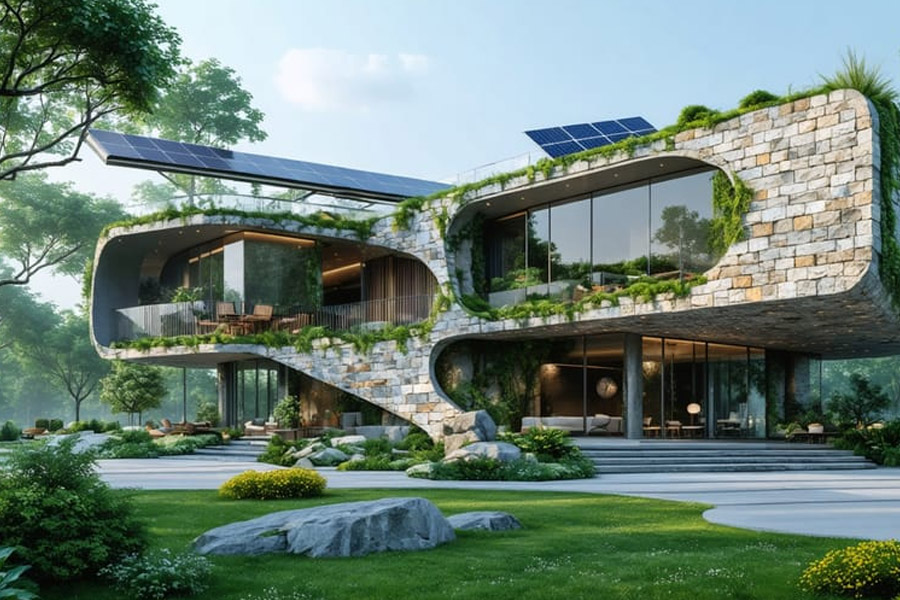
Technology and sustainability coexist. Innovation may improve the environment if applied responsibly. Green hardscaping benefits from advanced drainage, recycled materials, and solar-integrated lighting.
Water-sensitive designs can reclaim rain for irrigation. Reclaimed stone or brick reduces dependence on new extraction. Modular layouts adapt to future changes, enabling modification without full reconstruction.
Each integration phase redefines outdoor handicraft as a life cycle orchestration, not a decay resistance. Through renewal, design evolves without disrupting, achieving resilience.
Aesthetic Expression and Environmental Integrity
A sustainable building encourages art. Alignment creates beauty—stone that melts into soil, walkways that follow the land’s pulse, and patios bordered by vegetation rather than concrete.
This union is deeper than visual appeal. It restores the poetry of place. A pathway might echo a stream’s curve. A seating stone could reflect the texture of nearby bark. Patterns unfold like verses of a quiet conversation between creator and climate.
Responsibility and artistry coexist when design honors both function and feeling. Sustainability is not merely measured in resource conservation but also in emotional continuity—the sense that the built environment tells a story consistent with natural rhythm.
FAQ
How does sustainable hardscaping benefit soil health?
Sustainable hardscaping reduces compaction and improves soil permeability. Air and moisture travel through spaced stone or gravel, keeping soil organisms alive and preventing erosion.
What materials are best for eco-friendly patios?
Reclaimed brick, natural stone, and permeable pavers work well. They are weatherproof, nontoxic, and blend well with neighboring plants. Their smoothness prevents heat absorption and promotes water drainage.
Why is professional craftsmanship important for sustainability?
Proper installation ensures long-term stability and reduces maintenance needs. Professional hardscapers assess grading, drainage, and foundational layers with precision so that structures remain durable without environmental strain or wasteful corrections later.
Can technology enhance sustainable outdoor spaces?
Yes. Solar lighting, recycled-content pavers, and smart irrigation systems are eco-friendly. Innovation in resource management improves sustainability and style.
How can homeowners design paths that encourage natural balance?
They can follow the natural movement of land instead of imposing straight lines. Using gentle curves and porous materials supports water flow and invites exploration. The design should prioritize comfort, safety, and connection to the terrain rather than control over it.
What makes sustainability visually appealing?
Sustainable designs generally age well. Natural materials express seasonal stories through patina and texture. Integrating built and organic components creates authentic, rooted outdoor areas.