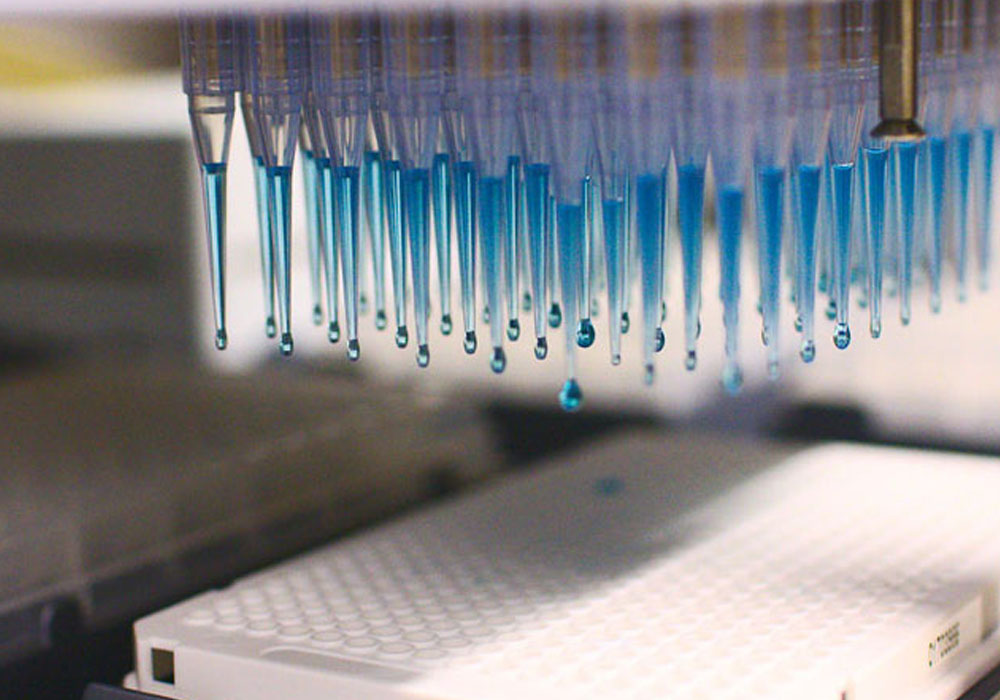
Developing a new drug is often compared to finding a needle in a haystack. In the past, scientists had to manually test chemical compounds one by one against a biological target to see if they had any effect. This manual process was slow, labor-intensive, and prone to human error. It could take years just to identify a single promising candidate for further study.
The HTS Process: Key Steps
High-throughput screening is a highly orchestrated process that involves several distinct stages. While the specific details can vary depending on the target and the library being screened, the general workflow remains consistent across most laboratories.
Target Identification and Validation
Before any screening can begin, researchers must know what they are looking for. This starts with identifying a biological target—usually a protein, enzyme, or receptor—that is involved in a disease process. Once identified, the target must be validated to ensure that interacting with it will actually have a therapeutic effect.
Assay Development
Once the target is selected, scientists develop an assay, or a test system, that can detect biological activity. This assay needs to be robust, reproducible, and suitable for automation. It essentially translates a biological reaction into a readable signal, such as a color change, fluorescence, or light emission, which indicates that a compound has successfully interacted with the target.
Compound Library Preparation
The “fuel” for the HTS engine is the compound library. These are vast collections of stored chemicals, often numbering in the hundreds of thousands. These compounds are stored in microplates—small plastic plates with grids of tiny wells—which allow robots to handle them efficiently.
Automated Screening
This is the core of HTS. Automated robotic arms move the microplates through the system, adding the biological target and the test compounds to the wells. Detectors then measure the reaction in each well. Because this is fully automated, the system can run 24 hours a day, processing data at a rate human researchers could never match.
Hit Identification and Confirmation
When the screening is complete, the system identifies “hits”—compounds that showed the desired activity against the target. However, a hit is not yet a drug. These initial results must be confirmed through re-testing to rule out false positives and to verify that the activity is genuine.
Benefits and Applications of HTS
The primary advantage of high-throughput screening is its sheer capacity. By testing massive numbers of compounds quickly, HTS significantly shortens the timeline for drug discovery. What used to take years can now be accomplished in weeks or even days. This efficiency reduces the overall cost of development, allowing resources to be allocated to other critical phases of research.
Beyond speed and cost, HTS offers versatility. While it is most famous for its role in pharmaceutical drug discovery, it is also used in other fields. In genomics, HTS helps identify genes involved in specific biological pathways. In biochemistry, it aids in understanding enzyme kinetics and protein interactions. The technology is adaptable to various types of assays, making it a universal tool in the life sciences arsenal.
Furthermore, HTS requires very small sample volumes. This “miniaturization” means that valuable or expensive reagents are used sparingly, further driving down costs and reducing waste.
Challenges and Limitations of HTS
Despite its transformative power, high-throughput screening is not without its hurdles. One of the most significant barriers is the initial capital investment. The robotics, detectors, and software required to set up an HTS facility are incredibly expensive, putting the technology out of reach for smaller labs or startups without significant funding.
Data management is another major challenge. An HTS run can generate massive amounts of data—terabytes of information that must be stored, processed, and analyzed. Distinguishing a true signal from background noise requires sophisticated statistical software and expertise. Without proper data handling, meaningful results can easily get lost in the noise.
False positives are a persistent issue. Sometimes, compounds appear active in the assay but are not actually interacting with the target in a useful way. These “assay interference compounds” can waste valuable time and resources if they are not identified and filtered out early in the process.
How HTS Improves Drug Discovery
The journey from a lab bench to a pharmacy shelf is long and fraught with failure. High-throughput screening improves the odds of success by filling the top of the funnel with high-quality candidates. By screening diverse libraries, HTS ensures that researchers are not missing out on novel chemical structures that could yield a breakthrough therapy.
HTS allows for a more systematic approach to drug discovery. Instead of relying on lucky guesses or limited historical data, researchers can empirically test a vast landscape of chemical possibilities. This leads to the discovery of “lead compounds” with better potency and selectivity profiles from the very beginning.
Moreover, HTS enables “repurposing” of existing drugs. Libraries can include compounds that have already been approved for other uses. If HTS reveals that an old drug interacts with a new disease target, that drug can be fast-tracked through clinical trials since its safety profile is already known.
The Role of a Toxicology Consultant in HTS
While HTS is excellent at finding compounds that work, it does not inherently tell you if those compounds are safe. This is where toxicology expertise becomes vital. Although toxicology studies typically happen later in the drug development pipeline, integrating this perspective during the screening phase can save millions of dollars.
A toxicology consultant can help design assays that not only look for efficacy but also flag potential toxicity early on. For example, they might recommend including a parallel screen using liver cells to see if the compounds are likely to cause liver damage—a common reason for drug failure.
By interpreting early data through a safety lens, these experts help narrow down the list of hits to those that are not only active but also have a higher probability of being safe for human use. This early de-risking is a crucial component of modern life science consulting, ensuring that companies do not invest years developing a molecule that will ultimately fail safety trials.
Future Trends in High-Throughput Screening
The field of HTS is continuing to evolve. One of the most exciting trends is the move towards more biologically relevant models. Traditional HTS often uses simple 2D cell cultures or isolated enzymes. However, the industry is shifting toward 3D cell cultures and organoids—miniature, simplified versions of organs grown in the lab. These models better mimic the complex environment of the human body, providing results that are more predictive of how a drug will behave in a patient.
Artificial intelligence (AI) and machine learning are also reshaping HTS. AI algorithms can analyze the massive datasets generated by screens to identify patterns that humans might miss. They can also predict which compounds are most likely to be active before they are even tested, allowing for “virtual screening” that saves time and physical resources.
Finally, lab-on-a-chip technology is pushing the boundaries of miniaturization even further. These devices integrate multiple laboratory functions on a single chip, allowing for extremely high-throughput analysis with microscopic volumes of liquid. This could democratize HTS, making it accessible to a wider range of researchers.
Conclusion
High-throughput screening (HTS) has revolutionized drug discovery, transforming it from a slow, manual process into a rapid, automated, and data-driven one. This shift has accelerated healthcare innovation. While cost and data complexity remain challenges, emerging technologies like AI and 3D biology promise to make screening even more precise and predictive.