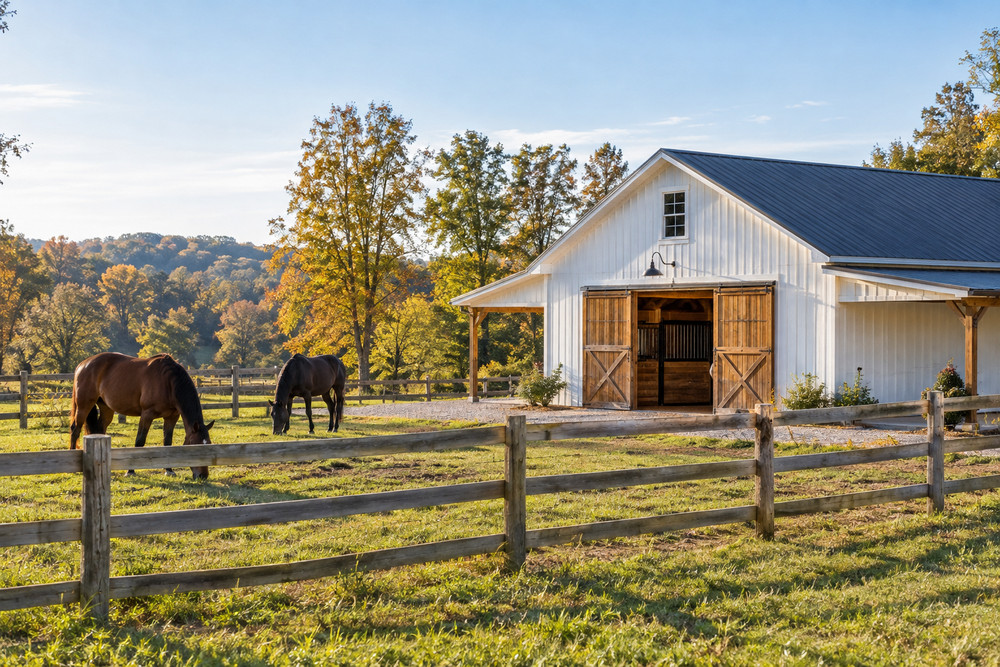
Buying acreage with plans to keep horses can be exciting, especially when the property appears to offer everything you need at first glance. A few acres, open pasture, a barn, fencing, and existing outbuildings may seem like a ready-made setup.
The catch is that rural properties often come with structures that have been neglected, poorly maintained, or designed for a previous owner’s needs. By the time you inspect the buildings closely, the cost of making them usable may be much higher than expected.
For buyers hoping to close before the end of the year, that can add another challenge. There may be limited time to repair an existing barn, order a replacement, arrange delivery, and have everything ready before horses arrive.
A careful evaluation before closing can help prevent an expensive surprise.
Start With the Property, Not the Barn
It is easy to focus on the acreage and assume the existing structures are an added benefit. However, a barn that looks serviceable from the driveway may have significant problems that are not obvious until a closer inspection.
Before treating an existing structure as an asset, evaluate:
- Roof condition and signs of water intrusion
- Structural framing and posts
- Foundation or ground contact points
- Doors, windows, and ventilation
- Electrical and lighting systems
- Plumbing and drainage
- Stall dimensions and condition
- Flooring and moisture problems
- Accessibility for vehicles and equipment
- Local restrictions affecting repairs or replacement
A professional inspection is particularly important when the building is older or has visible signs of deterioration.
Repair or Replace?
The biggest question is not always whether a barn can be repaired. It is whether repairing it makes financial sense.
For example, replacing a few damaged boards and repairing a door may be reasonable. Major structural deterioration, extensive roof damage, failing foundations, or outdated electrical systems can tell a different story.
Buyers should compare the estimated repair cost with the cost of replacing the structure with one that better suits their needs. They should also consider how long the repairs will take and whether the finished building will provide the layout and functionality they want.
Sometimes, searching for horse stables for sale can provide a useful point of comparison when determining whether an existing structure is worth renovating or whether starting fresh makes more sense.
Don’t Let a Low Purchase Price Hide Higher Costs
A property with an unusable barn may initially look like a bargain. But the purchase price is only one part of the total investment.
New owners may need to budget for fencing, gates, pasture improvements, water access, equipment storage, site preparation, and a replacement structure. These expenses can add up quickly.
Before making an offer, create a realistic improvement budget that separates immediate necessities from projects that can wait.
Prioritize Horse Safety
Not every property improvement needs to happen immediately, but safety-related work should take priority.
For horses, that generally means addressing hazards such as:
- Broken or unstable fencing
- Exposed nails or sharp edges
- Unsafe stall partitions
- Poor drainage
- Contaminated or damaged water sources
- Weak gates
- Unstable structures
- Inadequate shelter
A property doesn’t need to be perfect on move-in day, but horses should have a safe environment from the start.
Consider How the Property Will Function
A barn should work with the entire property, not just occupy an open section of land.
Think about how horses, people, trailers, feed deliveries, and farm equipment will move around the site. A building that is technically large enough may still be inconvenient if it is difficult to access or poorly positioned.
Consider the location of:
- Driveways and turning areas
- Pastures and paddocks
- Water sources
- Existing fencing
- Hay and feed storage
- Manure management areas
- Equipment storage
- Electrical connections
- Drainage paths
Site planning is especially important on acreage where terrain, soil conditions, and weather can affect year-round accessibility.
Fall Closings Create a Time Constraint
Buying in the fall can leave less time than expected to prepare the property before winter.
If an existing barn is unusable, buyers may need to decide quickly whether to repair it or pursue a new structure. Waiting until after closing to begin researching options can create unnecessary delays.
A better approach is to explore options while the purchase is still moving through the closing process, subject to any applicable property, zoning, and financing requirements.
This allows buyers to understand:
- What the existing structure is worth keeping.
- What repairs would actually cost.
- Whether a replacement is practical.
- How much site preparation may be required.
- How long ordering and delivery could take.
- What local approvals may be necessary.
Getting these answers early can make the transition to the new property much smoother.
New Structures Require More Than a Delivery Date
A modular barn can offer flexibility when an existing building is beyond economical repair. Still, buyers should not think of delivery as the only scheduling consideration.
The site may need preparation before the structure arrives. Depending on the property and building, that can include grading, access preparation, foundation work, utility planning, and clearing.
The delivery route also deserves attention. Narrow roads, low branches, bridges, steep grades, or difficult driveways can create logistical challenges for large building components.
Planning a Barn for a Kentucky Property
For buyers purchasing acreage in Kentucky, consider local conditions before selecting a structure or finalizing its location. The property may have specific terrain, drainage, access, and permitting considerations that influence the project.
When researching modular barns for Kentucky properties, buyers should discuss the intended use, building dimensions, site conditions, delivery access, and installation requirements before placing an order.
This is particularly important for buyers working toward a year-end move. A barn that arrives before the horses do is useful only if the site is ready to receive it and the necessary work is complete.
Ask Questions Before Ordering
A new barn is a significant investment, so buyers should understand exactly what is included.
Questions worth asking include:
- Is site preparation included?
- What foundation or base is required?
- How is delivery handled?
- Is installation included?
- What access does the delivery team need?
- Are permits the owner’s responsibility?
- What interior options are available?
- Can the layout accommodate future needs?
- What maintenance will the structure require?
Clear answers can prevent unexpected expenses later.
Avoid Designing Only for Today’s Horses
Another common mistake is building for the current number of horses without considering how the property may be used in the future.
A new owner may eventually add another horse, expand storage, create a tack area, or need additional space for equipment. Building slightly more flexibility into the design can be worthwhile if the property and budget allow it.
That does not mean choosing the largest possible structure. Oversizing a building can increase costs without providing meaningful benefits. The goal is to balance current requirements with realistic future use.
Make the Decision Before Moving Day
When buying acreage late in the year, the biggest risk is assuming you’ll have plenty of time after closing to solve every problem.
If the existing barn is unusable, determine its condition early. If repairs are practical, obtain estimates. If replacement makes more sense, research the structure, site requirements, delivery process, and local rules before the property changes hands.
The best horse property is not necessarily the one with the biggest barn or the most buildings already in place. It is the property where the land, structures, access, and planned improvements work together.
For buyers closing on acreage this fall, making those decisions early can mean the difference between moving into a property with a clear plan and spending the first few months dealing with unexpected construction problems.