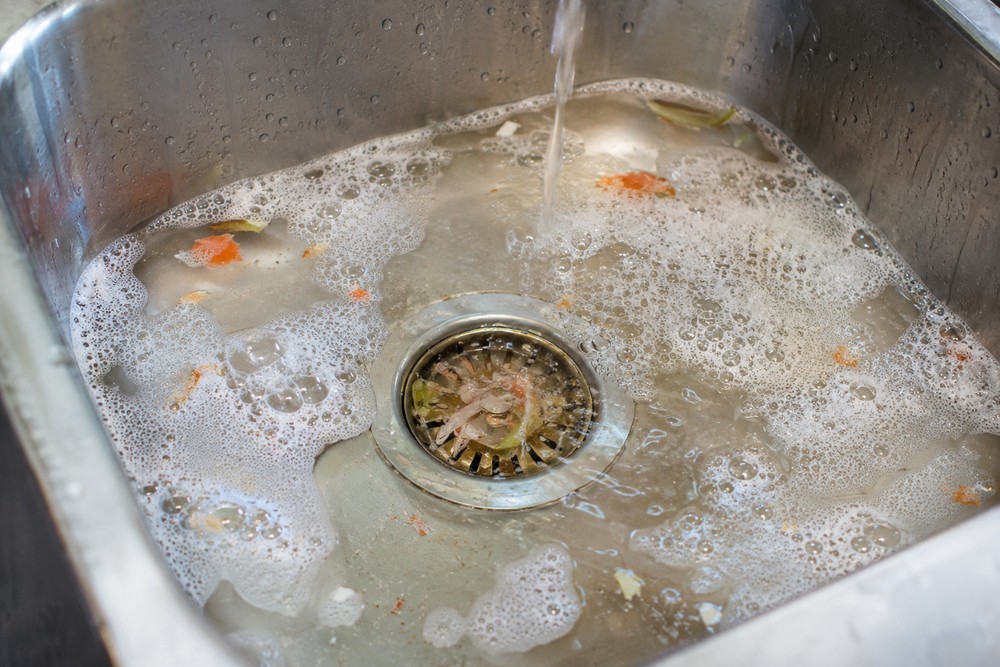
Most people don’t think much about their pipes until water starts backing up in the sink or the shower takes forever to drain. It’s one of those things you notice immediately but rarely understand. Professional drain cleaning exists for exactly this reason. But before we talk about solutions, it helps to understand what’s actually going on inside your plumbing. Because drain clogs aren’t random. They follow predictable patterns, and once you understand the science behind them, you’ll have a much better shot at staying ahead of the problem.
It Starts With Friction
Every pipe in your home or building is subject to a basic physical reality: water moving through a tube creates friction along the pipe walls. That friction, over time, makes it easier for materials to catch and accumulate. The narrower the pipe, the more pronounced this effect becomes.
Brand-new pipes have relatively smooth interior surfaces. But pipes don’t stay new. Older pipes, especially cast iron or galvanized steel, develop surface irregularities over time. Corrosion creates tiny ridges and pits. Those imperfections give organic and mineral materials a foothold. Once that foothold exists, buildup accelerates.
This is why clogs seem to come out of nowhere after years of no problems. The pipe was gradually changing the whole time. The clog itself was just the visible result of a much slower process.
The Chemistry of Soap Scum and Buildup
One of the most common contributors to drain buildup is something we use every day: soap. Traditional soap bars contain fat or tallow as a base ingredient. When that soap mixes with hard water, which contains elevated levels of calcium and magnesium minerals, it forms a compound called soap scum. This isn’t just a surface residue you wipe off a shower wall. It also coats the inside of your drain pipes.
Soap scum has a waxy, sticky consistency that makes it an effective trap for other materials passing through the pipe. Hair, food particles, sediment, and mineral deposits all get caught in this layer. Over weeks and months, the layer thickens. The effective diameter of the pipe shrinks. Water flow slows down. And eventually, you’re standing in two inches of water during your morning shower wondering what happened.
The chemistry here is pretty straightforward, but the consequences are real. Hard water accelerates this process significantly. Properties in areas with hard water supplies often deal with drain issues far more frequently than those with softer water, all else being equal.
Grease: The Slow-Moving Problem
Grease deserves its own category because it behaves differently than most other clog contributors. When cooking grease or oil goes down a drain in liquid form, it seems harmless. It flows freely. It disappears with the water. But it doesn’t actually disappear.
As grease moves through the drain line and away from the heat source, it cools and solidifies. It clings to pipe walls. More grease follows the same path and layers on top of what’s already there. Over time, this creates a thick, dense coating that narrows the pipe dramatically. Unlike soap scum, which builds up somewhat evenly, grease accumulation tends to create partial blockages that can suddenly shift and cause full obstructions.
This is especially pronounced in commercial kitchen drain lines, where the volume of grease passing through is significantly higher than in a residential setting. It’s a primary reason why grease trap maintenance and drain line cleaning are standard practice in food service and hospitality facilities, not optional add-ons.
Hair and Fibrous Materials
Hair is arguably the most intuitive cause of clogs because you can see it accumulate in a drain basket within days. But the actual mechanism is worth understanding.
Hair doesn’t dissolve in water. It doesn’t break down quickly. And it’s uniquely good at tangling. A few strands of hair in a drain will catch additional strands. Soap scum binds them together into a cohesive mass. That mass then starts catching other debris passing through the pipe.
What begins as a loose accumulation becomes, over time, a densely packed obstruction. The frustrating part is that the clog itself often sits several inches down the drain, not at the surface where you can easily reach it. That’s why drain covers and hair traps are genuinely useful, but they don’t fully prevent the problem. Some hair always gets through, and some always accumulates deeper in the line.
Fibrous materials behave similarly. Cotton flushable wipes (which, despite the label, are not truly flushable in most systems), paper towels, feminine hygiene products, and other fibrous items don’t break down the way toilet paper does. They catch on existing buildup, compress, and form blockages that can be surprisingly solid by the time they cause a noticeable problem.
Mineral Deposits and Scale
In areas with hard water, mineral scale is a serious and often underappreciated contributor to pipe narrowing. Calcium carbonate and magnesium deposits build up on pipe walls the same way they form on the inside of a kettle or water heater. This is called limescale, and it’s remarkably hard once it forms.
Unlike grease or organic buildup, limescale doesn’t respond well to most liquid drain treatments. You can’t soften it with hot water or dissolve it with common household products. In significant accumulations, it requires mechanical removal or high-pressure water jetting to clear effectively.
What makes mineral scale particularly challenging is that it can combine with other types of buildup. Grease and soap scum deposit on top of a mineral scale layer, and the scale provides a rough surface that makes those organic materials adhere more easily. The result is a composite buildup that’s thicker and harder to remove than any individual component would be on its own.
The Role of Pipe Angle and Slope
The physical layout of your plumbing plays a larger role in clog formation than most people realize. Drain lines are designed to run at a specific slope so that gravity moves water and waste toward the main sewer line or septic system efficiently. The standard residential drain slope is about one-quarter inch of drop per horizontal foot of pipe.
When pipes settle, shift, or were installed incorrectly, that slope changes. Sections of pipe with too little slope create low spots where water sits instead of moving on. Any material in that standing water settles out. Over time, those low spots become the primary locations where clogs form.
Similarly, horizontal runs that are too long without adequate slope create chronic drainage issues. The physics are simple. Water that isn’t moving fast enough doesn’t carry debris with it. And debris that isn’t carried through settles and accumulates.
This is one reason why camera inspections of drain lines are so valuable when chronic clogs keep returning. It’s not always about what’s in the pipe. Sometimes it’s about how the pipe is positioned.
What Happens When a Clog Forms
By the time you notice a slow drain, the clog is already well-developed. The early stages of accumulation don’t produce noticeable symptoms. Water still flows, just slightly slower. Most people don’t catch that subtle change until the restriction becomes significant enough to pool water or cause a backup.
A partial clog creates a feedback loop. The restriction slows water flow. Slower water flow deposits more material. More material narrows the pipe further. Each stage accelerates the next. This is why a drain that went from “fine” to “completely blocked” seemingly overnight was actually building toward that outcome for a long time before it became obvious.
Full blockages can create additional problems beyond just the inconvenience of slow drainage. Pressure can build in the line if a downstream blockage prevents flow from moving at all. In severe cases, that pressure can stress pipe joints or cause backups to occur at the lowest fixture in the system, usually a basement drain or floor-level toilet.
Why Most Liquid Drain Products Fall Short
Walk down any hardware store aisle and you’ll find an array of liquid drain treatments that promise to dissolve clogs quickly. These products generally rely on caustic chemicals like sodium hydroxide (lye) to break down organic material. They can be effective on fresh, soft, organic clogs. Hair mats that haven’t fully set, for example, may respond to a chemical treatment.
But for mature clogs that include mineral scale, compacted grease, or densely packed fibrous material, liquid products rarely solve the problem completely. They may dissolve a portion of the blockage, allowing partial flow to resume, without clearing the restriction fully. That partial clearing gives the impression of a solved problem. Meanwhile, the remaining buildup catches new material more easily because its surface area is now more irregular from the partial dissolution.
There’s also the issue of pipe compatibility. Caustic chemicals can damage older pipes, particularly PVC that has become brittle with age, or rubber gaskets and seals at pipe joints. Repeated use of aggressive chemical treatments can cause long-term damage that’s more expensive to address than the original clog.
Mechanical Removal and High-Pressure Jetting
When it comes to actually clearing a well-developed clog, mechanical methods are considerably more effective than chemical ones for most situations. A drain snake or hand auger can physically break up and retrieve clog material rather than just chemically softening it. For deeper or more complex blockages, professional augering equipment can reach much further into the drain line.
High-pressure water jetting, sometimes called hydro jetting, takes this further by using pressurized water to scour the interior pipe walls rather than just punching through the obstruction. This approach removes grease coatings, mineral scale deposits, and organic buildup from the pipe walls entirely, restoring flow capacity close to what it was when the pipe was new. It’s the most thorough method available for clearing a heavily restricted line and is commonly used in both residential and commercial settings.
Understanding the Problem Is Half the Battle
Drain clogs aren’t a mystery. They’re the predictable result of chemistry, physics, and time working together inside your pipes. Knowing what causes them, how they develop, and why they keep coming back gives you a real advantage in maintaining your plumbing over the long term.
Prevention comes down to being thoughtful about what goes down your drains, using mechanical drain covers to catch debris, and having your drain lines professionally cleaned on a reasonable schedule before buildup becomes a blockage. When you understand that every drain has a slow process happening inside it whether you notice it or not, staying ahead of it becomes a straightforward decision rather than a reactive one.