Key Takeaways
- Put safety ahead of cleanup, especially around electricity, unstable materials, or contaminated water.
- Stop the water source if it can be done safely.
- Photograph the damage before moving belongings or making repairs.
- Remove small amounts of clean water and begin drying as soon as conditions allow.
- Get professional help when water reaches hidden areas, involves sewage or floodwater, or creates structural concerns.
Water damage can result from a slow appliance leak, a burst pipe, roof failure, or flooding after a storm. Whatever the cause, the first 24 hours are critical for protecting the property and limiting further damage. Prioritize safety, document affected areas, and address the source of moisture when possible. For problems beyond a minor spill, professional water damage restoration can help remove standing water, dry affected materials, and assess the extent of the damage.
Even after visible water has been removed, moisture can linger beneath flooring, behind baseboards, and inside cabinets or walls. Hardwood floors require particular care because excess moisture can cause swelling, warping, discoloration, or lasting surface damage. Once the underlying moisture issue has been addressed, professional hardwood floor cleaning Austin services may help restore the floor’s appearance using methods suited to its finish and condition. Acting promptly and choosing the right cleaning approach can make recovery more manageable.
Why The First Day Matters
Water does not always remain where it first appears. Porous materials can absorb it, while gravity can carry it into lower levels, subfloors, and wall cavities. Even after visible water is removed, hidden moisture may remain. That is why thorough drying often involves checking materials rather than relying on whether a surface feels dry to the touch.
1. Make The Property Safe Before Cleaning
Before picking up towels or moving furniture, pause and assess the area. Do not walk through standing water near outlets, appliances, exposed wiring, or a wet electrical panel. If the affected area can be reached safely, turn off power at the breaker. If it cannot, stay clear and contact a qualified electrician or utility provider for guidance.
For wood surfaces exposed to a small amount of clean water, avoid aggressive scrubbing or applying any products while the material is still wet. Once the area is dry and stable, specialized hardwood floor cleaning services may be useful for addressing residue or restoring the floor’s appearance.
Watch For Additional Hazards
- Keep children and pets away from the affected area.
- Watch for sagging ceilings, loose flooring, broken glass, and slippery surfaces.
- Do not enter rooms with visible structural movement or heavy bulges in the ceiling.
- Leave the property if local officials advise evacuation or essential utilities are unsafe.
2. Stop The Water Source If It Is Safe
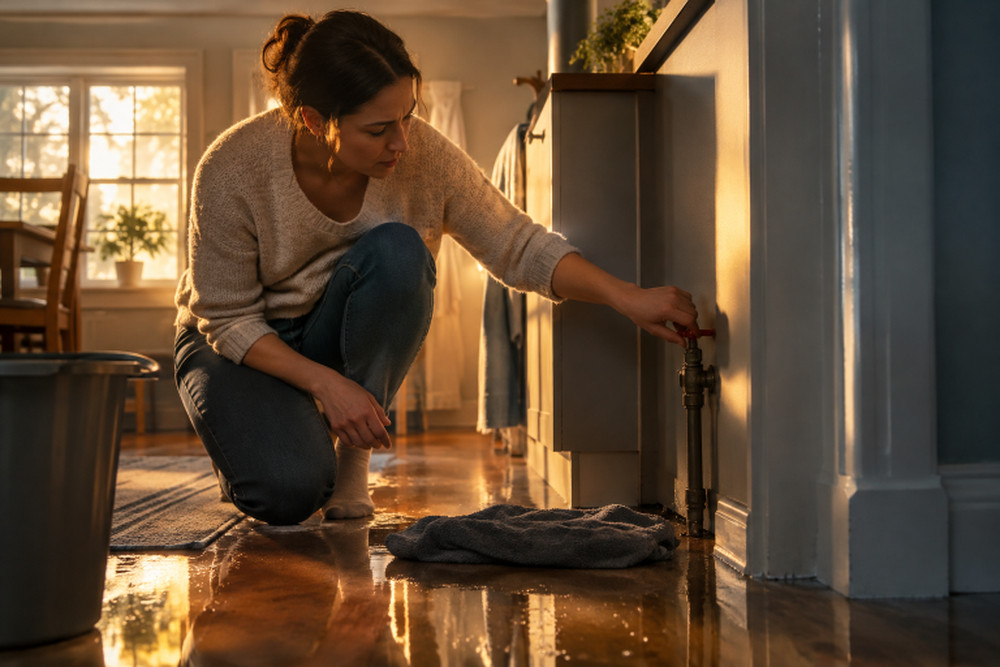
Stopping new water from entering the property is the next priority. For a burst pipe, turn off the main water valve if you can reach it safely. For a leaking sink, toilet, dishwasher, or washing machine, close the nearby supply valve and stop using the appliance. A roof or window leak may be temporarily contained from inside only when doing so does not require climbing, entering a hazardous space, or working near electricity.
If the source is unknown, cannot be controlled, or continues to release water, call a plumber or emergency restoration provider. Stopping the source prevents additional water from entering, but it does not remove moisture that has already spread through the structure.
3. Document Damage Before Moving Items
Take clear photos and videos before cleanup begins. Create wide shots of each affected room, then capture close-ups of standing water, stains, warped flooring, bubbling paint, damaged furniture, and the suspected source. Photograph model numbers or labels on damaged appliances and electronics when possible.
Write down when you discovered the issue, what you believe caused it, and every action taken afterward. Save photos, videos, receipts, and notes in cloud storage or send copies to yourself by email. Contact your insurer promptly, but remember that coverage may depend on the cause of the water damage and the policy’s terms.
4. Identify The Type Of Water
Not all water damage should be handled the same way. Water from a clean supply line may present fewer immediate contamination concerns than water from a drain, toilet overflow, sewage backup, or outdoor flooding. Unknown water should be treated cautiously until its source is confirmed.
- Clean water: Usually comes from a supply pipe, faucet, or similar source.
- Gray water: May come from appliances or drains and can contain soil, cleaning products, or other contaminants.
- Blackwater: May include sewage, floodwater, or water that may contain harmful contaminants.
Keep people and pets away from contaminated water. Cleanup involving sewage, floodwater, or an unknown source generally requires protective equipment and a more controlled response. The EPA guidance on moisture and mold also emphasizes drying water-damaged materials promptly to limit conditions that support mold growth.
5. Remove Water Only When Conditions Are Safe
For a small amount of clean water in a safe area, use towels, mops, or a wet/dry vacuum designed for water pickup. Lift rugs, move lightweight belongings to a dry location, and remove wet cardboard, books, and fabric from the floor. Never use a regular household vacuum on standing water.
Stop DIY cleanup and seek help if water covers a large area, has entered walls or flooring, has remained undetected for an unknown period, or came from a contaminated source. Do not attempt to move heavy soaked furniture if there is a risk of injury.
6. Begin Drying And Protect Belongings
When the water is clean and electrical conditions are safe, use fans to move air across wet surfaces and a dehumidifier to reduce indoor humidity. Opening windows can help when outdoor air is dry, but may add moisture during humid or rainy weather. Avoid running central HVAC equipment if contamination may be present or if the system could spread moisture or debris.
Move clean, non-porous items such as glass, metal, and plastic to a dry area. Separate damp fabrics instead of stacking them. Handle wet documents, photographs, electronics, artwork, and heirlooms gently, as some items may require specialized restoration. Keep damaged belongings when practical until they have been documented and reviewed for an insurance claim.
When To Call A Water Damage Professional
Professional assessment is a sensible choice when water reaches drywall, insulation, cabinets, subfloors, electrical systems, or other hidden spaces. It is also important when there is a musty odor, a sagging ceiling, unstable flooring, exposure to sewage, storm flooding, or uncertainty about how long the leak lasted.
A qualified provider should be able to explain the drying plan, identify the affected materials, use appropriate equipment, and document moisture conditions during the process. Surface drying alone may not address water trapped behind walls, under flooring, or inside building assemblies.
Final Checklist For The First Day
- Keep people and pets away from unsafe areas.
- Stop the water source if it is safe to do so.
- Address electrical hazards before entering or cleaning the area.
- Photograph the damage and save a written timeline.
- Separate clean-water incidents from contaminated-water incidents.
- Remove small amounts of clean water when safe to do so.
- Begin airflow and dehumidification where appropriate.
- Contact the insurer and retain receipts for emergency expenses.
- Arrange professional help for hidden moisture, contamination, or structural concerns.
Conclusion
The first 24 hours after water damage can feel overwhelming, but a calm, safety-first approach makes a meaningful difference. Stop the source, document what happened, remove water only when it is safe, and begin proper drying. When the situation involves contamination, electrical risk, or moisture inside structural materials, professional help is the safer path.