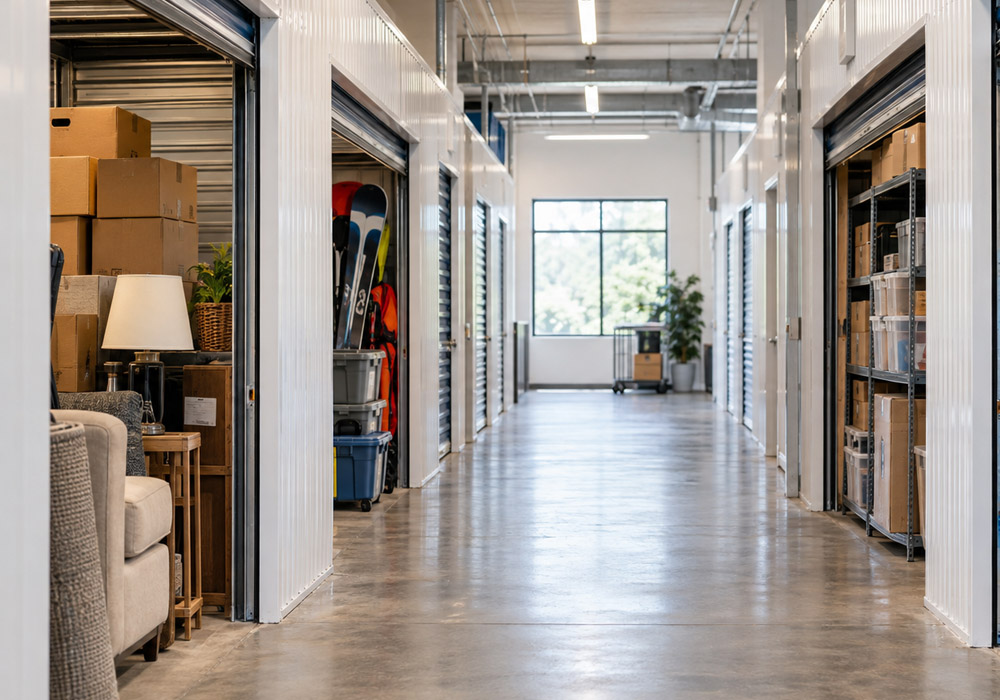
A storage facility provides dedicated space for belongings or business equipment that require storage beyond the home or workplace. Storage spaces differ in their access, environmental features, and vehicle accommodations, and each configuration suits different types of property. Understanding these differences helps match stored property with the appropriate space and access method. Here are several storage options available:
Standard Self-Storage Units
Standard self-storage units provide enclosed space for personal belongings and business inventory. Smaller units suit boxes, seasonal items, household clutter, and small furniture, while larger units accommodate bulky furnishings and equipment. The available space ranges from compact areas for limited belongings to larger units suited to substantial storage needs.
Household storage may include furniture, appliances, clothing, and other belongings that need extra space. Extensive home renovations also create a need for storage; furniture and boxes must be moved while work is underway. Businesses can use storage units for:
- Inventory
- Materials
- Files
- Equipment
The appropriate unit size depends on the volume and dimensions of the property being stored. Larger items influence the amount of space needed; if the item is oversized, it may require a larger door opening. An ideal storage facility provides a unit size that accommodates the piece of property without leaving excessive unused space.
Climate-Controlled Storage Units
Climate-controlled storage units help maintain a more consistent temperature range; this can protect belongings from extreme heat and cold. This option suits temperature-sensitive property, such as electronics, collectibles, antiques, and certain furniture. These units may be located inside the storage facility rather than in exterior drive-up areas.
The enclosed setting provides additional privacy and protection for stored belongings. Climate control regulates temperature, but it does not automatically control humidity. Humidity-controlled storage suits belongings that require a precise humidity range, making it different from conventional climate control.
Drive-Up Storage Units
Drive-up storage units make loading and unloading belongings easier. A vehicle parks in front of the unit, so there is no need to use indoor hallways or elevators. This setup works well for storing bulky or heavy items, as moving trucks can have direct access to the units. Security features include gated access and surveillance cameras, while some facilities offer individual unit alarms. Access hours also vary by facility.
Indoor Vehicle Storage
Indoor vehicle storage provides an enclosed space for cars and other vehicles, including motorcycles, RVs, boats, and trailers. These units function like garages, and drive-up access allows vehicles to reach the storage space directly. Indoor options suit vehicles that require storage for longer periods, including classic cars and sports cars. Some facilities offer climate-controlled vehicle storage, which provides a more consistent environment for sensitive cars. This specialized option may help protect vehicles from:
- Dust
- Debris
- Sunlight
- Rust
- Mildew
- Mold
Find a Storage Facility
Choosing the right storage facility depends on your access requirements and the conditions your belongings need. Standard units accommodate everyday household items, while specialized options provide solutions for temperature-sensitive possessions. Whether you’re storing musical instruments or a vintage car, you can find a suitable unit. Explore storage facilities in your area to find an option that fits your belongings.