Many fitness enthusiasts wonder if logging miles on a belt builds real muscle size. Running has a big reputation for burning calories and improving heart health, but its impact on muscle growth is nuanced. Understanding how mechanical strain influences lower body fibers helps you train with clear purpose.
Muscle Mechanics on the Moving Belt
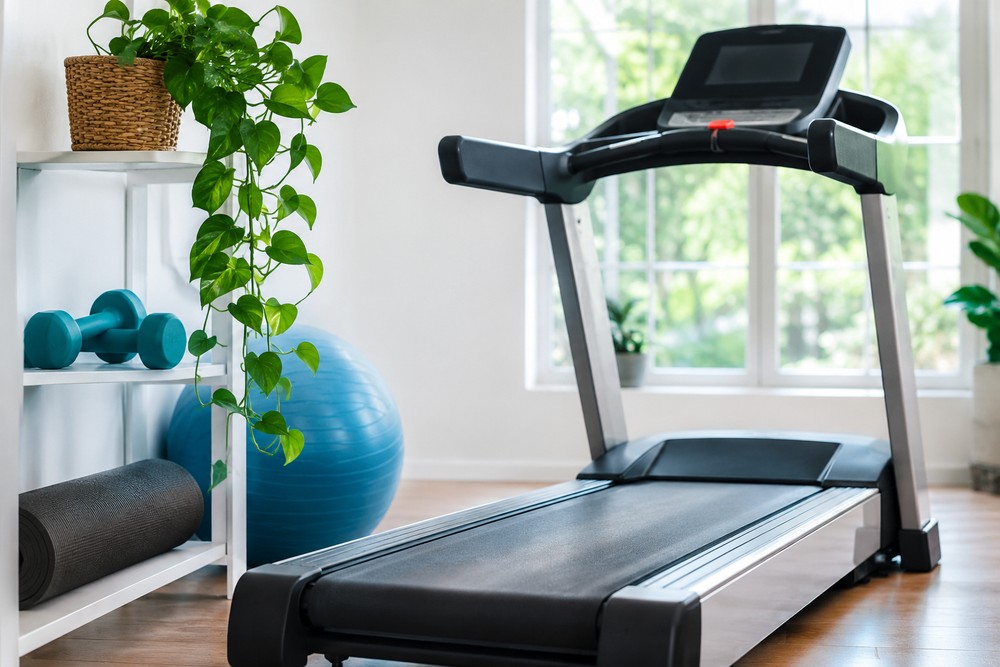
Running on a treadmill makes your lower body push against a moving surface over and over. Every step needs your quads, hamstrings, and calves to keep you steady. The belt moves on its own, which slightly changes how your leg muscles work compared to running outside.
A study from the National Center for Biotechnology Information found that outdoor roads make your hamstrings and calves work a little more than a motorized belt does. Even with that small difference, the belt keeps steady tension on your quads. Keeping a steady pace keeps those muscles working under load for 30 to 45 minutes.
That steady tension triggers changes inside your muscle fibers. Your body responds by increasing blood supply and energy capacity in the working tissue. These changes build muscular endurance. That gives you a solid base for harder strength workouts later in the week.
Adjusting Incline Settings for Greater Resistance
Walking against a steep slope shifts tension directly into your glutes, hamstrings, and calves. When setting up a home conditioning circuit, the team behind SOLE Fitness says that pairing steep hill climbs with weighted movements maximizes total lower body development. Combining these gives you more muscle activation without pounding your knees. You can switch between steady incline walks and squats with weights in one 30-minute session.
Incline walking needs strong hip drive with every step. Your glutes must work harder to push your body up the simulated hill. Setting the machine to an 8% or 12% grade boosts calf activation a lot compared to flat walking.
Steep incline intervals offer special benefits for athletes who want muscle growth without joint pain. Raising the belt changes how your foot lands and makes your backside muscles work harder:
- Glute muscle activation rises
- Knee joints absorb less shock
- Ankle stabilizers adapt
These mechanical shifts create meaningful metabolic stress across your lower body. By eliminating the jarring impact of downhill or pavement runs, high incline training allows you to accumulate conditioning volume safely.
Walking Protocols for Active Recovery
Hard training often leaves your legs stiff and out of energy. Easy treadmill walking boosts blood flow. That brings fresh nutrients to tired muscles. Gentle movement clears waste without causing new tiny tears in your muscle fibers.
A training feature from Becoming Her Journal said steady walking is easier to recover from than hard cardio. A relaxed walk on rest days saves energy for your heavy lifting. It keeps your daily calorie burn high and protects your muscle mass.
Regular easy walking helps your joints feel better by moving fluid through your hips and knees. Flexible joints let you squat and lunge through a full range of motion during heavy workouts.
Managing the Interference Effect and Strength Training
Cardiovascular training and heavy lifting send contrasting molecular signals to your muscle cells. Resistance training triggers pathways that drive protein synthesis and muscle fiber growth. Endurance exercise activates separate metabolic pathways that prioritize cellular energy efficiency over size.
A fitness guide from the YMCA of Central Stark County said too much cardio can slow muscle growth. When these two goals compete over and over, your body struggles to build maximum muscle size. To manage this, space your workouts smartly across the week.
Separate hard runs from leg workouts by 6 to 8 hours. This minimizes the conflict. Do treadmill sessions after lifting weights. That way, you don’t tire out the muscles you need for heavy squats and deadlifts. Set aside separate days for pure strength work. That gives your body a clear signal to build muscle.
High-Intensity Sprints and Fast-Twitch Recruitment
Long slow distance jogs primarily train Type 1 slow-twitch muscle fibers. These fibers resist fatigue with great success, but they have a limited ceiling for physical size. Short treadmill sprints recruit Type 2 fast-twitch fibers, which possess the greatest capacity for growth.
Aggressive sprint bouts force these powerful fibers to contract with rapid speed. Running at speeds above 10 miles per hour requires strong hamstring contractions during the swing phase. Your calves and hip flexors must push against the belt with sudden force, providing a strong stimulus for power.
A simple interval session on a motorized belt delivers quick results. Warm up thoroughly with 5 minutes of light jogging at 5 miles per hour. Perform 8 to 10 rounds of 20-second hard sprints followed by 40 seconds of complete rest on the side rails. Cool down with 3 minutes of easy walking to return your heart rate to baseline.
This style of high-intensity training promotes natural hormone release and elevates post-workout oxygen consumption. It challenges your lower body in a fashion that mirrors moderate-load resistance training.
Fueling Muscular Adaptation and Protein Synthesis
Building muscle while doing treadmill workouts means you have to watch what you eat every day. Running burns a lot of calories. It’s easy to eat too little without meaning to. If you stay in a deficit too long, your body breaks down muscle for fuel.
Eating enough protein gives your body the building blocks to repair muscle. If you lift regularly, aim for 0.7 to 1.0 grams of protein per pound of body weight each day. Spread it across 3 or 4 meals. That keeps muscle building active all day.
Carbs matter too. They refill the energy stores in your muscles after hard intervals. Eat a meal with complex carbs and lean protein within 2 hours after your workout. That speeds up recovery. Drink plenty of water so your muscles stay hydrated and work well.
Treadmill workouts can help you build muscle if you follow clear science-based rules. Change the incline, do short fast sprints, and respect your rest days. That turns normal treadmill sessions into strong muscle-building tools. Pair these cardio plans with structured strength training and good nutrition. That helps you build a strong, muscular lower body.
Looking for more practical fitness tips and workout advice? Explore more articles on our blog for helpful guides on muscle growth, exercise routines, recovery, and nutrition to support your fitness goals.