Key Takeaways
- Travertine adds natural texture and visual weight while still working with relaxed, lived-in rooms.
- The right piece depends on room size, traffic flow, delivery access, and daily habits.
- Timber, linen, wool, ceramics, and warm metals soften and balance stone furniture.
- Finish and sealing affect both the appearance of travertine and the care it requires.
- One well-proportioned stone piece is often more effective than several smaller accessories.
- Covered outdoor areas are generally a more practical option than fully exposed spaces.
Travertine furniture brings a grounded, tactile quality to Australian interiors, whether the home is a bright coastal apartment, a Melbourne terrace, or a relaxed family house with an open-plan living area. Its creamy, sand, walnut, and ivory variations can make a room feel considered without relying on strong patterns or glossy finishes.
For homeowners comparing dining tables, coffee tables, consoles, vanities, and decorative stone pieces, travertine furniture Australia from Elsa Home And Beauty is a useful starting point. Elsa Home And Beauty presents a dedicated natural-stone collection with options for living rooms, dining spaces, entryways, bathrooms, and covered outdoor settings, including custom sizing across many designs. With prices shown in Australian dollars and a range built around stone furniture, the collection is particularly relevant for Australian projects that need a statement piece suited to a specific floor plan.
Why Travertine Works in Contemporary Homes
Travertine is a type of limestone formed through mineral deposits from water, and its natural pores, tonal shifts, and layered appearance are part of its appeal. A little background on how travertine is formed and used helps explain why no two pieces look exactly alike. That variation can bring depth to rooms dominated by painted plasterboard, smooth joinery, glass, and uniform flooring.
In 2026, warm neutrals continue to suit interiors that feel calm rather than overly styled. Travertine works especially well alongside muted whites, clay tones, olive greens, warm timber, and charcoal accents. Current discussion of stone surfaces in furniture design also points to the value of combining stone with wood, textiles, metals, and softer colours instead of treating it as an isolated luxury material.
How To Choose the Right Piece
Start With the Room’s Job
A dining table needs enough surrounding space for chairs to slide back comfortably. A coffee table should leave clear paths around the sofa, while a console must be shallow enough for an entry or hallway. Side tables are a lower-commitment way to introduce stone in compact rooms. For vanities and basins, account for plumbing, splash zones, ventilation, and the cleaning routine before selecting a finish.
Check Scale, Weight, and Access
- Measure the proposed location, including doorways and circulation space.
- Mark the footprint on the floor with masking tape before ordering.
- Confirm stair, lift, and doorway access for heavy pieces.
- Check that the floor is level and the furniture has stable support.
Stone furniture has visual presence as well as physical weight. A substantial table can anchor a generous room, but an oversized piece may make a smaller space feel blocked or difficult to use.
Room-By-Room Styling Ideas
Living Room and Dining Room
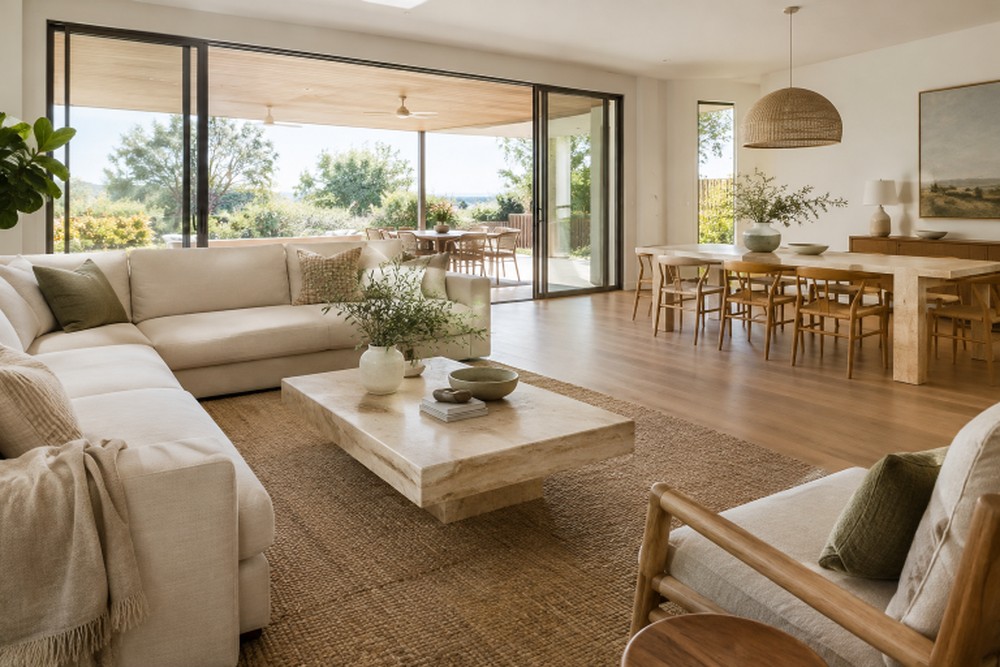
A round or oval travertine coffee table can soften the straight lines of a modular sofa and rectangular rug. Keep the surface visible with one ceramic bowl, a tray, or a low branch arrangement. In the dining room, balance a solid stone table with lighter timber, woven, or upholstered chairs so the setting does not feel heavy.
Entryway and Bathroom
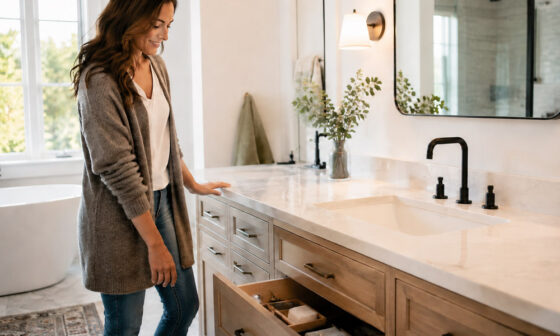
A slim console gives an entry a clear focal point without filling it with small decorations. Pair it with a mirror and a single lamp or vessel. In bathrooms, travertine vanities and basins can create a quiet, spa-like look when teamed with timber cabinetry, brushed metal tapware, and soft neutral tiles. Good ventilation and prompt wiping of water marks remain important.
Covered Outdoor Areas
Travertine may suit a sheltered verandah, covered terrace, or protected entertaining area, but suitability depends on the individual piece and finish. Confirm recommendations with the supplier before purchase. Prolonged rain, intense direct sun, frost, and temperature changes can affect natural stone and protective sealants over time.
Materials That Pair Well With Travertine
- Natural timber: Adds warmth through dining chairs, joinery, shelves, or flooring.
- Linen and cotton: Bring a relaxed contrast through curtains, cushions, and upholstery.
- Wool: Helps make a stone-centered living room feel softer underfoot.
- Ceramics: Echo the earthy, handmade character of the stone without competing with it.
- Brushed brass: Introduces a gentle glow in lighting, handles, mirrors, or tapware.
- Black metal: Provides definition through frames, shelving, or lighting.
Finish, Sealing, and Everyday Care
Honed travertine has a soft, low-sheen appearance, while polished stone reflects more light and can appear more formal. Filled travertine has its natural holes filled for a smoother surface. Open or textured finishes feel more rustic but may need extra attention when cleaning.
- Wipe spills promptly, particularly acidic drinks and strongly coloured foods.
- Use a soft cloth and a cleaner approved for natural stone.
- Avoid abrasive pads, harsh acids, and powdered scourers.
- Use coasters, placemats, and trays where they suit the piece.
- Follow the supplier’s advice about sealing and resealing.
Common Styling Mistakes To Avoid
- Choosing a table that interrupts everyday movement through the room.
- Using several competing stone patterns in a small space.
- Layering beige without adding contrast, texture, or darker accents.
- Selecting a finish only for appearance, not for the household’s cleaning habits.
- Placing stone furniture in fully exposed outdoor conditions without confirmation that it is suitable.
Advice for Australian Homes
Australian homes often place living, dining, and outdoor entertaining areas close together, so a restrained approach usually works best. Use one meaningful travertine piece, then repeat its warmth through timber, woven fibers, or ceramic details. In sunny rooms, view samples at different times of day because natural stone can look lighter or deeper as daylight changes. Before committing, confirm lead times, delivery access, installation requirements, and whether custom dimensions are available.
Frequently Asked Questions
Is travertine furniture suitable for everyday use?
It can be, provided the piece suits the room, is correctly supported and sealed where required, and is cleaned with products intended for natural stone.
Does travertine look dated?
No single material determines whether a room feels current. Simple shapes, thoughtful proportions, and a balanced mix of timber and textiles can give travertine a contemporary appearance.
What colours work with travertine?
Warm white, sand, terracotta, walnut, olive, muted blue, charcoal, and soft black can all work well, depending on whether the desired mood is light, earthy, or more defined.
How can a small room use travertine?
Choose one compact piece, such as a side table, a narrow console, or a small coffee table, rather than filling the room with multiple stone items.
Travertine furniture works best when it is chosen for real life, not just for appearance. Prioritize proportion, access, comfort, and care, then let one well-placed stone piece bring warmth and permanence to the home.