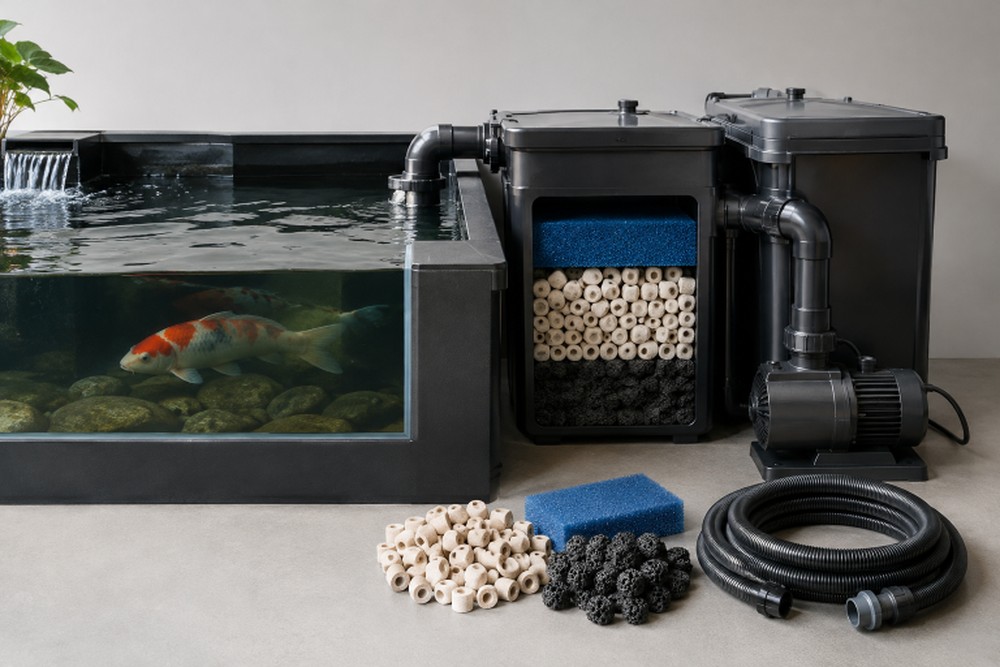
A healthy koi pond depends on more than water that looks clear. Fish produce waste continuously, weather changes affect oxygen and temperature, and fallen leaves or extra food can quickly add to the system’s workload. A well-planned koi pond filtration system helps manage that workload, but daily observation and steady maintenance matter just as much.
The goal is not to make constant large changes. Instead, create a stable environment with reliable circulation, sensible feeding, regular water tests, and gentle filter care. When those habits work together, potential problems are easier to spot before they become stressful for koi.
Why Water Quality Matters
Clear water can still contain ammonia, nitrite, or other conditions that put fish under strain. Koi need stable water chemistry, adequate oxygen, and temperatures appropriate for the season. Waste, decaying plants, algae, and overcrowding can all reduce water quality, particularly when water movement is limited. Because dissolved oxygen supports aquatic life, surface movement and aeration deserve close attention during warm weather and periods of heavy organic buildup.
How Pond Filtration Works
Filtration is a group of connected jobs rather than one device. Each stage helps the next stage work more effectively, and circulation carries debris toward the places where it can be removed.
Mechanical Filtration
Mechanical filtration captures solid material such as leaves, fish waste, uneaten food, and windblown debris. Removing solids early helps keep them from breaking down in the pond or clogging biological media. Check baskets, screens, and pads regularly because trapped debris can restrict flow.
Biological Filtration
Biological media provides beneficial bacteria with a protected environment to process nitrogen waste. In the nitrogen cycle, ammonia is converted into nitrite and then nitrate. Since the bacteria live on the media, harsh cleaning or replacing every biological section at once can disrupt the pond’s balance.
Water Clarification And Circulation
Circulation moves suspended material toward skimmers, drains, and filter intakes while preventing poorly circulated areas from collecting debris. Fine particles may still cause cloudy water, even when larger solids are being captured. Waterfall returns, air diffusers, and other moving-water features can also improve gas exchange at the surface.
How To Match Filtration To The Pond
Pond volume is only one part of the filtration decision. Fish size and number, feeding level, sunlight, plant growth, nearby trees, plumbing layout, and local weather all affect how much waste the system must handle.
- Estimate the pond’s actual water volume.
- Consider the current and eventual size of the koi.
- Track how much leaf litter and debris enter each week.
- Review pump flow after pipe length, bends, and elevation are considered.
- Allow capacity for seasonal changes and fish growth.
For example, two ponds with the same volume can have very different needs. A lightly stocked pond in a sheltered area may collect little debris, while a heavily stocked pond beneath deciduous trees may need more frequent mechanical cleaning and greater biological capacity.
A Simple Water-Testing Routine
Testing turns guesswork into useful information. Check ammonia and nitrite when a pond is new, after adding fish, after a major cleanout, or whenever fish behavior changes. Monitor pH and alkalinity for stability, nitrate for signs of accumulating waste, and temperature during heat waves or abrupt weather shifts. Recording results in a notebook or phone spreadsheet makes gradual changes easier to notice.
Safe Filter-Care Steps
- Turn off the pump before opening equipment or handling moving parts.
- Remove trapped solids from mechanical sections first.
- Rinse biological media gently in water taken from the pond.
- Avoid cleaning every filter section during the same session.
- Inspect seals, valves, pipes, screens, and pump intakes.
- Restart the system and confirm that flow is steady.
- Observe water clarity, equipment sounds, and fish behavior afterward.
Seasonal Pond Maintenance
Spring
Remove winter debris, inspect pumps and hoses, and test water as fish activity increases. Heavy rain can alter pond conditions, so inspect intakes and flow after storms.
Summer
Watch temperature, algae growth, and oxygen availability closely. Feed only what koi consume promptly, and increase observation during hot, still, or cloudy conditions.
Autumn
Use netting or frequent skimming to control falling leaves. Remove decaying plant material before it becomes additional organic waste, and prepare circulation and aeration equipment for colder weather.
Winter
Reduce feeding as fish activity declines with colder water. Where freezing conditions occur, maintain appropriate surface gas exchange and avoid sudden disturbances that can stress dormant fish.
Common Water Problems And Fixes
Green Water
Green water often reflects a combination of sunlight, available nutrients, and filtration limits. Check feeding, debris removal, circulation, and test results before adding treatments.
Cloudy Water And Surface Foam
Cloudiness can come from disturbed sediment, fine particles, a developing biological filter, overfeeding, or insufficient mechanical capture. Foam may indicate dissolved organic material from food, plant decay, or fish waste. In both cases, look for the underlying cause rather than treating only the appearance.
Slow Water Flow
Inspect skimmer baskets, intake screens, filter pads, valves, and visible plumbing. Reduced flow may also result from a blockage or air entering the pump line.
Mistakes To Avoid
- Cleaning all biological media at once.
- Adding fish faster than the pond can support them.
- Judging water health by clarity alone.
- Overfeeding during very warm or cold periods.
- Ignoring fish that repeatedly gather at the surface.
- Making several large changes at the same time.
A Practical Maintenance Checklist
Daily, observe fish and remove visible debris or leftover food. Weekly, inspect skimmers, baskets, pumps, returns, and flow while testing water when the pond is new or unstable. Monthly, review filter performance, examine fittings for leaks, and compare water-test records. For broader background, koi pond design and filtration principles can help explain how skimmers, drains, filters, and pumps work together.
Final Thoughts
Healthy koi ponds are built on balance. Filtration performs best when it is supported by practical stocking, careful feeding, steady circulation, regular testing, and conservative maintenance. A simple routine protects water quality and gives koi a safer, more stable place to thrive.