Before you look at a single spec sheet, sit down and map out your parts. Write down the materials, the tolerances your clients expect, the maximum dimensions, and whether any features require simultaneous multi-axis movement. Most small shops find a rigid 3-axis vertical machining center handles 85% to 90% of their work. Buying a full 5-axis machine because it sounds impressive – when your actual work is brackets and fixtures – ties up capital you don’t have and adds programming complexity you don’t need yet.
This part of the process sounds obvious, but that is how shops end up with machines that are either under-equipped or overkill for the jobs coming through the door.
Match the machine to your shop’s physical reality
A CNC machine may seem to be the right fit for your business, but there are several factors to keep in mind before you make that big of a purchase or investment, otherwise, you might end up damaging both the machine and your factory. The first thing you should keep in mind is the amount of space you have, a machine needs more than the space it takes up.
If you can’t fit a forklift or a pallet of material around the machine, you’ll soon be bumping into the machine every time you turn around, then there’s the fact that operators need space to put in raw materials and take out finished parts. So if your shop is in vintage arrangements your best bet is to remodel before buying that CNC machine.
The real cost of ownership isn’t on the sticker
The initial price for a machine in manufacturing isn’t all you need to spend. There are extra costs to consider. Also, when that machine then breaks down unexpectedly the hidden costs are compounded. For this reason, many small-to-mid-sized manufacturers find it makes more financial sense to buy industrial-grade machines used – typically from a plant that traded up for new. New machines from premium Japanese manufacturers carry price tags that are hard to justify at startup scale, but a used mazak makes it affordable to get the rigidity, spindle quality, and conversational controls that serious production work requires – without the depreciation hit that comes with buying new.
Prioritize the control system your team can actually use
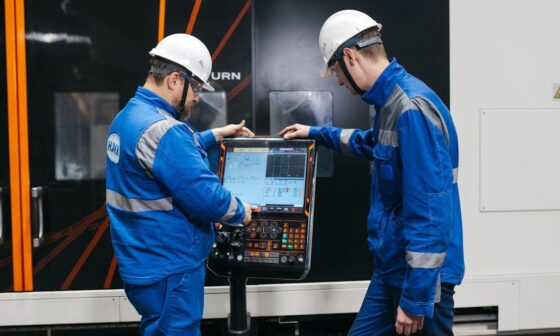
For small shops where machinists are a jack of all trades, having the flexibility to program the machine isn’t a nice-to-have aspect, it’s a daily reality due to time constraints. For instance, Mazatrol (used in Mazak machines) conversational programming enables a machinist to generate a program at the control right on the machine, bypassing the need for a fully-loaded CAM system or dedicated programming expert. A manual machinist making the jump to CNC can do so with less of a learning curve, and workholding devices that can take hours to program via traditional G-code can be up and running immediately.
None of this matters, of course, if the machine isn’t properly equipped for the material you run. Small, lightweight spindles can’t take the same loads as larger, beefier ones, and the motor driving the spindle, along with the transmission components, ultimately determine the torque curve and power band. Most CNCs are “fast” machines and are plenty capable of dry cutting aluminum or other nonferrous materials at breakneck speeds, for hours at a time. Doing the same with hardened steel isn’t practical and you’ll watch your tooling disintegrate in no time.
Think about where the machine lands in five years
The capacity of the tool changer is not as widely discussed but perhaps more important. A machine with an 8-tool changer restricts the complexity of the part you can produce in a single setup. As your work shifts to longer unmanned runs, that constraint will become a real bottleneck. A 20-plus position machine will provide you with the additional capacity needed to meet expected demand increases, without the expense of buying a second machine.
Resale value will typically follow the brand. A well-known brand with strong demand on the used market (more so for Japanese builds with service records) will be a better performing asset for you. The used machine you purchase today is typically the down payment on the new machine you will buy tomorrow. A smart purchase allows you to trade it in for what’s still owed, or sometimes even show a profit. A cheap purchase ensures that you will likely get the scrap value on trade in.
Making the call
It’s easy to understand why someone would be tempted by the low cost of a new, less-capable machine. It feels like a safer bet. In reality, it’s risky for a shop hoping to land production work with tight tolerances, because that machine sets a limit on your potential before you even get out of the gate. Instead, invest in the type of machine that production managers at major job shops and OEMs already trust. Then, pick it up after it’s taken the depreciation hit of its first few years. Get the exceptional rigidity and damping, the service and applications engineering support, the brand reputation, and the control system. The type of work you’re able to bid on right away will likely be of higher complexity and higher margin. The resulting numbers tend to follow suit.