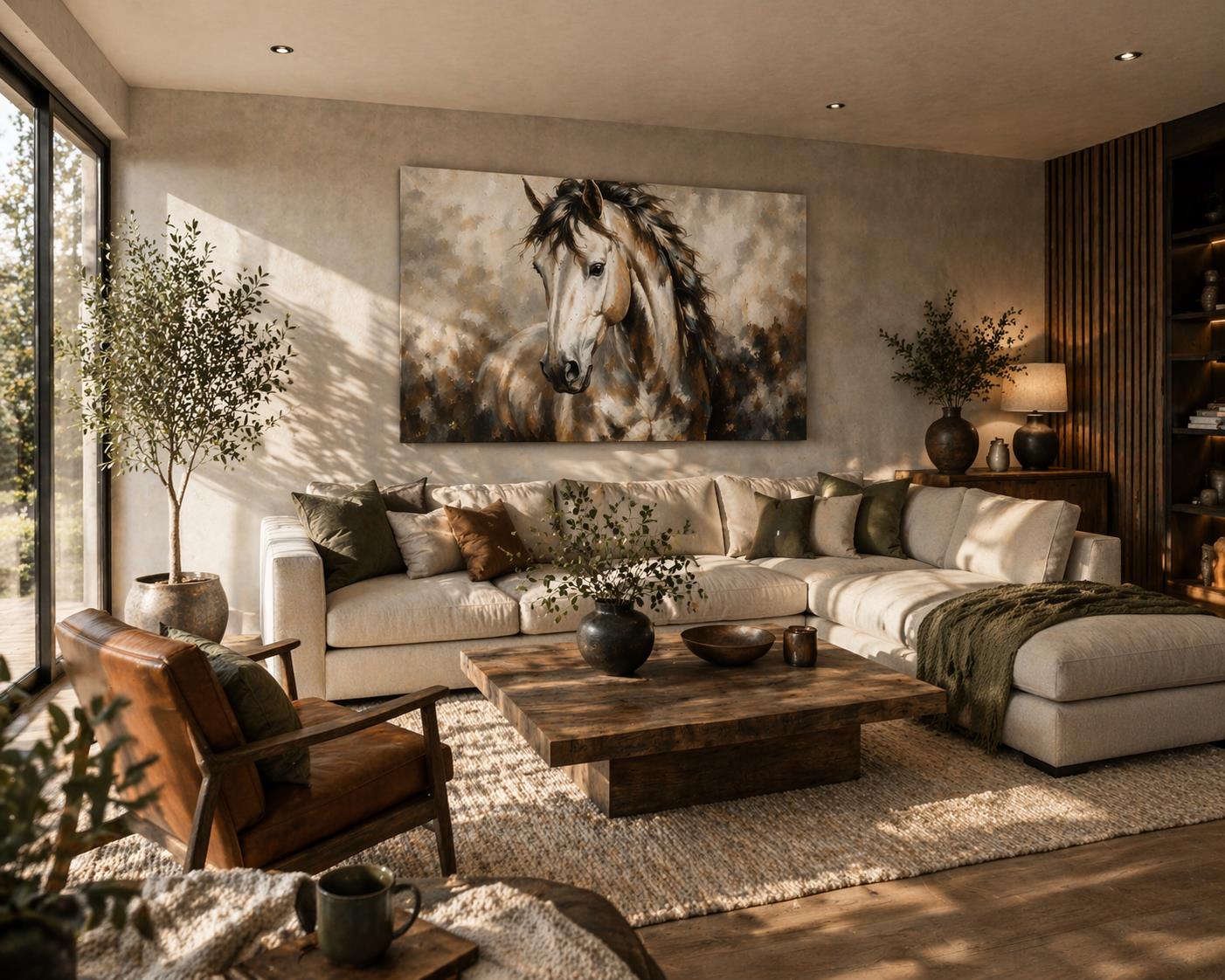
Animal-themed art is having a real moment in home interiors. Not just as a passing fad – as a genuine, lasting design choice that spans everything from spare Scandinavian apartments to warm, layered country-style homes. The question most homeowners are asking isn’t whether animal art belongs in a modern home. It’s which piece, where, and why.
There’s a practical reason this category is growing. According to Apartment Therapy in June 2025, “animalcore” was named design’s hottest maximalism decor trend of the year. But original animal paintings offer something that a printed cushion cover or a mass-produced wall print doesn’t: they hold their presence over time. You don’t stop noticing them after a month.
This guide is for homeowners who want to make an intentional choice – not an impulsive one. It covers why animal art works so broadly, how to match style to room type, how to get scale and placement right, and how to decide between originals and prints.
Why Animal Paintings Work in Any Room
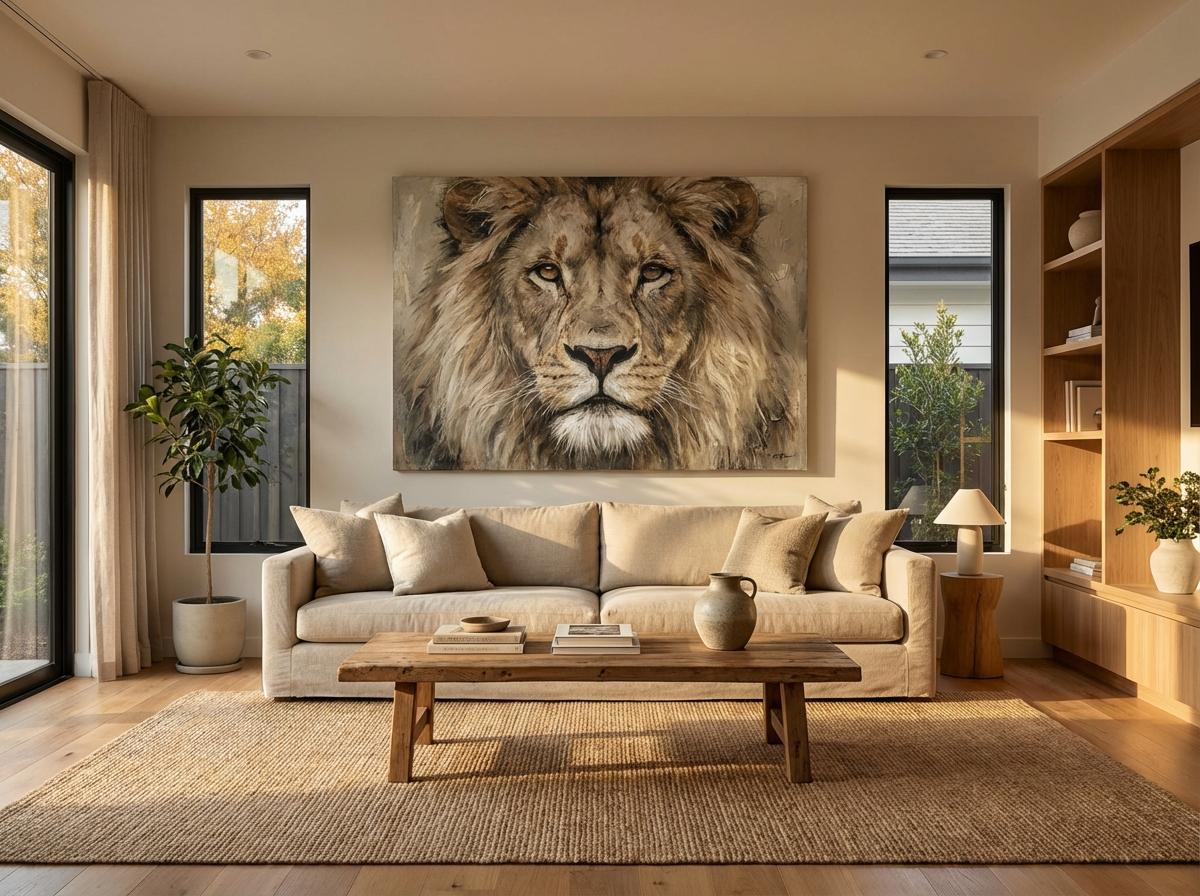
An original animal painting used as a focal point wall piece in a modern living room
Most wall art requires the viewer to do some interpretive work. Abstract pieces reward patience. Conceptual art asks for context. Animal subjects don’t – people respond to them immediately, without needing an art background or a gallery label.
This is where biophilic design becomes relevant. A 2025 peer-reviewed study published in PLOS ONE found that nature-based imagery in built environments actively supports psychological wellbeing and stress recovery. Animal paintings tap into that same instinct. You’re not just hanging something pretty – you’re introducing a reference to the natural world that the brain genuinely responds to.
The other reason these pieces work across room types is that the subject matter is emotionally neutral enough to anchor a space without dictating it. If you’re choosing a well-executed animal painting as a focal point, it can do the compositional work that a large mirror or a statement sofa would otherwise carry – but with more personality.
Matching the Art Style to Your Interior Design
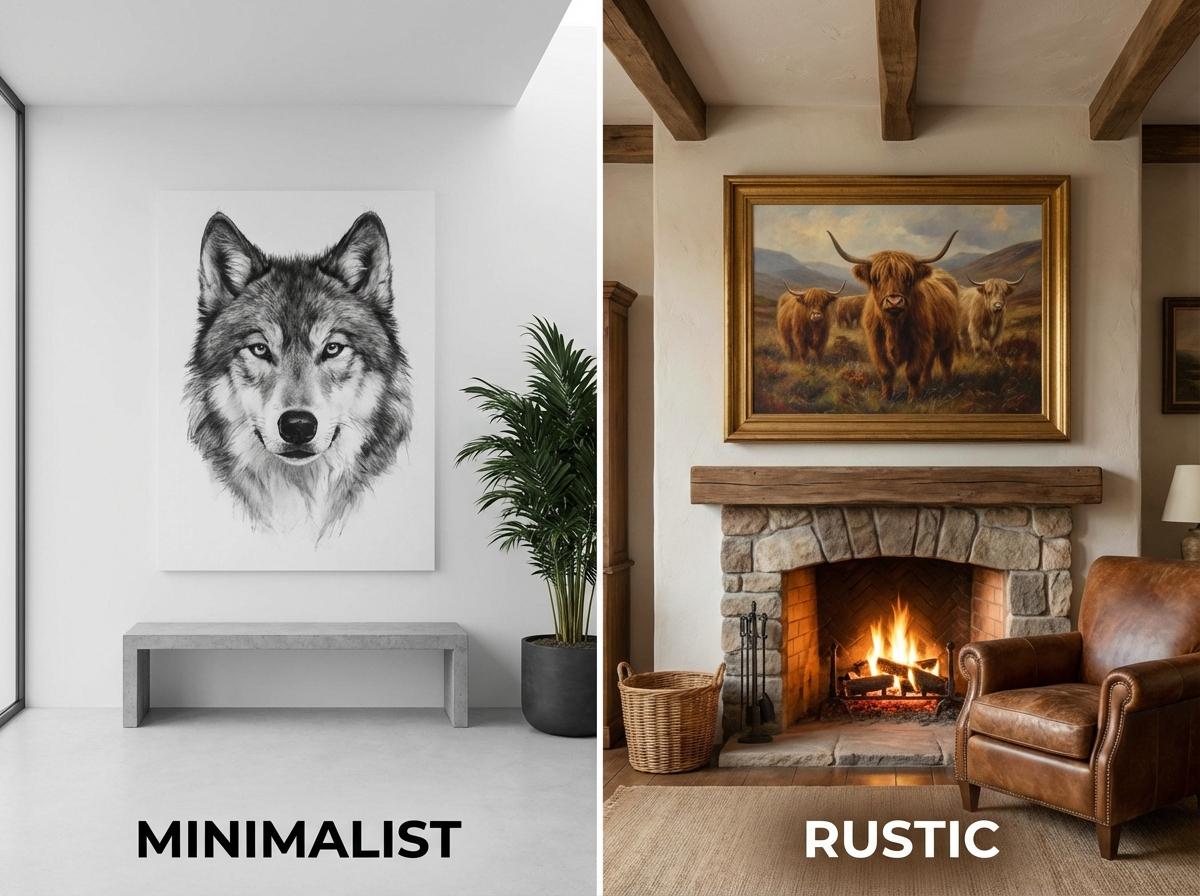
Split image showing a minimalist room with a wolf wall art and a rustic living room with a fireplace and framed cattle painting
The most common mistake buyers make is choosing a subject they love without considering whether the execution style fits the room. A beautifully painted elephant in deep charcoal and gold will feel out of place in a room full of floral patterns and reclaimed wood. Matching medium and mood to the existing space matters as much as the animal itself.
For modern or minimalist rooms, bold and expressive works well. Think single-subject portraits – a wolf, a bear, a raptor – in limited palettes. Charcoal, ink, or cold-pressed oil with a controlled color range reads as intentional rather than decorative. One striking piece against a white wall carries more weight than three smaller ones.
Rustic and traditional spaces respond better to warmth. Oil-on-canvas wildlife scenes with earthy pigments – highland cattle, foxes in autumn fields, deer at dusk – feel at home alongside natural wood, stone, and warm textiles. The medium and subject should echo the room’s existing materials.
Eclectic interiors have more flexibility, but that doesn’t mean anything goes. Gallery walls featuring smaller animal prints in varied media can work well, as long as you commit to a consistent color family running through the group. Mix species, mix scale, but keep the palette coherent.
The animalcore trend in 2025 has pushed designers toward bolder, more expressive animal motifs – moving well past the cute or purely decorative, into pieces with genuine visual weight.
Size, Placement, and Lighting
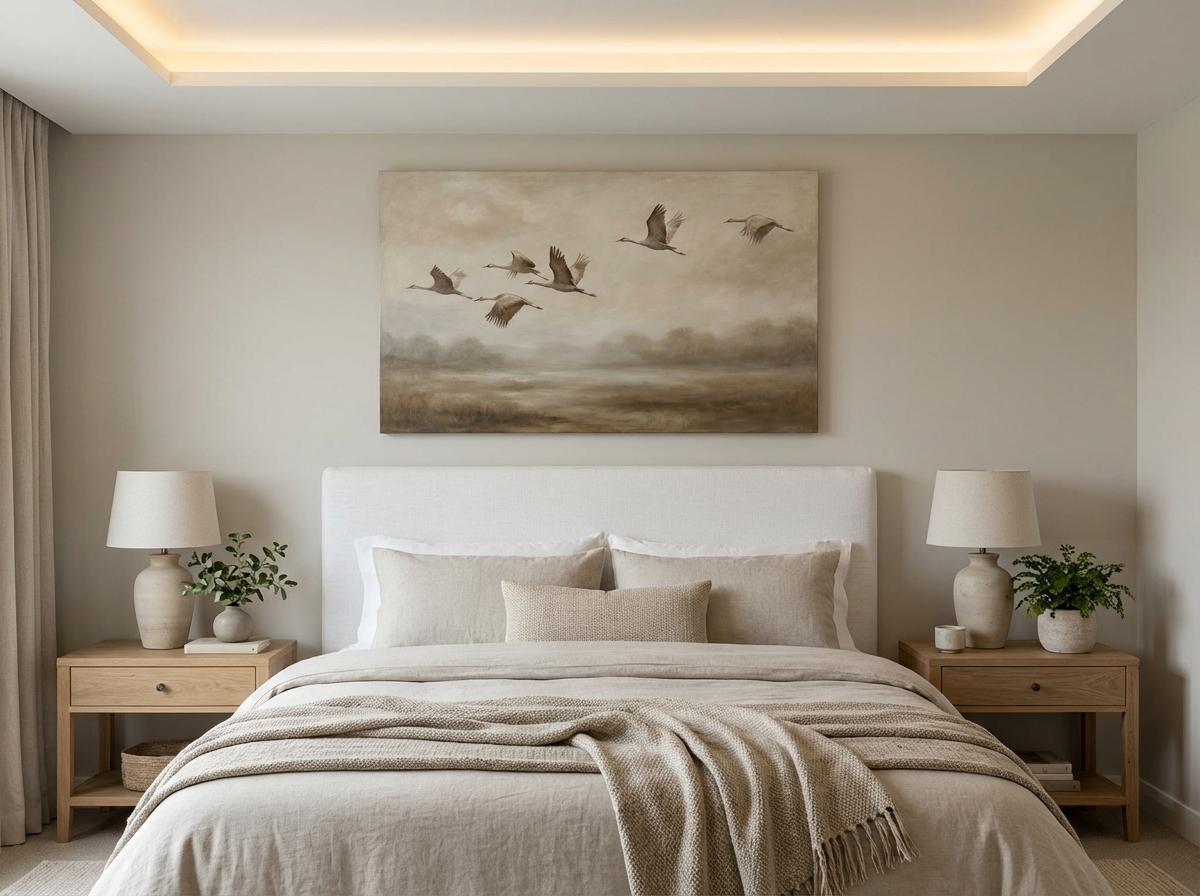
Neutral-toned bedroom with a large wall painting of birds above the bed, wooden nightstands, and soft lighting
Scale is the most underestimated factor in art placement. A painting that’s too small for the wall reads as an afterthought, even if the work itself is strong. A practical starting point: the artwork should take up roughly 60-75% of the wall width above a piece of furniture. That’s true whether it’s a sofa, a bed, or a console table.
Room by room, the guidance shifts depending on how the space is used. In the living room, hang above the sofa at seated eye level. Large-format single-subject paintings – an elephant, a horse, a big cat – hold more presence than crowd or landscape scenes. The subject commands the wall without competing with itself.
In the bedroom, calming subjects work better than energetic ones. Birds in flight, resting animals, quiet forest scenes with soft light – these set a tone that supports the room’s function. Avoid high-contrast, intensely detailed predator pieces above a bed. They read fine in daylight but can feel agitated at night.
Hallways and entryways are ideal for a bold first impression. Narrow vertical formats work well in these spaces, and a confident animal portrait tells something about the home before a guest has seen another room.
Lighting makes more difference than most buyers expect. Natural sidelight brings out texture in brushwork and canvas. In rooms with low natural light, a small directional picture light installed above the frame can change how the work reads entirely – texture becomes visible, colors read truer.
For homes where art selection connects to broader design ideas for luxury spaces, placement and lighting are where a considered choice becomes an obvious one.
Original Paintings vs. Prints: What Actually Matters
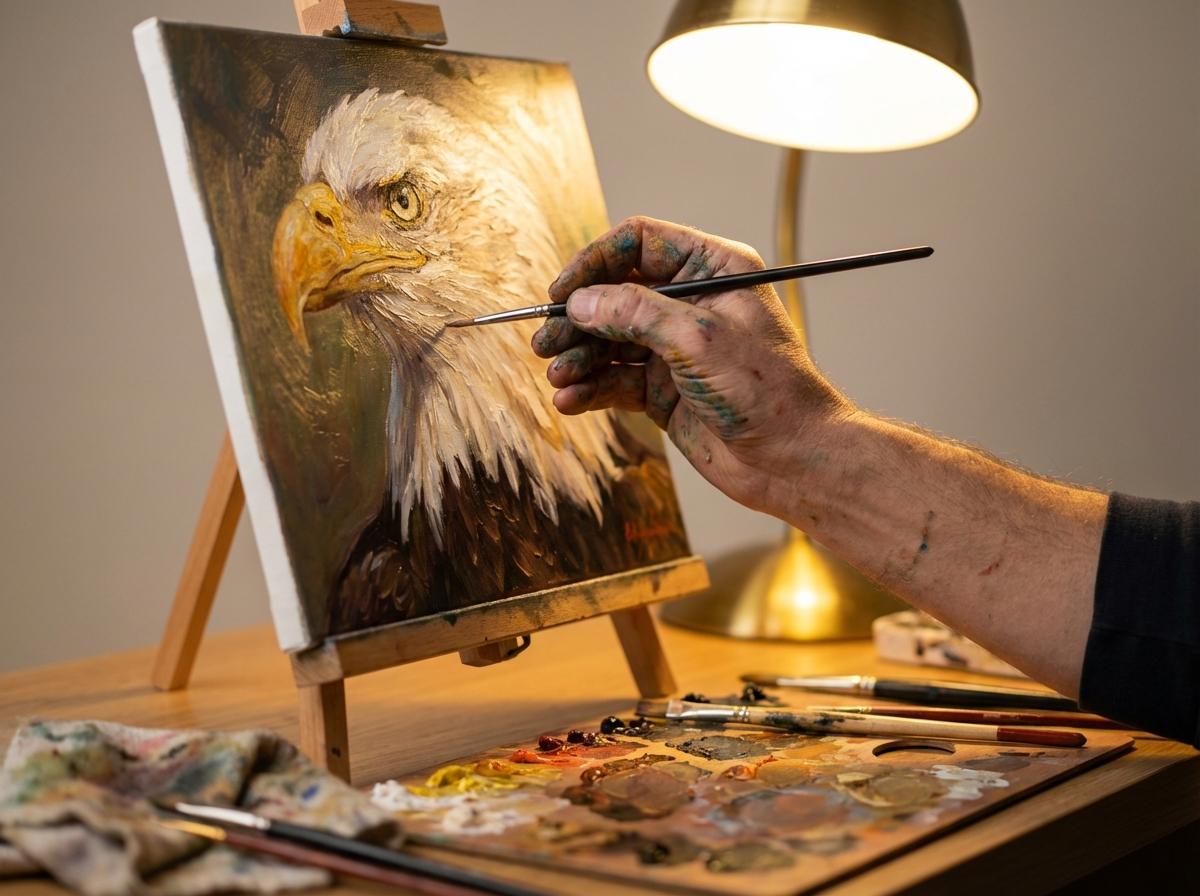
Artist painting a detailed eagle portrait on canvas at an easel, with brushes and palette on a desk nearby
Prints have a practical case: they’re cheaper, they’re consistent, and they’re easy to replace. But the gap between originals and prints has narrowed considerably, and the reasons to default to a print are weaker than they used to be.
The online art market reached $12.16 billion in 2025 according to SNS Insider market research, and it’s projected to double by 2035. More importantly, the Art Basel & UBS Global Art Market Report 2026 found that dealers with turnover under $250,000 saw a 17% sales increase – independent artists selling directly online at accessible price points. The idea that original paintings are out of reach for most homeowners isn’t accurate anymore.
Living with an original is materially different from living with a print. Brushwork, impasto texture, the slight variation in a hand-mixed pigment – none of that survives reproduction at standard print sizes. You notice the difference every time you walk past it.
That said, 73% of collectors cite high prices as a barrier to buying art, according to Artsy’s 2025 art market trends analysis. The answer isn’t to settle for a print – it’s to look at independent wildlife artists who sell directly rather than through galleries with large markups.
When you’re evaluating originals, check for a named artist with a verifiable portfolio or exhibition history, consistent technical quality across their body of work, and a clear return policy if you’re buying online. Reputable independent artists include this as standard.
Where to Find Original Animal Paintings
The shift to online has changed how most buyers find serious wildlife art. According to the Art Basel & UBS Global Art Market Report 2025, 46% of online dealer sales in 2024 went to first-time buyers – up from 35% in 2023. The gallery visit is no longer the default route in.
Direct artist shops, curated platform galleries, and dedicated wildlife art collections give buyers the ability to browse style, medium, subject, and price point in one place without walking into a space where they might feel pressured. You can compare how a red deer portrait in oils looks against a monochrome badger study before committing to either.
What to look for when buying online: high-resolution images that let you check brushwork quality, defined sizing and medium information, and transparent shipping and return terms. Any serious independent artist selling original work includes these as a matter of course.
If you’re putting together an interior that coheres – rather than a series of separate decorating decisions – it’s worth thinking about how the painting connects to the room’s other choices. Homes where art is part of a wider visual strategy, rather than an afterthought, tend to read better to buyers and guests alike. That’s a consideration developed further in writing on luxury real estate aesthetics.
Final thoughts
Animal paintings have moved past the question of whether they belong in a modern home. The data reflects what many designers already know – nature-based art connects with people in ways that abstract or purely decorative work often doesn’t, and the online market has made original pieces genuinely accessible to buyers who aren’t gallery regulars.
The practical questions are more specific: which style fits the room, what scale works for the wall, whether you’re buying original or print and why. Getting those right turns what could be an impulsive purchase into something you don’t second-guess five years later.
Choose the subject that genuinely interests you, match the execution style to the room it’s going into, take placement and lighting seriously, and lean toward original work where the price allows. That’s not complicated. It just takes a bit more thought than pointing at the first thing that catches your eye.