Industrial warehouses need floors that can handle constant pressure, heavy traffic, and daily wear. The surface must support forklifts, pallets, equipment, and staff without causing quick damage. A weak floor can raise repair costs and slow work across the facility.
Epoxy coatings give warehouse managers a durable surface with practical long-term value. Properly installed warehouse epoxy flooring can improve strength, safety, cleanliness, and visual order. This makes it a smart choice for facilities that need performance and low upkeep.
High Strength for Heavy Warehouse Use
Epoxy coatings create a hard surface that can handle industrial work conditions. The floor can resist pressure from forklifts, carts, racks, and loaded pallets. This strength helps reduce surface cracks, chips, and early wear.
A strong floor also protects the concrete beneath it. Once sealed, the surface can handle daily traffic with better resistance to abrasion. This helps warehouses reduce repair needs and preserve a cleaner work area.
Protection Against Impact
Warehouse floors face dropped tools, pallet movement, and equipment contact. Epoxy can absorb many normal impact stresses without fast surface failure. This makes it useful in storage areas, loading zones, and production spaces.
Support for Heavy Loads
Many warehouses use equipment that places a steady weight on the floor. Epoxy creates a dense surface that supports high-load operations with less strain on the concrete. This helps the facility maintain a safer and more reliable base.
Resistance to Chemicals and Spills
Industrial spaces may deal with oils, solvents, cleaners, fuel, and other harsh substances. Bare concrete can absorb spills and develop stains or surface damage. Epoxy creates a sealed layer that helps block liquid penetration.
This resistance makes cleanup easier after routine spills. Staff can remove many substances before they leave deep marks or odors. A cleaner surface also helps protect the professional look of the facility.
Safer Surfaces for Busy Work Areas
Safety matters in warehouses because people and machines share the same space. Epoxy coatings can include slip-resistant textures for areas with moisture or heavy foot traffic. This can help reduce fall risks in busy work zones.
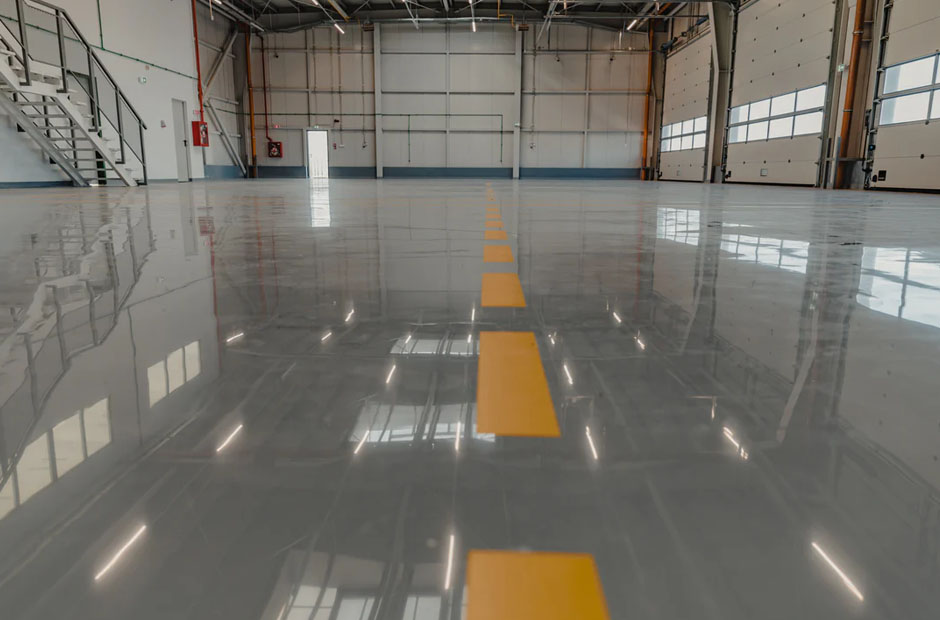
The surface can also support bright line markings and clear traffic paths. These visual cues help separate walkways, storage areas, and equipment routes. A well-marked epoxy floor can improve movement and reduce confusion.
Slip-Resistant Texture
A textured finish can add grip where smooth floors may feel unsafe. This helps in areas near doors, wash zones, or loading docks. The texture should match the facility’s work type and safety needs.
Clear Visual Zones
Epoxy coatings can use color and markings to guide warehouse activity. Aisles, hazard zones, and equipment areas can stand out with strong visual contrast. This creates better order across large industrial spaces.
Easy Maintenance and Clean Appearance
Warehouse floors collect dust, tire marks, spills, and debris during normal use. Epoxy creates a smooth, sealed surface that supports faster cleanup. Regular sweeping and scheduled washing can keep the floor in good condition.
A clean floor also supports a better impression for visitors, staff, and business partners. Warehouse epoxy flooring can make large industrial spaces look organized and well cared for. This matters for companies that value safety, efficiency, and brand image.
Epoxy floor coatings suit industrial warehouses because they combine strength, safety, chemical resistance, and easy care. They help protect concrete, support heavy work, and improve the look of large operational spaces. For warehouse owners who want a practical floor with long-term value, epoxy remains a reliable and cost-effective option.