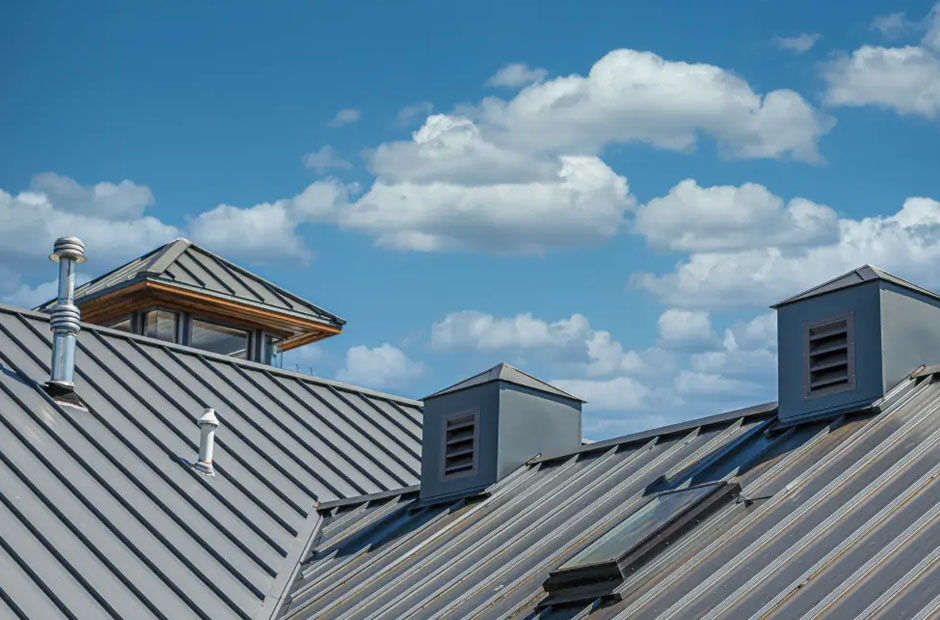
Metal roofing offers long-term, reliable structural performance with little maintenance due to its unique features, such as non-porosity and resistance to damage like cracking. Low maintenance means minimal re-laminating, re-shingling, or re-sealing, and this makes metal roofs ideal for diverse climates with heavy rain, snow, or high winds. Here are a few things that make metal roofing easy to maintain:
Durability and Longevity
Metal roofs offer structural integrity that enables them to perform reliably for many years without rapid degradation from threats like the sun’s UV rays. Roofing materials such as zinc, aluminum, and copper can effectively withstand thermal cycling. This resistance helps keep metal roofing panels intact over extended periods without buckling, sealant failure, or even fastener loosening. The consistency of these materials also enables easier inspections, and this helps identify minor issues before they cause major damage.
Long-term fastener and panel stability, together with seamless interlocking designs, enable the roofs to remain intact during high winds. The superior tensile strength of metal roofs mcauss the them to last long while withstanding environmental stress. Metal panels’ engineered design enhances their rigidity and also enables uniform load distribution. This enhances low maintenance by enabling the roofs to last longer without sagging and getting deformed quickly. Because of durability and longevity, homeowners avoid maintenance-intensive activities, such as repeated tear-offs and reinstallations.
Biological Growth Resistance
Metal roof panels have non-porous surfaces, so they don’t absorb and retain moisture that allows biological growths like molds and algae. The panels also come with sleek and smooth finishes, helping resist possible grip to lichen or moss spores. Their non-porous nature and smooth texture also lead to rapid drying after exposure to moisture. Metal roofing materials’ inorganic nature means a lack of organic matter to feed or support the growth of mold and mildew colonies.
A lack of biological growth helps to protect metal roof surfaces from possible degradation, so finishes and protective coatings stay intact longer. This protection minimizes surface maintenance tasks, such as frequent restorations, repainting, and resealing. Metal roof surfaces prevent lichen and moss from extending their root-like structures and causing damage. Early inhibition of root-like penetration prevents invasive growth, eliminating the need for unplanned repairs. Minimal buildup of biological growth on metal panels also helps homeowners avoid frequent roof cleaning interventions.
Homeowners avoid maintenance-intensive interventions such as scrubbing or even the use of chemical treatments like fungicides or algaecides. A lack of mold and mildew colonies on metal roofs leads to fewer damp zones that may result from water retention; this also minimizes frequent targeted cleaning. Mold and algae tend to stain roof surfaces by causing discoloration or dark streaks. With limited growth on metal roofs, surface staining is reduced, helping preserve appearance without frequent washing.
Corrosion-Resistant Finishes and Coatings
Corrosion-resistant coatings on metal roofs form a sealed barrier, helping prevent moisture and oxygen from reaching the metal substrate. This prevents oxidation reactions from starting, and so rust fails to form and spread across the roof’s surface. The lack of rust on your metal roof eliminates the need for frequent treatments like rust converters, protective primers, or topcoats, making maintenance easy. The consistent outer layer formed by corrosion-resistant finishes helps protect the roof against degrading unevenly. This eliminates intensive maintenance, limiting it to routine inspections rather than corrective work.
Dimensional Stability
Dimensional stability enhances metal roofing’s resistance to cracking, warping, and shrinking. The stability enables metal panels to maintain proper alignment or original shape long-term. This eases the roof’s maintenance by minimizing the need for frequent corrective fastening or realignment. A dimensionally stable metal roof surface also lowers the risk of stretching or distortion in protective coatings. The coatings stay intact over time, and this helps minimize the need for touch-ups or recoating.
Hire Metal Roofing Services
Metal roofing is often an ideal option for your home because it lasts long without requiring intensive maintenance. With proper installation, it can withstand sunlight, high winds, or moisture, and also resist splitting or cracking from seasonal temperature shifts. Contact a reputable roofing contractor and schedule repair or replacement services.