Understanding when to replace your brake pads is a fundamental responsibility for every driver. Your vehicle’s ability to stop safely depends on the health of its friction components, which naturally deteriorate over time. If you have been searching for brake repair Houston experts to diagnose a new noise, you likely already suspect that your pads are reaching their limit. Catching these signs early is the best way to maintain your braking system and ensure you can stop abruptly to avoid a collision on the road. Safe braking also depends on overall road conditions, and well-coordinated systems like Chester Traffic Management contribute to smoother traffic flow, helping drivers maintain better control and reduce sudden braking risks.
Average Brake Pad Lifespan
The question of “when” often comes down to the odometer, but there is no universal expiration date for friction material. On average, most vehicles require a fresh set of pads every 30,000 to 70,000 miles. When you visit a shop for auto repair Houston, a technician will measure the remaining material to give you an exact timeline. Monitoring this interval is a vital part of preventative maintenance, ensuring you aren’t caught off guard by a sudden loss of stopping power or expensive mechanical failures.
Why the 30,000 to 70,000 Mile Window is So Wide
The massive gap in mileage expectations exists because brake pads are highly sensitive to external variables. It is important to learn more about how different materials, ranging from organic to semi-metallic, wear down at vastly different rates depending on their heat tolerance. For drivers navigating the humid, stop-and-go traffic of the Gulf Coast, regular inspections help narrow down your specific replacement window before the pads reach a critical, metal-on-metal thinness.
Driving Style vs. Brake Longevity
Your daily commute is the primary factor in determining how quickly you’ll burn through your friction material.
- City Drivers: Constant stop-and-go traffic leads to “brake scrubbing,” requiring replacement closer to the 30,000-mile mark.
- Highway Commuters: Steady speeds and engine braking allow pads to stay cool, often stretching their life to 70,000 miles.
- Towing/Hauling: Carrying heavy loads adds kinetic energy that the brakes must dissipate, causing rapid wear.
Warning Signs of Worn Brake Pads
While mileage is a great guideline, your car provides physical and auditory feedback when the system is compromised. Paying close attention to these “sensory triggers” can be the difference between a simple pad swap and a full braking system overhaul.
1. Identifying the High-Pitched Squeal
Most pads feature a metal “wear indicator” that emits a high-pitched screech when the friction material gets dangerously thin. This sound is an intentional final warning. If you hear this piercing noise while driving, you should seek professional assistance immediately to prevent the metal from scoring your rotors.
2. Vibrating Steering Wheel or Pedal
A vibrating steering wheel or a pulsating brake pedal usually indicates “warped” rotors or uneven pad deposits caused by excessive heat.
- The Risk: Reduced contact between the pad and rotor increases your total stopping distance.
- The Fix: This typically requires resurfacing the rotors or replacing them entirely alongside new pads.
3. Spongy or Soft Brake Pedal
If your pedal feels “mushy” or sinks to the floor, you are likely dealing with a hydraulic issue or air in the brake lines. This is a critical safety hazard. Old brake fluid absorbs moisture, which can boil under pressure and lead to total brake failure.
Visual Inspection
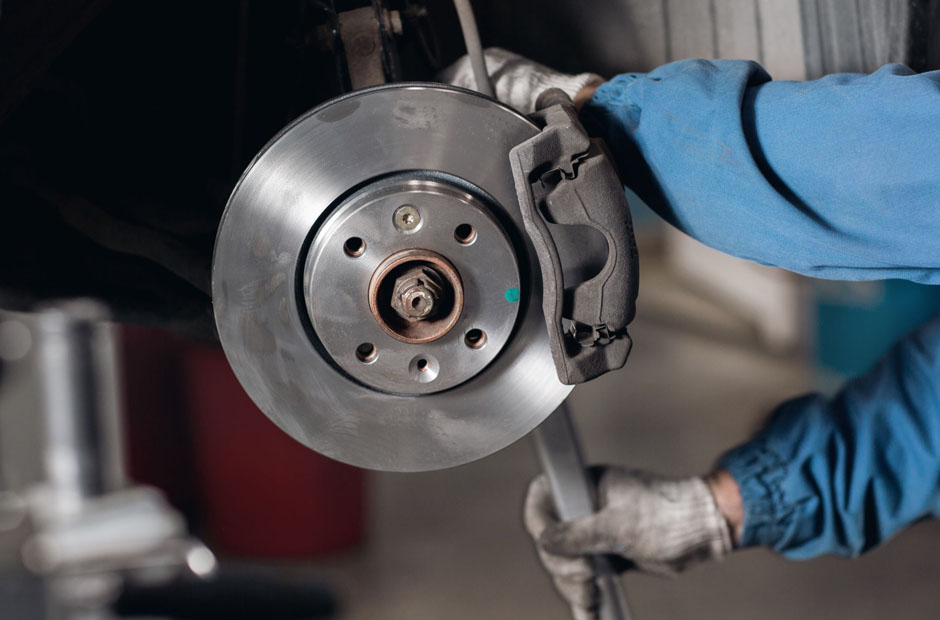
You don’t always need a mechanic’s lift to spot a problem. A quick visual check through your wheel spokes can reveal the reality of your brake health.
- The Measurement: Look for at least 1/4 inch (6mm) of thickness for optimal health.
- The Danger Zone: If the pad appears to be 3mm (1/8 inch) or thinner, replacement is non-negotiable.
- Brake Dust Clues: While messy, brake dust is a sign of healthy friction. A sudden “clean” wheel could indicate a seized caliper that isn’t applying the pad to the rotor at all.
Proactive Maintenance
Being proactive isn’t just about safety; it’s about protecting your wallet. The math is simple: brake pads are inexpensive, while rotors and calipers are not. Replacing the sacrificial pads before they are fully exhausted protects the more permanent components.
When you allow pads to wear down to the backing plate, they grind deep grooves into the rotors, making them unserviceable. A standard pad replacement is a fraction of the cost of a full “brake job” involving new rotors and labor-intensive system bleeding.
Takeaways
- Replace pads immediately when they reach 3mm of thickness.
- Never ignore high-pitched squealing or rhythmic vibrations.
- A brake fluid flush every two years prevents internal corrosion.
- If the “BRAKE” light or wear sensor illuminates, schedule a diagnostic check within 24 hours.