Most carriers view route planning solely as a dispatch function. Close the gap between loads and trucks, get the driver to the destination, and move on to the next order. But whether your trucking operation is realizing a profit or just scraping by can depend on taking route planning seriously as a financial function rather than just a dispatch activity. Fuel and driver wages are the two most substantial marginal costs for motor carriers. Fuel alone represents roughly 28% of total average marginal costs per mile (American Transportation Research Institute). When you’re struggling with slim profits, every mile of route inefficiency adds up.
The Deadhead Problem Nobody Talks About Enough
Those are the miles you drive with no load in the box. Sometimes they’re inevitable – the load delivers in downtown Chicago, then you’ve got to drive to wherever the next pickup is, and by that time it’s almost impossible to synchronize a reload from Chi-Town because shippers want you there yesterday. And sometimes they’re just the result of poor planning or a reluctance to work with freight brokers.
The fastest fix for a small-to-midsize carrier isn’t adding trucks. It’s backhauling. Planning a return trip with a load, even a partial one, flips a cost center into a revenue leg. Freight brokers are useful here – they exist specifically to fill gaps in routes and match available capacity to available freight. A carrier that treats every return trip as a revenue opportunity will consistently outperform one that treats the backhaul as an afterthought.
Average revenue per mile is the number that tells the real story. If you’re not tracking it against your deadhead percentage, you don’t actually know what your routes are costing you.
Dynamic Variables Eat Static Routes Alive
A plan that may seem logical in theory can become unfeasible in practice. Congestion, bad weather, road work, detours – any of these factors can add two hours to what was supposed to be a four-hour trip. And because ELDs clamp down on hours of service, that extra time you spend waiting somewhere doesn’t just vanish. It subtracts from your drive time on the next segment. So now you arrive two hours late to the shipper, which means you have two less hours to drive tomorrow, and maybe you now miss that appointment.
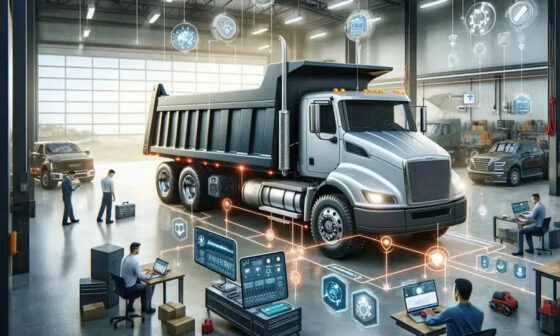
Real-time telematics can help you avoid this. When your dispatcher can monitor a truck’s location, its speed, and the road conditions, they can make the decision to send you on an alternate route in time to prevent the delay, rather than after you’re already stuck. Geofencing is no less important. Knowing automatically every time a truck arrives at or leaves a terminal can eliminate all those two-minute check calls to provide your location as well as help with load planning. It’s part of the basic infrastructure a freight provider needs if they don’t want to hemorrhage money on fuel surcharges and driver overtime. The compliance side of that infrastructure matters just as much as the routing itself. Before a truck ever rolls, a carrier has to be properly registered and authorized to operate, and that groundwork is now handled online through the MOTUS platform, where carriers file and manage their federal operating authority. Getting that foundation right keeps a fleet legal to run, so the efficiency gains from smart routing actually translate into revenue instead of stalling over paperwork problems.
The Density-First Approach To Building Routes
Here’s a routing philosophy that small carriers virtually never apply deliberately: density first. Rather than optimizing for individual loads, optimize for geographic concentration. Build routes that serve more customers within a tighter radius. The cost-to-serve drops on every load when you’re not driving across three counties to fulfill orders that could be batched more efficiently.
This is where carriers that partner with experienced trucking logistics providers gain a structural edge. Access to load-matching technology and established freight networks means you can build dense routes without spending years developing the shipper relationships to fill them. For LTL operations especially – where multiple stops and consolidation needs add significant routing complexity – that network access isn’t just convenient, it changes the unit economics entirely.
What Better Routes Do To Your Fleet and Your Drivers
Route efficiency contributes to maintenance savings in ways that many companies never consider. For one, the fewer unnecessary miles a truck runs, the less it costs to maintain that truck. It may sound like a stretch to say that not driving a truck can save you on tire wear, but it’s true. The obvious example is that it’s not possible to blow a steer tire on a truck that’s not out on the road. Perhaps less obvious, the wear and tear on a tire when it’s rotating freely (rolling down the road) is cumulative. Obviously, if you drive twice as far you use a tire up twice as fast. Less obviously, if you add a lot of extra miles to the tire’s life, you also add a lot of hours of running with a damaged or weakened tire. That’s a common thread for a lot of on-the-road repairs. A weakened tire that blows out can easily damage brake chambers, the trailer’s underside, cause a host of suspension problems and more.
Driver retention is connected to this more directly than most operators realize. Routing that respects hours of service limits, builds predictable schedules, and minimizes unproductive time keeps drivers earning well within their legal limits. Fatigue and unpredictability are two of the main reasons experienced drivers leave carriers. If your routes are consistently chaotic, your turnover costs will quietly offset whatever gains you think you’re making elsewhere.
Routing Is Where The Margin Lives
Reducing expenses in a trucking business typically involves focusing on fuel cards, insurance rates, or maintenance contracts. While important, the lever most carriers overlook is the routing itself – viewing every mile as a financial decision rather than just a directional one. A well-managed trucking company understands that strategic route planning can significantly reduce fuel consumption, minimize vehicle wear and tear, improve delivery times, and ultimately increase overall profitability.
Carriers that create dense networks, remove deadhead with disciplined backhauling, and leverage real-time data to shield driver hours aren’t simply efficient operators. They are stacking small wins on every load, every week. That’s not operational hygiene. That’s how you create a growing business.