Modern Packaging Beyond Preservation
Packaging today has outgrown its traditional role of protection and containment. In the butter industry, packaging is now a performance art that merges precision engineering with visual storytelling. The evolution of butter packaging machines has opened the doors to sleek presentation and elevated efficiency. These machines have become the bridge between craftsmanship and industrial output, ensuring butter retains its creamy identity while becoming a shelf-ready product that communicates brand quality. From specialty dairies to global producers, automation has turned packaging into an essential aspect of market differentiation.
The Rise of Intelligent Packaging Systems
Technology has changed butter packaging, portioning, and sealing. Modern butter packaging systems use clever controls that easily respond to product parameters. Advanced weight calibration maintains consistency, and real-time monitoring tools track production. Modern machines have cameras, precision sensors, and computerized feedback loops that detect even slight anomalies. This response reduces waste and improves hygiene by avoiding human contact.
The heart of these systems lies in their ability to maintain butter’s delicate texture. Through temperature stabilization and controlled flow mechanisms, the machines protect the butter from melting or deforming. As a result, even during high-volume runs, each package retains uniform quality and visual appeal. What once required a team of skilled operators is now orchestrated by compact, automated systems that deliver accuracy at industrial speeds.
Transforming Brand Identity Through Design Flexibility
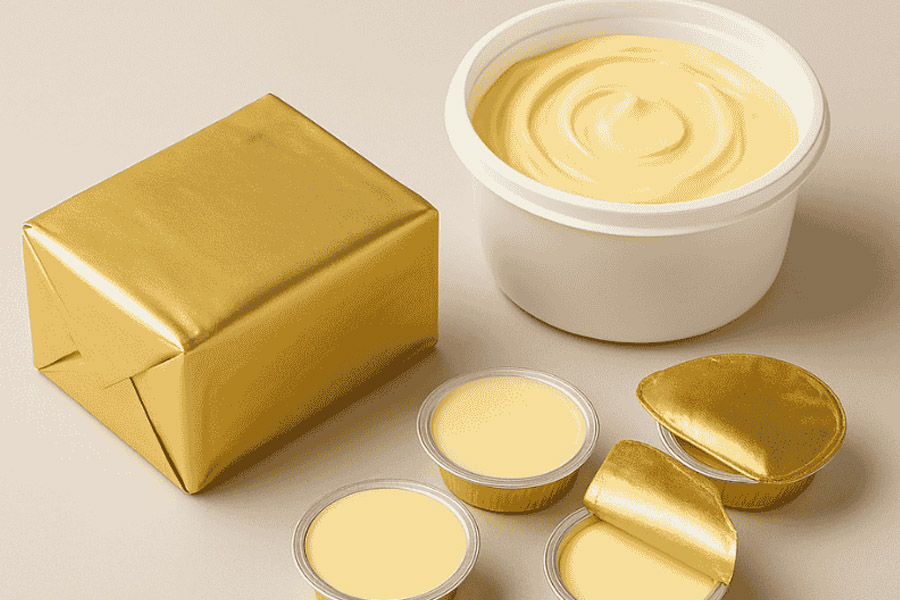
Packaging has become a silent ambassador for a brand. Modern butter packaging machines empower companies to embed that language directly into every wrapper, tub, or foil. Digital print modules and customizable die-cutting systems offer boundless flexibility in design. A producer can switch effortlessly from artisanal paper wrapping to sleek biodegradable film within minutes. Such versatility encourages experimentation with both style and sustainability.
Uniformity indicates reliability in competitive retail. Consumer trust is built on smooth folds, crisp edges, and airtight seals. Wrinkles and air are regularly removed by smart equipment. This kind perfection highlights colors, logos, and designs. A brick of butter symbolizes constancy and attention.
Efficiency Gains That Redefine Production
The true strength of modern packaging machinery is its ability to balance speed with accuracy. Automated feeding systems synchronize movement from the filling station to the sealing unit. High-performance servomotors and touch-screen interfaces make operations nearly intuitive. A technician can shift production volumes or package sizes without halting the entire line.
This agility translates directly into profit margins. Reduced manual labor, minimal rework, and controlled portioning cut operating costs. Automated portion cutters ensure even weight distribution with negligible product loss, saving both ingredients and time. The smooth dance of conveyors, sealers, and cooling units embodies a harmony that once seemed impossible in mass production. Each cycle becomes a precise rhythmic motion where technology and foodcraft coexist.
Technological Innovations Driving Sustainability
Environmental responsibility has moved from trend to necessity. Butter packaging machines are now built with sustainability in mind from design to function. Energy-efficient components, recyclable materials, and lower power consumption characterize the new generation of equipment. Many systems are compatible with eco-friendly films made from renewable or compostable resources.
Smart data integration enhances this ecological approach. Machine performance data can help reduce material waste. AI optimizes every gram of packaging by assessing temperature and sealing consistency. These innovations become tools for measurable impact as butter brands commit to green.
The integration of the Internet of Things allows real-time oversight. Production managers can monitor efficiency remotely, predict maintenance needs, and prevent downtime. Predictive maintenance minimizes energy use and reduces machine wear, reinforcing a cycle of longevity and conservation. Sustainability is no longer confined to what covers the butter; it has moved into the mechanical heart that creates that cover.
The Strategic Choice of Manufacturer Partnerships
Choosing a packaging machinery manufacturer is difficult. This partnership shapes a company’s growth and competition. Companies must look beyond output and cost. Ideal manufacturers collaborate, provide customisation, technical training, and support.
Producers benefit from partners capable of integrating new technologies like robotics and machine learning into existing systems. When the butter packaging line aligns with a company’s growth model, adaptation to market changes becomes effortless. The choice of manufacturer also reflects a brand’s long-term vision toward quality assurance, safety compliance, and sustainability leadership.
Manufacturers who view packaging as a living system innovate. Modular machines can adapt to new packaging materials and meet production needs. This foresight helps butter producers avoid frequent machinery upgrades.
The Future of Automated Butter Packaging
The road ahead is paved with adaptive intelligence and collaboration. Artificial intelligence will enhance real-time decision-making, predicting when machines need calibration or when quality drifts below standards. Predictive data analytics will transform maintenance from a reactive duty into a proactive strategy.
Future machines will prioritize configurable workflows and user-friendly interfaces. Many butter kinds can be made in one facility without much changeover time. The next wave of innovation will include sensory packaging—materials and finishes that appeal visually, tactilely, and thermally.
Sustainability will guide all design decisions. Responsible production will be redefined by modular energy loops, recyclable mechanical parts, and solar-compatible technologies. Butter packaging will represent a quiet revolution where automation complements the human touch rather than replacing it as technology advances.
FAQ
What features make modern butter packaging machines different from older versions?
AI, precision sensors, and automatic calibration tools improve hygiene and consistency in modern systems. They give digital flexibility traditional machines lacked by adapting to different packaging sizes and materials with minimal user involvement.
How do these machines maintain product hygiene?
Butter packaging equipment minimize operator-product touch. Enclosed chambers, automated feeding, and temperature zones prevent contamination, ensuring cleanliness.
Can eco-friendly materials be used with current packaging machines?
Yes. Many new models are engineered to handle biodegradable or recyclable materials. Temperature and sealing mechanisms can be adjusted to work with plant-based films or compostable wraps without compromising packaging integrity.
What is the role of AI in next-generation packaging solutions?
AI assists in predictive maintenance, quality monitoring, and performance optimization. It evaluates data in real time to detect irregularities and make corrections automatically, ensuring consistent output and reduced downtime.
Why is manufacturer selection critical for butter producers?
A reliable manufacturer ensures not only durable machinery but also ongoing technical support, customization options, and future scalability. The partnership influences how efficiently a business can expand, innovate, and maintain product quality in a competitive market.