
Immediate Crisis Support and Emergency Mental Health Services
In October 2026, many of us recognize the growing importance of mental well-being. Yet, navigating mental health services can often feel complex and daunting. From understanding immediate crisis support to finding a therapist who truly fits our needs, the journey can seem overwhelming.
We understand these challenges. That’s why we’ve created this extensive guide. Our goal is to simplify the process of finding effective mental health support.
Here, we will walk through various pathways to care. We’ll cover what to do in a mental health crisis, and how to locate a mental health provider or even explore mental-health treatment centers that align with our specific situation and insurance. We will also delve into key questions to ask potential therapists, explain how telehealth therapy works—especially for those with Medi-Cal or Partnership HealthPlan—and show you how to check eligibility for free or low-cost options. Additionally, we will discuss different types of therapy, steps to start treatment, and reliable sources for information on mental disorders.
This guide is designed to empower us with the knowledge and tools needed to confidently access the mental health care we deserve.
When facing a mental health crisis or experiencing suicidal thoughts, immediate action is paramount. It’s crucial to know that help is available 24/7, and reaching out is a sign of strength. Our priority in such situations is to ensure safety and connect with compassionate support.
For life-threatening emergencies, the most direct course of action is to call 911. This will connect you with emergency services that can provide immediate intervention and ensure your physical safety.
For situations involving suicidal crisis or emotional distress that are not immediately life-threatening, the 988 Suicide & Crisis Lifeline is a vital resource. Launched nationally in 2022, this service provides confidential support around the clock. You can connect with trained crisis counselors by calling or texting 988, or by using their online chat service. This lifeline is designed to offer a safe space for individuals to talk through their struggles and receive guidance on next steps.
Veterans and those who support them have a dedicated resource in the Veterans Crisis Line. This service is available 24/7, even if you are not registered with the VA. Veterans can connect by dialing 988 and then pressing 1, or by texting 838255. This specialized line understands the unique challenges faced by military personnel and their families, offering tailored support.
In addition to these direct lines, if you become aware of someone expressing suicidal thoughts or engaging in self-harm behaviors on social media, most platforms have mechanisms to report such content. Reporting these instances can prompt the platform to reach out to the individual and offer resources, potentially saving a life.

Specialized Crisis Lines and Multilingual Support
Beyond the general crisis lines, specific situations may warrant specialized support. The Disaster Distress Helpline is a crucial resource for individuals experiencing emotional distress related to natural or human-caused disasters. This helpline offers interpretation services in more than 100 languages, ensuring that language barriers do not prevent anyone from accessing support during times of trauma. Whether you’re dealing with the aftermath of a wildfire, flood, or other community-wide event, this service provides confidential counseling and support to help you cope with the emotional impact.
These specialized lines highlight our commitment to providing accessible mental health care, recognizing that distress can manifest in many forms and require diverse support systems. Access to multilingual support is a cornerstone of equitable care, ensuring that everyone, regardless of their primary language, can find a compassionate ear and professional guidance when they need it most.
Understanding Different Types of Therapy and Levels of Care
Once immediate crisis needs are addressed, or if we are proactively seeking support for ongoing mental health concerns, understanding the landscape of therapy and care levels becomes essential. Mental health services are not one-size-fits-all; they encompass a wide spectrum of approaches and intensities designed to meet diverse needs.
Therapy, often referred to as psychotherapy or counseling, involves working with a trained mental health professional to address emotional, behavioral, and psychological challenges. There are numerous clinical modalities, each with its own theoretical framework and techniques. Some of the most common include:
- Cognitive Behavioral Therapy (CBT): Focuses on identifying and changing negative thought patterns and behaviors that contribute to mental health issues.
- Dialectical Behavior Therapy (DBT): A type of CBT adapted for individuals who experience emotions very intensely, often used for conditions like Borderline Personality Disorder. It emphasizes mindfulness, distress tolerance, emotion regulation, and interpersonal effectiveness.
- Psychodynamic Therapy: Explores how past experiences and unconscious patterns influence current behavior and relationships.
- Humanistic Therapy: Emphasizes self-actualization, personal growth, and self-exploration, fostering a supportive environment for clients to discover their inner resources.
- Family Therapy: Involves multiple family members in therapy sessions to address dynamics and communication patterns that impact mental health.
- Couples Therapy: Focuses on improving communication and resolving conflicts within romantic relationships.
Therapy can be delivered in various formats, including individual counseling, group therapy, and family or couples sessions. The choice of modality often depends on the specific concerns, personal preferences, and the therapist’s expertise. For some, incorporating spiritual or religious beliefs into their healing journey is important. In such cases, seeking out faith-based therapists can provide a unique and deeply resonant path to mental and emotional well-being, integrating spiritual principles with therapeutic techniques.
Inpatient Programs and Mental Health Services Directories
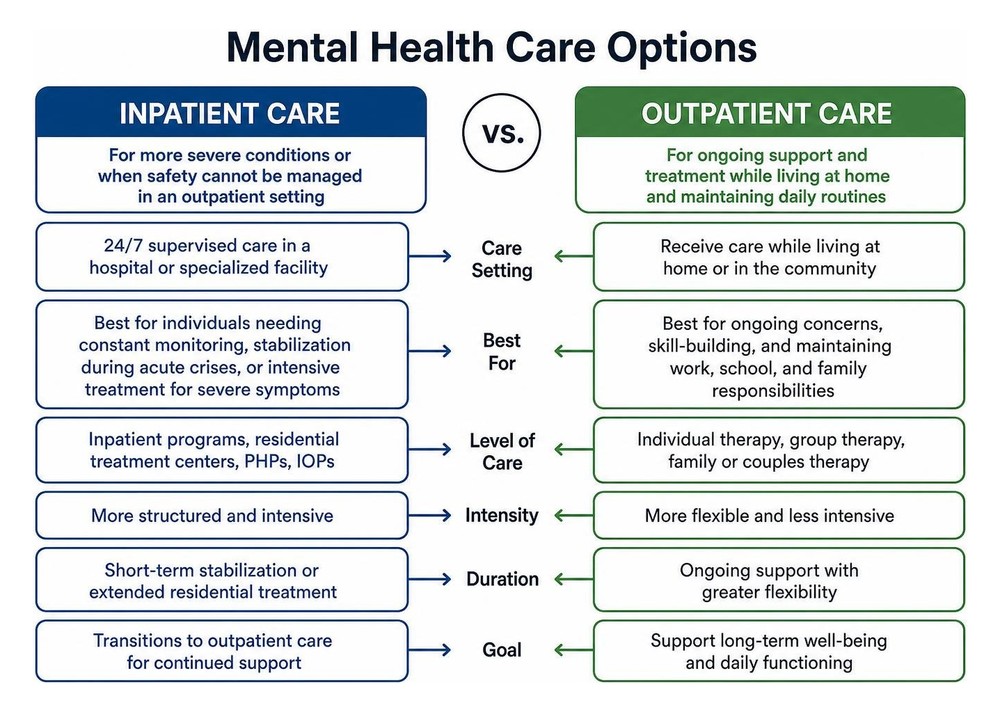
For more severe mental health conditions or when there is a risk to safety that cannot be managed in an outpatient setting, more intensive levels of care may be necessary. These can include:
- Inpatient Programs: Provide 24/7 supervised care in a hospital or specialized facility. This level of care is for individuals requiring constant monitoring, stabilization during acute crises, or intensive treatment for severe symptoms.
- Residential Treatment Centers: Offer a structured, live-in environment for an extended period, focusing on therapy, skill-building, and reintegration into daily life. These are often less restrictive than inpatient hospitals but more intensive than outpatient care.
- Partial Hospitalization Programs (PHPs): Provide intensive treatment during the day, with patients returning home in the evenings. They offer a step-down from inpatient care or a step-up from outpatient therapy.
- Intensive Outpatient Programs (IOPs): Similar to PHPs but with fewer hours per week, allowing individuals to maintain more daily responsibilities while receiving structured therapy.
Finding the right level of care and the right provider often begins with utilizing reliable directories. Our primary care provider can be an excellent first point of contact for referrals. Additionally, federal resources like the Substance Abuse and Mental Health Services Administration (SAMHSA) and the Centers for Medicare & Medicaid Services (CMS) offer tools to locate providers. National organizations, state and county agencies, and insurance company websites also typically provide searchable directories of mental health professionals. University counseling centers often serve students, and Employee Assistance Programs (EAPs) can offer confidential mental health support and referrals to employees. When exploring options for comprehensive support, including various levels of care, exploring specialized mental-health treatment centers can be highly beneficial, as these facilities often offer a range of services from intensive outpatient to residential programs.
Navigating Virtual Care and Telehealth Mental Health Services
The landscape of mental health care has been significantly transformed by telehealth, especially since 2020, with telehealth visits for mental health growing over 30% annually. Telehealth therapy, or remote counseling, allows us to connect with mental health professionals from the comfort and privacy of our own homes, using video conferencing or phone calls. This model has dramatically improved access to care, particularly for individuals in rural areas, those with mobility challenges, or people with busy schedules.
For many, concerns about cost and insurance coverage are significant barriers. We are pleased to report that in October 2026, Medi-Cal, California’s Medicaid program, covers mental health services for over 4 million Californians. This includes telehealth therapy, making it a viable and accessible option for many.
Specifically, for those with Partnership HealthPlan of California, the benefits are even more extensive. If you are a Partnership HealthPlan member in one of the 24 counties they serve, you can often access therapy at no out-of-pocket cost through providers like Pacific Mental Health Services. Such services are often delivered via a 100% telehealth model, eliminating geographical barriers. Providers like Pacific Mental Health Services are serving all 58 California counties via telehealth, offering same-week appointments and no waitlists, which is a significant advantage for those seeking timely care. This means that access to quality mental health support no longer depends on your zip code or the availability of local clinicians. The convenience of virtual care, coupled with comprehensive coverage, makes starting therapy more achievable than ever before.
How to Find, Evaluate, and Begin Working with a Provider
Finding a mental health provider who is the right fit for our needs and insurance can feel like a significant undertaking. However, by taking a structured approach, we can navigate this process effectively.
Our journey often begins by leveraging existing healthcare relationships. Our primary care provider (PCP) can be an excellent first point of contact. They can offer referrals to mental health specialists they trust or who are within our healthcare network. If we are employed, our company’s Employee Assistance Program (EAP) may offer confidential mental health support, short-term counseling, and referrals to providers covered by our benefits.
Next, we should consult our insurance company’s website or member services. Most insurance providers have online directories of in-network mental health professionals. This is crucial for understanding what services are covered and what our out-of-pocket costs might be. When searching, we can filter by specialty, location (including telehealth options), and specific concerns.
Other valuable resources include:
- Federal and State Directories: Organizations like SAMHSA and state mental health departments often maintain public directories of licensed providers.
- National Organization Directories: Professional organizations for psychologists, psychiatrists, and therapists often have searchable databases.
- University Counseling Centers: If we are students, our university’s counseling center can provide services or referrals.
Once we have a list of potential providers, the evaluation phase begins. The goal is to find a therapist with whom we can build a strong therapeutic alliance—a relationship based on trust, respect, and mutual understanding. This relationship is a key predictor of successful therapy outcomes.
Essential Questions to Ask a Potential Therapist
To determine if a provider is the right fit, it’s highly recommended to schedule an initial consultation or “meet and greet” session. During this time, we should come prepared with a list of questions. This allows us to assess their approach, experience, and practical considerations. Here are some essential questions we recommend asking:
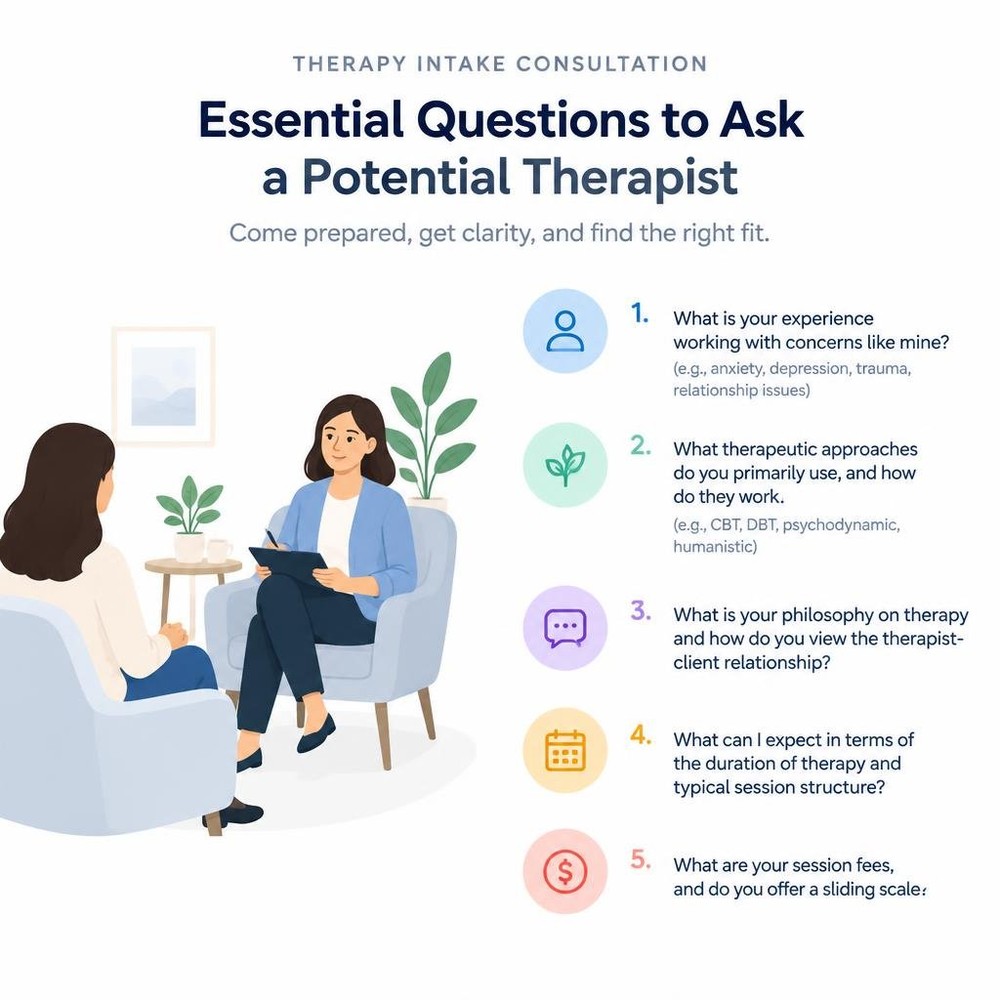
- What is your experience working with concerns like mine? (e.g., anxiety, depression, trauma, relationship issues)
- What therapeutic approaches do you primarily use, and how do they work? (e.g., CBT, DBT, psychodynamic, humanistic)
- What is your philosophy on therapy and how do you view the therapist-client relationship?
- What can I expect in terms of the duration of therapy and typical session structure?
- What are your session fees, and do you offer a sliding scale?
- Do you accept my insurance plan? If so, what is my co-pay or deductible?
- What is your cancellation policy?
- How do you handle communication between sessions?
- What are your credentials and licenses? (e.g., Licensed Professional Counselor, Licensed Clinical Social Worker, Psychologist)
- How do you measure progress in therapy?
By asking these questions, we gain valuable insights into the therapist’s practice and can gauge whether their style and expertise align with our needs and preferences. It’s perfectly acceptable to speak with a few different therapists before making a decision.
Step-by-Step Guide to Scheduling Your First Session
Once we’ve identified a potential therapist, the process of starting therapy typically involves a few clear steps:
- Reach Out: Initiate contact, usually by phone or email, to express interest and inquire about their availability for new clients and an initial consultation.
- Initial Consultation/Screening: Many therapists offer a brief, often free, phone consultation to discuss our needs, answer initial questions, and determine if there’s a potential fit.
- Insurance Verification: If applicable, the therapist’s office (or we ourselves) will verify our insurance benefits to understand coverage, co-pays, and any necessary authorizations. For those with Medi-Cal and Partnership HealthPlan, this step is crucial for confirming eligibility for no-cost therapy. We may need to provide our Medi-Cal ID and county of residence for benefits verification.
- Complete Intake Paperwork: Before the first official session, we will typically receive intake documentation. This usually includes consent forms, privacy policies (HIPAA), and questionnaires about our mental health history, symptoms, and goals for therapy. Many providers use secure online platforms, like SimplePractice, for this.
- Schedule Your First Session: Once paperwork is complete and logistics are handled, we can book our first official therapy appointment. This initial session often involves a more in-depth diagnostic assessment and initial goal setting with the therapist.
It’s important to be open and honest during this process. The more information we provide, the better equipped our therapist will be to understand our situation and tailor treatment effectively.
Reliable Research-Based Mental Health Resources and Education
Empowering ourselves with accurate, research-based information about mental disorders and treatments is a crucial part of our mental health journey. While a therapist provides personalized guidance, understanding the broader context of mental health can help us advocate for ourselves and make informed decisions.
The National Institute of Mental Health (NIMH) is a federal research agency and an excellent starting point. While NIMH does not provide direct medical advice or referrals, its website is a treasure trove of reliable information. We can explore their health topic pages, read educational brochures, and access fact sheets that summarize current research on various mental disorders, such as depression, anxiety disorders, bipolar disorder, and schizophrenia. Their resources are grounded in scientific evidence, making them highly trustworthy.
Other reputable sources for research-based information include:
- Substance Abuse and Mental Health Services Administration (SAMHSA): Offers publications, data, and resources related to mental and substance use disorders.
- American Psychological Association (APA) and American Psychiatric Association (APA): These professional organizations provide information for the public, often including guides on choosing a therapist and understanding different treatment modalities.
- Centers for Disease Control and Prevention (CDC): Provides data and public health information on mental health.
- Veterans Affairs (VA): Offers extensive resources for veterans and their families regarding mental health conditions prevalent in the military community.
When seeking information online, we should always prioritize sources that are government-affiliated, from established medical or psychological organizations, or from academic institutions. Be wary of websites that promise quick fixes, promote unproven treatments, or lack clear scientific backing. Our goal is to gain a deeper understanding of conditions and evidence-based treatments, which can enhance our discussions with our mental health provider and contribute to our overall well-being.
Frequently Asked Questions About Mental Health Therapy
How do I know if therapy is the right choice for my current situation?
Deciding whether therapy is right for us is a personal process, but there are common indicators that suggest it could be beneficial. Therapy isn’t just for those in crisis; it can be a powerful tool for personal growth, self-understanding, and developing healthier coping mechanisms.
We might consider therapy if we are experiencing:
- Persistent emotional distress: Prolonged sadness, anxiety, anger, or feelings of hopelessness that interfere with daily life.
- Difficulty coping with life transitions: Major changes like job loss, divorce, grief, or relocation can be overwhelming, and therapy can provide support.
- Relationship challenges: Struggling with communication, conflict, or connection in personal or professional relationships.
- Unhealthy coping mechanisms: Relying on substances, isolation, or other behaviors that negatively impact our well-being.
- A desire for self-improvement: Even without a specific “problem,” therapy can help us gain deeper self-awareness, improve communication skills, and achieve personal goals.
If something “feels off,” or if we find ourselves struggling to navigate life’s challenges effectively, therapy offers a confidential and supportive space to explore these feelings and develop strategies for a more fulfilling life. It’s a proactive step towards preventive mental health and lasting wellness.
How can I access free or low-cost therapy through Medi-Cal and Partnership HealthPlan?
Accessing free or low-cost therapy through Medi-Cal and Partnership HealthPlan is a significant opportunity for many Californians to receive essential mental health services. Here’s how we can check our eligibility and utilize these benefits as of October 2026:
- Check Your Medi-Cal Card: The first step is to examine your Medi-Cal card. If it displays the Partnership HealthPlan branding, you are likely eligible for covered therapy services through their network.
- Confirm Your County: Partnership HealthPlan serves 24 specific counties in California. If you reside in one of these counties, your eligibility for their services, including telehealth therapy at no out-of-pocket cost, is greatly increased.
- Contact Partnership HealthPlan Member Services: If you’re unsure about your enrollment or benefits, the most reliable method is to call Partnership HealthPlan Member Services directly. They can confirm your coverage, explain your mental health benefits, and provide a list of in-network providers.
- Provider Verification: When you reach out to a mental health service provider that accepts Partnership HealthPlan (like Pacific Mental Health Services), they can often assist with benefits verification during the intake process. You will typically need to provide your Medi-Cal ID number and confirm your county of residence.
Many providers within the Partnership HealthPlan network offer telehealth services, making it convenient to access care from anywhere in California. For eligible members, this means access to professional therapy with zero co-pays or deductibles, removing a major financial barrier to mental health support.
What should I do if my current therapist is not a good fit?
The therapeutic relationship, or “therapeutic fit,” is a cornerstone of effective therapy. It’s a unique and personal connection, and sometimes, despite our best efforts, a particular therapist might not be the right match for us. This is a common experience, and it’s perfectly okay to acknowledge it.
If we feel that our current therapist isn’t a good fit, here are steps we can take:
- Communicate Openly: The first step, if we feel comfortable, is to discuss our concerns directly with our therapist. A good therapist will be receptive to feedback and may be able to adjust their approach or explain their methods in a way that addresses our concerns. This open communication is valuable, even if we ultimately decide to switch providers.
- Reflect on the Reasons: Consider what specifically isn’t working. Is it their communication style, their therapeutic approach, a lack of perceived progress, or something else? Clarifying these points can help us identify what we’re looking for in a different therapist.
- Explore Alternatives: If communication doesn’t resolve the issue, or if we don’t feel comfortable discussing it, we can begin researching other potential therapists. Revisit the questions we asked during our initial search, focusing on what we’ve learned about our preferences.
- Plan for Care Continuity: If we decide to switch therapists, it’s generally advisable not to discontinue treatment abruptly. Ideally, we can have a final session with our current therapist to discuss the transition, process any unresolved feelings, and ensure a smooth handover of care, if appropriate. This helps maintain care continuity and provides a sense of closure.
Finding alignment with a mental health professional is key to our healing journey. Our well-being is the priority, and advocating for our needs, even if it means finding a new therapist, is a valid and important part of that process.
Conclusion
Navigating the options for mental health support and therapy can feel like a complex journey, but it is one that leads to lasting wellness and a more fulfilling life. From the immediate, life-saving resources available in a crisis, such as the 988 Suicide & Crisis Lifeline and the Veterans Crisis Line, to the diverse range of therapeutic modalities and levels of care, a robust support system exists.
We’ve explored how to find providers that align with our needs and insurance, including the significant benefits of telehealth, especially for those covered by Medi-Cal and Partnership HealthPlan. We’ve also highlighted the importance of asking key questions to ensure a good therapeutic fit and outlined the practical steps to begin our therapy journey. Furthermore, we’ve emphasized the value of empowering ourselves with research-based information from trusted sources like NIMH.
Our mental health is just as vital as our physical health. Taking proactive steps to seek support, whether for acute distress or ongoing personal growth, is a testament to our resilience. We encourage you to utilize the resources and actionable steps outlined in this guide. You don’t have to navigate these challenges alone. Support is available, and taking that first step is often the most courageous one.