Key Takeaways
- Build year-round interest with foliage, bark, berries, seed heads, evergreen plants, and hardscape, not flowers alone.
- Start with site conditions and permanent structure before filling beds with seasonal color.
- Choose plants for their mature size, light, soil, moisture, and winter hardiness.
- Repeat dependable plants and use layered heights to make beds look intentional in every season.
- Use a simple seasonal routine to keep the garden manageable.
A four-season garden is designed to offer something worth noticing in every month, even when little is flowering. Spring bulbs, summer perennials, autumn foliage, winter stems, and evergreen structure can each contribute to the display. Thoughtfully placed fall blooming azaleas, for example, can help extend the color sequence between summer flowers and the broader foliage show of autumn. The goal is not to force nonstop bloom from every bed. A successful garden also uses changing leaf color, contrasting textures, fragrance, berries, ornamental grasses, and the shapes of trees and shrubs. By planning for these features from the beginning, the garden can feel composed rather than empty during quieter seasons.
Why A Four-Season Garden Works Better Than A One-Season Display
Many gardens peak for a few weeks because they rely heavily on one group of plants, such as spring bulbs or summer annuals. A four-season design spreads visual interest across the calendar. Woody plants provide a lasting framework, while perennials and annuals add shorter-lived color around them. This approach also helps reveal gaps before they become problems: if a border looks bare in winter, it may need an evergreen, a shrub with strong branching, or a feature such as a stone path or a container.
Step 1: Study The Garden Site
Observe the site before buying plants. Track where the sun falls in the morning and afternoon, identify spots that remain wet after rain, and note slopes, wind exposure, large tree roots, utility lines, windows, and property edges. Measure beds and pathways so a design is based on available space rather than guesswork. Use the “right plant, right place” principle. A plant that fits the available light, drainage, and room to grow generally needs less correction later. Check the USDA plant hardiness zone map as one starting point for comparing a plant’s cold-hardiness rating with local winter conditions, then also account for the site’s sun, soil, and moisture.
Step 2: Build A Strong Garden Framework
Place the longest-lived elements first. Trees can provide height, shade, screening, and canopy cover. Shrubs establish mass and define bed edges. Evergreens are particularly useful where winter coverage matters. Paths, fences, walls, pots, birdbaths, and seating areas also remain visible when herbaceous plants are dormant. Allow plants room to reach their mature width and height. Crowded plants compete for light and air, obscure paths, and often require repeated pruning. A garden that appears slightly open in its first season usually becomes more balanced as the framework fills in.
Step 3: Choose Plants For Every Season
Spring
Use early bulbs, flowering trees and shrubs, fresh perennial foliage, and cool-season container plantings. Place spring stars where they can be seen from commonly used windows, entrances, or seating areas.
Summer
Rely on long-blooming perennials, heat-tolerant annuals, bold foliage, and shade plants in protected areas. Mix flower forms and leaf shapes so the garden still has depth between bloom cycles.
Fall
Plan for late-blooming perennials, ornamental grasses, trees, and shrubs with dependable foliage color, berries, and decorative seed heads. Fall is also an opportunity to notice which areas need more structure for the coming winter.
Winter
Include evergreen foliage, colorful or peeling bark, persistent fruit, strong stems, and architectural seed heads. Stone, wood, metal, and containers can add contrast when the garden is quiet. Leave healthy seed heads and grasses standing where their appearance and maintenance needs allow.
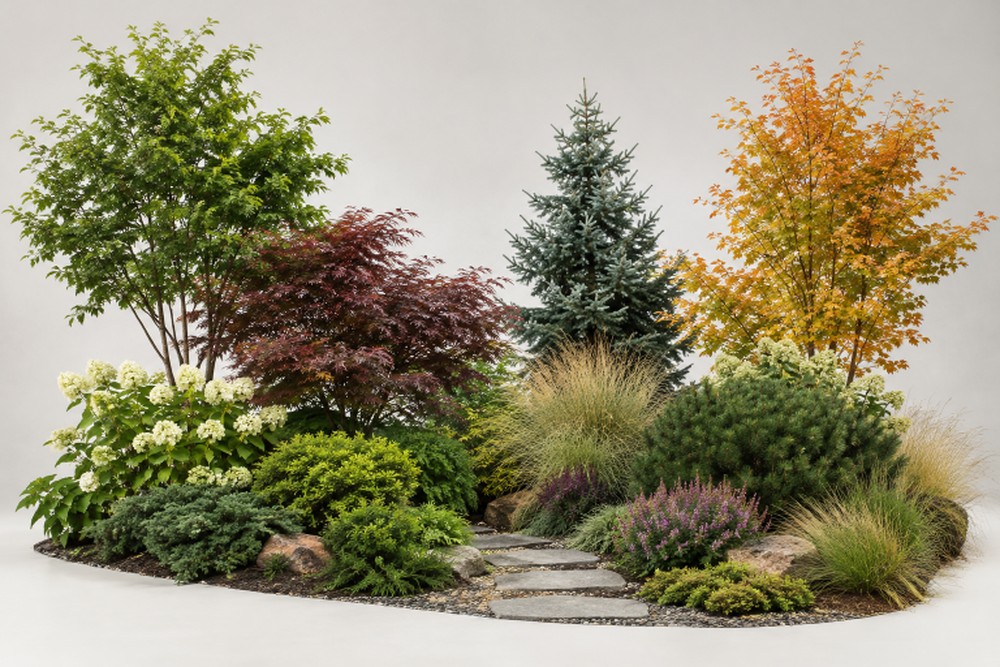
Step 4: Layer Plants By Height, Texture, And Timing
- Set taller trees and shrubs toward the back of a border or along its outer edge.
- Place medium-height shrubs and perennials through the center.
- Use low perennials and ground covers near paths and bed fronts.
- Repeat selected plants in groups to create rhythm and continuity.
- Combine fine, broad, glossy, and matte foliage to maintain interest when flowers fade.
Repeated groupings tend to look calmer than many unrelated single plants. Repetition does not mean monotony. A repeated grass, evergreen, or foliage plant can tie together several changing bloom periods.
Step 5: Plan For Pollinators And Wildlife
Choose flowering plants with staggered bloom times so that food is available for longer across the growing season. Plants that offer nectar, pollen, seeds, fruit, cover, or nesting material can add wildlife value without turning the garden into a crowded collection. Use native plants where they suit the conditions, along with noninvasive, well-adapted plants that meet the same practical needs.
Step 6: Improve Soil Before Adding More Plants
Test soil before applying fertilizer or major amendments. A soil test can help identify pH, nutrient levels, texture, and organic matter, making it easier to avoid applying products the garden does not need. Guidance on soil testing for lawns and gardens also explains how results can inform fertilizer and amendment decisions. Improve compacted beds with appropriate organic matter, address drainage before installing moisture-sensitive plants, and mulch the soil surface to help moderate moisture and reduce weeds. Keep mulch away from trunks and plant crowns so stems are not held in constant contact with damp material.
A Simple Seasonal Garden Calendar
Winter
- Review photographs and notes from the previous year.
- Sketch changes, order seeds, and inspect woody plants for storm damage.
Spring
- Clear debris carefully, check irrigation, and plant hardy selections when conditions are suitable.
- Refresh mulch after soil begins to warm.
Summer
- Water deeply during dry weather, monitor for pests and disease, and maintain accessible edges and paths.
- Deadhead plants that benefit from it, but retain attractive foliage and seed heads where desired.
Fall
- Plant bulbs and, where appropriate for the local climate, trees, shrubs, and hardy perennials.
- Collect leaves for compost or mulch, divide overcrowded perennials, and preserve useful winter structure.
Common Four-Season Garden Mistakes
- Buying plants only because they are blooming at the time of purchase.
- Ignoring mature size and planting beds too tightly.
- Forgetting winter form, bark, and evergreen coverage.
- Using fertilizer without understanding soil conditions.
- Creating beds that are difficult to reach, water, weed, or prune.
- Trying to renovate the whole garden at once instead of improving it in manageable stages.
Frequently Asked Questions
Does A Four-Season Garden Need Flowers Every Month?
No. Foliage, bark, berries, seed heads, evergreen plants, and hardscape can make a garden attractive when blooms are limited.
How Many Plant Types Are Needed?
There is no fixed number. A small garden can feel complete with a few structural plants, repeated plant groupings, and seasonal accents.
How Can A Garden Stay Attractive In Winter?
Use evergreen form, colorful stems, berries, ornamental grasses, seed heads, paths, containers, and visible structural features.
Conclusion
A four-season garden develops through practical, connected decisions that work together to create a landscape with lasting beauty, structure, and purpose. Start by carefully evaluating the site, including sunlight exposure, soil quality, drainage, available space, and local climate conditions. These observations provide a strong foundation for selecting plants that can thrive with less intervention and remain healthy as the seasons change. Next, establish a durable framework using trees, shrubs, evergreen plants, pathways, and other permanent features that maintain the garden’s shape even when flowers fade or perennials become dormant. Choose a diverse selection of plants with different seasonal roles, including spring bulbs, summer-blooming flowers, autumn foliage, ornamental grasses, colorful berries, and winter-interest branches. Arranging these plants thoughtfully can create a natural progression of color, texture, and visual interest throughout the year without making the garden feel overcrowded. Regular maintenance, guided by a realistic seasonal calendar, will also help keep the landscape healthy and manageable. Tasks such as watering, pruning, mulching, removing weeds, and monitoring plant growth become easier when they are planned around the garden’s actual needs rather than handled all at once. It is equally important to leave room for adjustments as plants mature and new opportunities emerge. The best plan is not necessarily the one with the most plants, the rarest varieties, or the most elaborate features. Instead, it is the one that fits the available space, supports the gardener’s goals, respects the surrounding environment, and remains practical to maintain. With thoughtful planning, suitable plant choices, and consistent care, a four-season garden can become a welcoming outdoor space that offers something beautiful to appreciate in every month of the year.