Key Takeaways
- Heat, wind, sunlight, water temperature, and swimming activity can all lower a pool’s water level.
- A bucket test compares the pool’s water loss with evaporation in the same conditions.
- Wet soil, air in the pump, persistent moisture on the equipment pad, and an unstable water balance can signal a leak.
- Low water can affect skimmer performance and cause the pump to draw air.
- Pool covers and routine equipment checks can reduce normal water waste.
- Fast, steady, or unexplained water loss should be investigated rather than continually topped off.
A swimming pool can lose water for several reasons, and not every drop in water level indicates a leak. In Austin, Texas, hot temperatures, dry conditions, wind, and regular pool use can all contribute to water loss through evaporation. However, a noticeable or continuing decline may also signal a plumbing, structural, or equipment-related problem. Understanding the difference can help homeowners decide when further investigation is needed.
A simple checklist can make it easier to monitor water levels and identify warning signs early. Homeowners can track how quickly the pool loses water, inspect visible areas for moisture, and consider factors such as recent weather and pool activity. When water loss seems unusual or difficult to explain, qualified pool technicians can help evaluate potential causes and determine whether professional leak detection or repairs may be appropriate.
Why Pool Water Levels Change
Pool water levels are affected by more than evaporation. Splash-out, water features, vacuuming to waste, filter cleaning, and heavy rain can all change the waterline. Some of these changes are temporary and expected, while others may be worth monitoring if they happen frequently or without an obvious explanation. Understanding these everyday factors can help Austin homeowners better assess changes in their pool water level.
Evaporation or a Leak? Start With the Pattern
Normal evaporation usually follows the weather. Water may drop more after sunny, dry, or windy days, and less when the pool is covered, or conditions are mild. A possible leak often appears as water loss that continues at a similar pace regardless of weather or pool use. There is no single daily amount that applies to every pool, because surface area, shade, water temperature, features, and cover all matter.
If the pattern suggests more than ordinary evaporation, a professional inspection may help identify whether the loss is related to plumbing, equipment, fittings, or the pool structure. A leak detection company can help investigate persistent water loss and determine whether further testing is needed. The most useful first step, however, is documenting what the water is doing under controlled conditions.
How to Perform a Simple Bucket Test
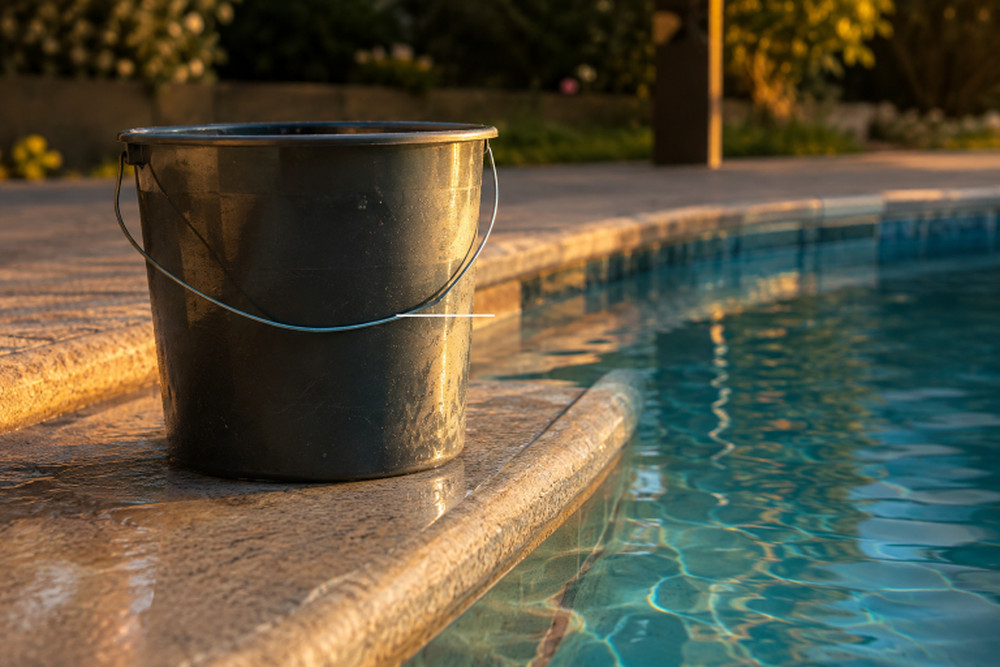
A bucket test does not locate a leak, but it can help distinguish a possible leak from evaporation. Choose a day when you can avoid swimming, refilling, and running fountains or spillovers.
- Turn off the automatic fill system if your pool has one.
- Fill a sturdy bucket with pool water and place it on a stable pool step.
- Bring the bucket’s water level close to the surrounding pool water level.
- Mark the water level inside the bucket and the pool waterline on the outside of the bucket.
- Leave the setup undisturbed for about 24 hours.
- Compare the amount of water lost from the bucket with the amount lost from the pool.
If both levels drop by roughly the same amount, evaporation is the likely explanation. If the pool level falls noticeably farther than the bucket level, there may be abnormal water loss. Record whether the circulation pump, heater, cleaner, or other water features were operating, since those conditions can affect the result.
Warning Signs That Deserve Attention
One clue alone does not prove a leak. Several signs together, especially when they persist, make a careful inspection more important.
- The pool needs frequent refilling even during calm or cooler weather.
- Water collects repeatedly around the pump, filter, heater, valves, or plumbing connections.
- The pump basket shows air bubbles or loses prime.
- Soil near the pool stays damp, feels soft, or becomes unusually green.
- Chemistry becomes difficult to maintain because fresh water is constantly being added.
- The waterline seems to stop dropping near a light, skimmer, return fitting, tile line, or crack.
- Your household water use rises without another clear explanation.
Common Places Where Pool Leaks Begin
Leaks can occur where pool components join together, where seals age, or where plumbing develops a problem. Visible moisture around equipment may point to an above-ground issue, while a dry equipment pad does not rule out an underground plumbing leak.
- Skimmer throats, face plates, and gaskets
- Return fittings, cleaner lines, and suction connections
- Pool lights and light niches
- Pump seals, valves, filter fittings, and heater connections
- Underground suction or return lines
- Vinyl liners, plaster, tile lines, coping, and expansion joints
Why Low Water Levels Can Create New Problems
Adding water may temporarily keep the pool usable, but it does not address why the level is falling. If the water drops too low, the skimmer can draw air instead of water. That can interrupt circulation and may leave the pump operating without the steady flow it needs. Keep the water at an appropriate operating level and follow the equipment manufacturer’s instructions.
Use caution around electrical equipment, pool lights, heaters, and wiring. Do not open powered equipment or attempt electrical repairs without the proper knowledge and safety precautions. If a water-loss issue appears connected to a light, electrical component, or damaged wiring, avoid hands-on inspection.
Ways to Reduce Normal Water Loss
Evaporation cannot be eliminated entirely, but consistent habits can limit it. The U.S. Environmental Protection Agency explains that using a pool cover when the pool is not in use can substantially reduce evaporation and help keep debris out of the water.
- Use a properly fitted cover whenever practical.
- Limit fountains, waterfalls, and spillovers during especially hot or windy periods.
- Check that an automatic fill system is not running continuously.
- Inspect the equipment pad during regular skimming and cleaning.
- Record the waterline after storms, backwashing, or periods of heavy pool use.
- Avoid overfilling, which can cause overflow when swimmers enter the pool.
Pool Checks After Severe Austin Weather
After heavy rain, strong wind, or a major temperature swing, check the waterline, deck drainage, equipment pad, visible plumbing, and the area around the pool shell. Rainwater can dilute pool chemistry, while wind and storm debris can affect circulation. Overflow, splash-out, soil shifting, or damaged fittings may also alter the water level after severe weather.
When a Detailed Inspection Makes Sense
Basic observation is useful, but it has limits. A more detailed inspection is appropriate when the bucket test shows the pool is losing more water than the bucket can hold, the source cannot be seen, the pump regularly pulls air, or wet ground and erosion are present near the pool. It is also wise to address unexplained loss before a repair grows more complicated. Professional leak detection services can assist with identifying underground or hidden leaks.
Conclusion
For Austin pool owners, a lower waterline is not automatically an emergency, especially after heat, wind, or active use. But steady or unexplained loss should not become part of the routine. A controlled bucket test, regular equipment checks, and attention after severe weather can help separate normal evaporation from a developing leak before it affects water quality, equipment, soil, or the pool itself.