Key Takeaways
- Give the coin one clear purpose and one main message.
- Choose imagery and wording that recipients will recognize and value.
- Use each side of the coin for a distinct part of the story.
- Prioritize readable text, bold details, and careful proofreading.
- Plan the presentation as carefully as the artwork.
A challenge coin can turn a shared accomplishment, mission, or memory into something people can carry and keep. Whether it is for a service unit, public safety team, workplace, school, club, fundraiser, reunion, or family event, the strongest coins begin with intentional planning rather than a long list of images.
Start by gathering the essential details, then experiment with layouts using a free challenge coin design tool. Seeing the emblem, wording, colors, and shapes together makes it easier to identify what belongs on the coin and what should be left out. A thoughtful design can help ensure the finished coin reflects the meaning behind the occasion.
Start With the Purpose
Define the coin’s purpose before choosing colors or finishes. It may honor service, recognize a milestone, mark an anniversary, celebrate a successful event, or reinforce a group identity. Write the purpose in one sentence. That sentence should guide every later choice, from the central image to the final wording.
Think About the Recipients
The audience determines the tone. A coin for a fire crew may call for a department insignia and a service-focused motto, while a school team may use brighter colors and a more energetic design. Ask a few future recipients what images, phrases, or local references matter most. Their feedback can prevent a design from feeling generic or overly formal.
Build Around a Story
A memorable coin captures a specific shared story. Use an event date, mission, location, landmark, achievement, inside phrase, or defining moment as the starting point. For example, a volunteer organization could place a recognizable local landmark on one side and its annual fundraiser date and goal on the other. The design then becomes a reminder of what the group accomplished together.
Choose Symbols With Care
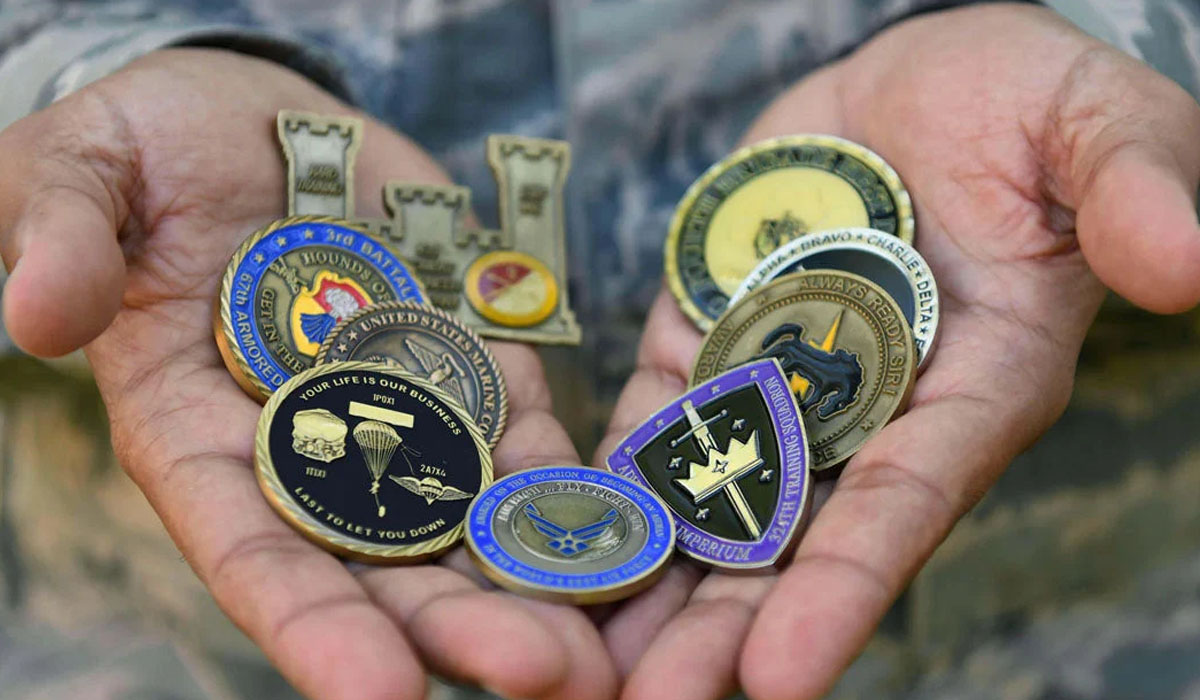
Symbols communicate identity quickly, but they should be accurate and relevant. Animals, tools, flags, buildings, stars, badges, maps, and landscapes can all work when they connect directly to the group. The broader challenge coin tradition has long associated these small medallions with membership, recognition, and commemoration, so an emblem should feel deliberate rather than decorative. Confirm that logos, seals, rank insignia, and cultural symbols are correct before approving artwork.
Plan Both Sides of the Coin
Give each side a separate job. The front can feature the primary emblem, portrait, mascot, or visual centerpiece. The reverse can carry a motto, date, location, achievement, or supporting image. Repeating the same design on both sides usually wastes space. Instead, connect the sides through a shared color palette, border style, or visual theme.
Keep the Design Easy to Read
Coins have limited space, so short wording is usually more effective than a paragraph of text. Use clear lettering, strong contrast, and simple silhouettes. Review the artwork at approximately the finished coin size on a screen or printed proof. If a date, name, or small detail is difficult to recognize at that scale, simplify it before production. Clean designs also tend to remain recognizable years later.
Compare Shapes, Sizes, and Finishes
A traditional round coin suits many organizations, while a custom shape can reinforce a meaningful image, such as a shield, badge, state outline, vehicle, or mascot. Larger coins allow more room for detail, but they can be heavier to carry. Consider how recipients will use the coin, whether in a pocket, in a display case, on a desk stand, or in a presentation box.
- Antique finishes can emphasize recessed texture and fine relief.
- Polished finishes can create a cleaner, brighter appearance.
- Color fills can separate important elements, but should not overwhelm the artwork.
- Two-tone finishes can help distinguish borders, emblems, or central features.
Review Artwork Before Production
Proofing is the stage where small errors can be prevented. Review the front and reverse independently, then look at them together as a complete piece. Check every name, date, abbreviation, slogan, and spelling. Confirm that any official marks are authorized for use. Finally, ask someone outside the planning group what message they take from the design. If the meaning is unclear to them, refine the artwork.
Plan the Presentation
How a coin is given can make it more meaningful. Present it at an award ceremony, retirement, graduation, reunion, team gathering, or community event, and explain the design in a few words. Recent discussion of coins as personal recognition items emphasizes that the gesture and the story behind challenge coins matter as much as the coins themselves. A small card describing the symbols is especially helpful for commemorative coins.
Common Planning Mistakes to Avoid
- Trying to fit too many unrelated ideas onto one small surface.
- Using long phrases or lettering that cannot be read easily.
- Selecting symbols without confirming their meaning or accuracy.
- Omitting an important group name, event date, or accomplishment.
- Approving artwork without reviewing it at the final size.
- Choosing a finish only because it looks trendy rather than because it supports the design.
Challenge Coin Planning Checklist
- State the coin’s purpose in one sentence.
- Identify recipients and the message they should take from it.
- Select the main image, supporting symbols, wording, and dates.
- Assign a clear role to the front and rear.
- Choose a shape, size, colors, and finish that fit the intended use.
- Proof all artwork, wording, and official marks before approval.
- Decide when, where, and how the coin will be presented.
Frequently Asked Questions
What should go on a challenge coin?
Include details that support the main purpose, such as a group name, emblem, motto, location, event date, or achievement. Not every detail needs to appear on the coin.
Should the front and back use different designs?
Usually, yes. Distinct but connected sides help the coin tell a fuller story while keeping the artwork balanced.
How much text is too much?
If text becomes difficult to read at coin size, it is too much. Keep wording brief and move longer explanations to a presentation card or certificate.
Are challenge coins only for military groups?
No. Many types of groups use commemorative coins, including public safety organizations, businesses, schools, clubs, volunteer teams, and event organizers.
Conclusion
A meaningful challenge coin begins with a clear reason for being made. When the purpose, audience, story, and presentation are all considered early, design choices become easier and more consistent. The finished coin can then serve as a lasting reminder of the people, work, and occasion it represents.