A fall at a Las Vegas hotel, casino, store, apartment complex, restaurant, or parking area can leave an injured person facing pain, medical appointments, missed work, and difficult questions. Whether a property owner may be legally responsible depends on the specific condition involved, the owner or manager’s knowledge of that condition, and the evidence available after the incident.
People considering pursuing compensation after a slip and fall should focus first on safety and documentation. A fall does not automatically mean a property owner is liable, but prompt reporting, medical care, and careful recordkeeping can help preserve facts that may later matter.
When A Property Owner Owes A Duty Of Care
Premises liability is the area of law that addresses injuries connected to unsafe property conditions. In general, the person or business that owns, occupies, manages, or controls a property may have responsibilities to use reasonable care in maintaining areas where guests, customers, tenants, and other lawful visitors are expected to walk.
This does not mean every surface must be perfect. It does mean that a property owner or operator may need to inspect reasonably, address hazards within a reasonable time, and provide warnings when a dangerous condition cannot be corrected immediately. Responsibility may rest with more than one party, such as a landlord, management company, maintenance contractor, or business tenant.
Dangerous Conditions That May Create Liability
A claim usually begins with a clear answer to a practical question: what caused the fall? The issue might be a temporary condition, such as a spill, or a structural problem that existed over time.
Examples Of Conditions That May Need Attention
- Water, tracked-in rain, spilled drinks, food, grease, or leaking equipment.
- Torn carpeting, loose mats, broken tile, uneven flooring, or raised pavement.
- Damaged stairs, missing or unstable handrails, and abrupt changes in elevation.
- Poor lighting in hallways, garages, stairwells, walkways, or entrances.
- Cluttered aisles, cords, debris, or merchandise obstructing a walking path.
- Missing, unclear, or poorly placed warnings about a known hazard.
The condition must be more than an unfortunate setting for a fall. The evidence should support that a hazardous condition existed and that it played a meaningful role in causing the injury.
One of the most important questions is whether the responsible party knew, or reasonably should have known, about the problem. Actual notice can exist when an employee sees a spill, receives a complaint, or creates the condition. Constructive notice may be argued when a hazard existed long enough, or was recurring enough, that reasonable inspections or maintenance should have found it.
For example, a fresh spill in a crowded resort corridor may raise different questions than a long-standing broken stair tread in an apartment building. Maintenance logs, surveillance video, cleaning schedules, employee statements, prior complaints, and photographs can all be relevant to the issue of notice.
Connecting The Hazard To The Injury
Even where an unsafe condition is present, a claim requires a connection between that condition and the person’s fall and injuries. Photos of the exact area, reports made immediately afterward, witness accounts, medical records, and the shoes or clothing worn during the event can help clarify what occurred.
Medical care also matters. Some injuries, including strains, fractures, head injuries, and back problems, may not be fully apparent in the first few minutes. Seeking appropriate care and accurately describing the fall and symptoms to a medical provider creates a clearer record than waiting while symptoms worsen.
How Shared Fault May Affect A Claim
Property owners and insurers may examine whether the injured person was distracted, ignored an obvious warning, used a restricted route, or wore footwear that contributed to the fall. Those allegations do not necessarily end the matter.
A person should avoid guessing about the fault at the scene. A simple factual report, such as identifying the location and the condition observed, is usually more useful than an immediate conclusion about who was responsible.
Common Las Vegas Locations And Hazards
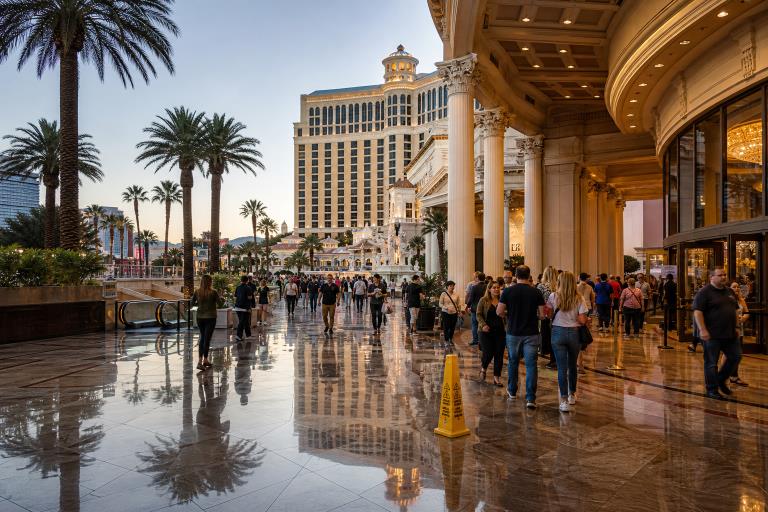
Las Vegas receives millions of visitors and has busy pedestrian areas, large resorts, entertainment venues, retail centers, and residential communities. The setting can shape the evidence that should be reviewed, without proving fault by itself.
- Hotels and casinos:Wet entrances, busy walkways, loose rugs, escalator approaches, and dimly lit areas may require close review.
- Restaurants and bars:Spilled beverages, grease, recently mopped floors, and crowded paths can create slipping risks.
- Grocery and retail stores:Leaking coolers, dropped merchandise, food spills, and uneven flooring are common issues to investigate.
- Parking lots and garages:Potholes, wheel stops, cracked pavement, poor lighting, and unexpected elevation changes can be relevant.
- Apartment communities:Stairways, handrails, shared sidewalks, pool areas, and exterior lighting may be important.
Evidence To Preserve After A Fall
Conditions can change quickly. A spill may be cleaned, a warning cone may be moved into place, or damaged flooring may be repaired. If it is safe to do so, document the area before leaving. Report the incident to a manager, security officer, landlord, or other person in charge, and ask for the report number or a copy of any incident report.
Helpful Items To Save
- Photos and video showing the hazard, wider surroundings, lighting, and any warnings.
- Names and contact details for witnesses and responding employees.
- The shoes and clothing worn during the fall were kept unwashed when possible.
- Medical records, bills, prescriptions, work-loss information, and receipts.
- A written timeline made while the location, time, symptoms, and conversations are still fresh.
Deadlines And Special Situations
Time limits can apply to injury claims, and the correct deadline may depend on the parties involved and the nature of the claim. The periods listed in Nevada’s limitation-of-actions statutes should not be treated as a one-size-fits-all answer. Claims involving public property, minors, construction issues, or other special circumstances can involve additional rules.
Prompt action also helps preserve nonlegal evidence. Businesses may not retain surveillance footage indefinitely, and witness memories can fade. A written request to preserve relevant video or records may be appropriate when a serious injury occurred.
Common Questions About Slip And Fall Claims
What if there was a warning sign?
A warning sign can be important, but it is not always conclusive. Its placement, visibility, wording, and whether it reasonably addressed the actual hazard may all matter.
What if pain starts later?
Seek medical attention and tell the provider about the fall. Delayed symptoms should be documented honestly, including when they began and how they affect daily activities.
What if the property owner denies that the incident happened?
Photos, witness information, an incident report, payment receipts, medical records, and communications with the property can help establish a reliable timeline.
Final Takeaway
A property owner may be liable for a Las Vegas slip and fall injury when an unsafe condition existed, the responsible party failed to use reasonable care, and that failure caused harm. The facts surrounding notice, maintenance, warnings, shared responsibility, and medical evidence can all shape the analysis. Protecting personal safety and preserving accurate information after a fall are practical first steps toward understanding what happened.