A roof problem can quickly raise a difficult question: should you repair the damaged area or replace the entire roof? The right answer depends on more than the size of a leak or the number of missing shingles. Homeowners who consult licensed roofers should still understand the factors behind the recommendation, including the roof’s age, the scope of damage, moisture, ventilation, previous repairs, and the long-term cost of waiting. A targeted repair can preserve a roof with substantial remaining useful life. Replacement can be the wiser investment when the roofing system is deteriorating across multiple areas. Before signing a contract, compare both options based on a complete inspection rather than choosing solely by the lowest immediate price.
The Quick Answer: Repair or Replace?
Repair is often appropriate when damage is isolated, and the surrounding roof remains sound. Replacement becomes more reasonable when problems are widespread, leaks keep returning, or the roof is nearing the end of its expected service life. A roof should be evaluated as a system that includes shingles or other covering, flashing, underlayment, decking, attic ventilation, and drainage.
- Choose repair when one identifiable issue has caused limited damage.
- Consider replacement when deterioration appears on several roof slopes.
- Investigate recurring leaks instead of repeatedly patching visible symptoms.
- Compare expected years of service, not only today’s project price.
Why Roof Age Matters
Roof age changes the repair-versus-replacement calculation. A relatively new roof with storm damage in one area may be a strong candidate for repair. On an older roof, a small leak may reveal brittle shingles, worn flashing, or moisture damage that has developed over time.
Look for the installation date in closing documents, permits, invoices, warranty paperwork, or prior inspection reports. Asphalt shingles commonly last less time than metal, tile, or slate shingles, but any material can fail early when exposed to severe weather, trapped moisture, poor ventilation, installation errors, or repeated repairs. Manufacturer life ratings are useful planning estimates, not guarantees.
How to Judge the Type of Damage
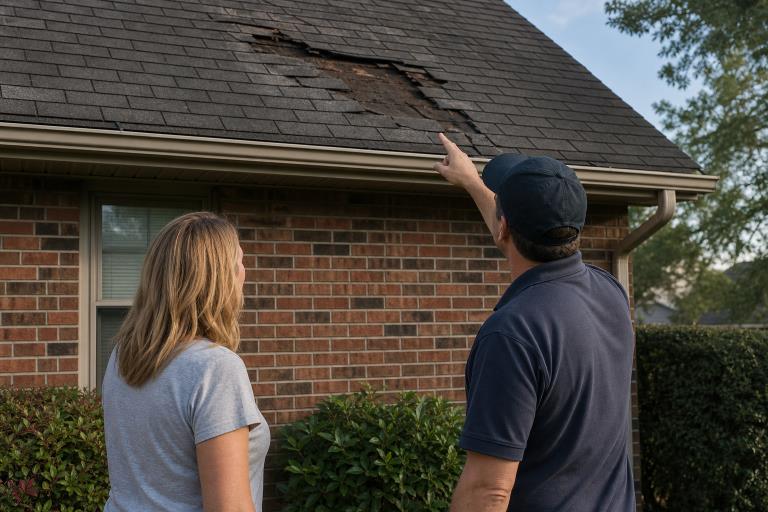
The most important distinction is between localized damage and system-wide deterioration. Localized problems may include a puncture from a branch, a small group of wind-damaged shingles, one failed flashing detail, or a leak around a vent pipe. These issues may be repairable if the nearby materials and roof deck are still in good condition. Widespread warning signs include cracked or curled shingles across several areas, broad granule loss, multiple leaks, repeated flashing failures, soft decking, or a sagging roofline. Do not climb onto a steep, wet, damaged, or debris-covered roof. Review the roof from the ground with binoculars if safe, then arrange a professional inspection.
Signs a Repair May Be Enough
A repair may be the practical choice when it addresses the root cause of the problem and does not merely cover a stain or replace a few visible shingles.
- The roof is still relatively young for its material.
- Damage is limited to one clearly defined area.
- The roof deck is dry, solid, and structurally stable.
- There is no history of recurring leaks in different locations.
- Compatible replacement shingles, tiles, or panels are available.
- The repair includes related flashing, sealing, or drainage corrections when needed.
Signs It May Be Time for Replacement
Replacement is usually worth serious consideration when the roof is failing overall. Patching one section of an aging roof can be less expensive today, but it may lead to more service calls, interior damage, and disruption over the next few years.
- The roof is near or past its anticipated service life.
- Damage extends across multiple slopes or roof sections.
- Leaks return after prior repairs.
- Shingles are brittle, curled, cracked, or missing in many places.
- Decking shows extensive moisture damage or decay.
- Ventilation problems have accelerated deterioration.
- Repair costs are approaching a substantial portion of replacement costs.
How to Compare Repair and Replacement Costs
Roofing costs vary substantially by region, material, roof size, pitch, access, labor availability, permits, and hidden damage. Instead of relying on a national average, request separate written estimates for repair and replacement, then compare the likely cost of each option over its useful life.
Use a simple decision worksheet that lists:
- Current roof age and material
- Written repair estimate
- Written replacement estimate
- Expected remaining service life after each option
- Repairs completed during the last three to five years
- Possible future maintenance costs
- Whether decking, flashing, ventilation, cleanup, and permits are included
- Material and artistry warranty terms
Insurance, Permits, and Local Rules
Insurance often treats sudden wind, hail, or fallen-tree damage differently from ordinary aging and neglected maintenance. Photograph visible damage safely, save inspection reports and invoices, and review your deductible, claim deadline, exclusions, and whether coverage is based on actual cash value or replacement cost value. Emergency work to prevent further damage may be necessary, but document conditions before permanent repairs whenever possible. Permit requirements vary by jurisdiction and can change. For example, Oklahoma City homeowners can review the city’s roofing permit requirements before starting a project. Your own city or county building department can confirm whether a permit, inspection, or contractor registration is required. Some local programs may help qualifying homeowners address urgent roof needs. The City of Richmond’s Healthy Homes program, for example, lists roof repair and replacement among eligible health and safety work. Funding, income limits, property requirements, and application periods should always be confirmed directly with the local agency.
What a Proper Roof Inspection Should Include
A useful inspection goes beyond a quick look at the driveway. It should assess the roof covering, valleys, ridges, eaves, flashing around chimneys and skylights, vents, penetrations, gutters, and drainage paths. The inspector should also check the attic for moisture, insulation problems, airflow issues, staining, and visible deck damage. Ask for photos and a written explanation of each finding. A clear report identifies what is damaged, why it likely happened, how urgent the issue is, and whether repair or replacement is recommended.
How to Review Roofing Estimates
Two estimates with very different prices may not cover the same work. Compare the scope line by line before making a decision. Confirm exactly which areas will be repaired or replaced, whether old roofing will be removed, how damaged decking is priced, and whether flashing and ventilation improvements are included.
Questions to Ask Before Signing
- Who obtains the required permits?
- What cleanup and disposal services are included?
- How are hidden repairs and change orders approved?
- Which warranties cover labor and materials?
- What payment schedule applies, and when is the final payment due?
Common Questions About Roof Repairs and Replacement
Can a small leak be repaired?
Yes, if its source is isolated and the rest of the roof is sound. However, a small ceiling stain can result from water traveling away from the entry point, so both the roof and the attic need review.
How many times should a roof be repaired?
There is no fixed number. Repeated repairs in different locations often indicate that the roof is deteriorating broadly and should be assessed for replacement.
Does a new roof increase home value?
A new roof can improve buyer confidence, reduce inspection concerns, and support marketability. The financial return depends on local demand, material choice, installation quality, and the home’s overall condition.
Should a roof be repaired before selling?
Possible options include completing the work, offering a credit, adjusting the price, or selling with full disclosure. The best approach depends on the roof condition, project cost, timeline, and local market.
The Best Next Step
Roof repair and replacement are not one-size-fits-all decisions. Combine the roof’s age, the scope of damage, inspection findings, repair history, insurance terms, local requirements, and written estimates. A thorough assessment helps prevent unnecessary replacements and avoids short-term patches that do not solve the real problem.
Conclusion
Choosing between roof repair and replacement is about understanding the condition of the entire roofing system, not just the most visible damage. A thorough inspection, clear documentation, and detailed written estimates can help you determine which option offers the best long-term value. While repairs are often the right solution for isolated problems on a healthy roof, widespread deterioration, recurring leaks, or advanced age may make replacement the more practical investment. By considering the roof’s age, the extent of damage, future maintenance costs, insurance coverage, and local requirements, homeowners can make informed decisions that protect both their property and their budget for years to come.