Metal fabrication projects differ according to their intended use, property conditions, and level of customization. Because each application has distinct requirements, the specifications established at the outset influence how the project progresses. A railing may require different specifications than a structural installation, and the surrounding property sometimes introduces additional requirements. Here are several factors to think about when starting a metal fabrication process:
Project Requirements
The intended function determines the requirements established before fabrication starts. Railing systems serve safety purposes, while gates and fences address security and property separation. Structural steel elements, balconies, and canopies serve structural applications. Decorative metalwork and furniture may place more emphasis on architectural integration, and they provide unique visual details.
Stair railings also require attention to safety guidelines and code-compliance requirements. Project size and property type affect the metalwork specifications, and residential, commercial, and government projects may have different spaces and uses. Site assessments check measurements and safety conditions before fabrication. Installation also varies by surface, including wood, concrete, and stone pavers.
Design Specifications
Design specifications define the shape, proportions, dimensions, and architectural details required for custom metalwork. Consultations with a fabrication company address geometric forms and fully customized patterns before metal fabrication proceeds. Staircases and balconies also require defined load requirements, and calculations help guide their strength requirements. Architectural character also influences the specified design.
Historic settings may use ornamental scrollwork, while contemporary designs incorporate sleek lines and linear profiles. Final measurements establish the dimensions for fabrication after project approval. Complex projects requiring precision detailing may receive custom shop drawings for review before fabrication. Railing designs are each suited to different spaces and sometimes include:
- Interior railing systems
- Exterior railing systems
- Stair railing systems
- Cable railing systems
- Glass railing systems
Material Options
The choice of material influences the application of fabricated metalwork and its integration with the surrounding architecture. Each project requires a material suited to its intended use, whether the work serves structural, railing, staircase, or ornamental purposes. Materials that may be used in these applications include:
- Steel
- Aluminum
- Wrought iron
- Stainless steel
- Bronze
- Glass
- Ferrous metals
- Nonferrous metals
Fabrication Methods
Fabrication turns approved designs into finished metal parts through cutting, shaping, welding, and assembly. Metal railing fabricators cut the metal to the required size; they then shape it to match the design. Hot forging creates curved forms, while tube bending shapes handrails. Texture hammering helps add surface detail.
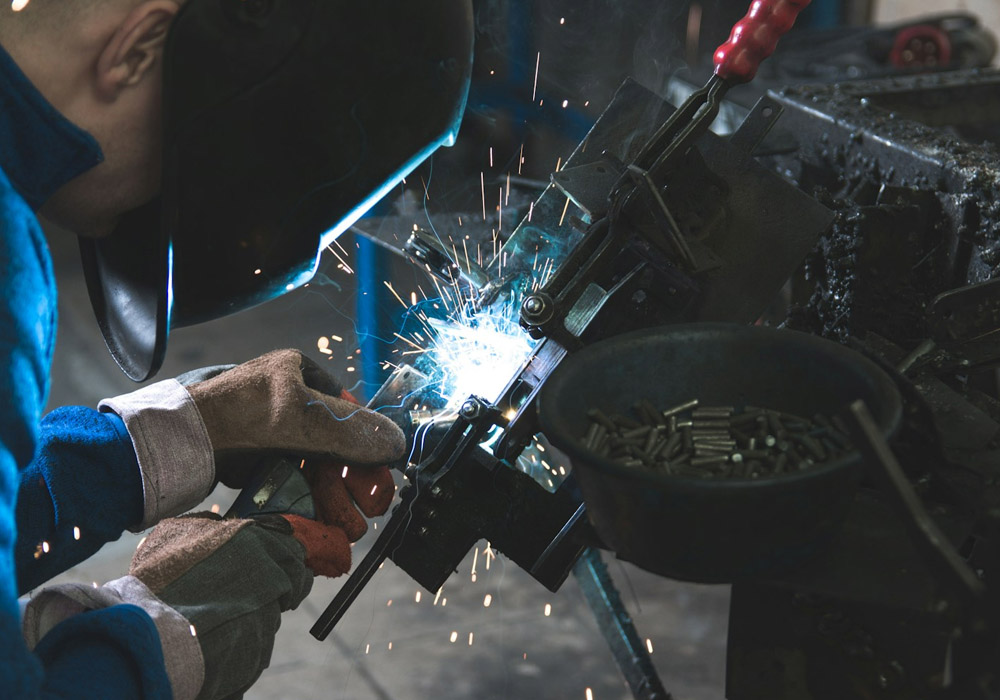
Welding joins separate metal components and contributes to the structural integrity of custom railings. Metal inert gas (MIG) welding produces clean welds for steel staircases and aluminum railings. Tungsten inert gas (TIG) welding provides precision and smooth-looking joints for stainless steel and aluminum applications.
Shielded metal arc welding (SMAW) suits heavy-duty structures and outdoor staircases, while flux-cored arc welding (FCAW) also supports fabrication work. Decorative elements receive fabrication before final finishing. Grinding and smoothing remove visible weld seams after welding work, and powder coating provides a finishing option with multiple color choices.
Plan Your Metal Fabrication Project
Metal fabrication requires clear decisions regarding various aspects; this includes the project’s use, materials, design, and production methods. These requirements help align the finished metalwork with its architectural setting and installation conditions. Custom railings, staircases, gates, and decorative metalwork require detailed planning before fabrication begins. Contact a qualified fabrication company to discuss your project requirements.