Most people don’t know the first thing about what legal documents are being sent back and forth when they submit their car to the same repair time after time. All the information gathering and scheduling and waiting usually overwhelms them, so they take a printout or a scribbled receipt saying, “This is what we did. You’re good to go” and drive off and hope the sound stops this time.
What Actually Qualifies As A “Substantial Defect”
Not every rattle or scratch qualifies you for protection under the lemon law. The law itself requires a certain level of malfunction to apply, calling for a nonconformity (a word lawyers love that just means defect) that substantially impairs the vehicle’s use, value, or safety. This threshold separates valid claims from the kind of nitpicking most customers do not because they wouldn’t like a new car for a paint scratch, but because those complaints do not form a basis for legal relief.
Because the real-world effect of the nonconformity requirement is to exclude early termination for trivial problems, implying that you lean on lemon regulations can precondition a service department to answer that the problem doesn’t qualify. Quite a few perfectly lousy cars have ever been bought back as lemons, but a competent service advisor hears lemon all day long. Since that’s the case, why would they want to put in the paperwork?
Let them know this conversation includes two conditions that either directly shortchange you or present a real risk of accident and injury. A transmission that slips intermittently, an engine that stalls without warning, brakes that pulse under normal stopping, electrical systems that shut down randomly, the A/C system that blows hot air, the heater that overheats your foot, the seat that records a butt heater demand even after it’s turned off – these determine how safely and reliably you can operate the machine. A door panel with a slight misalignment, a paint swirl on the hood, the rearview mirror that reflects it all right back at you typically won’t.
The Repair Order Is Your Most Important Document
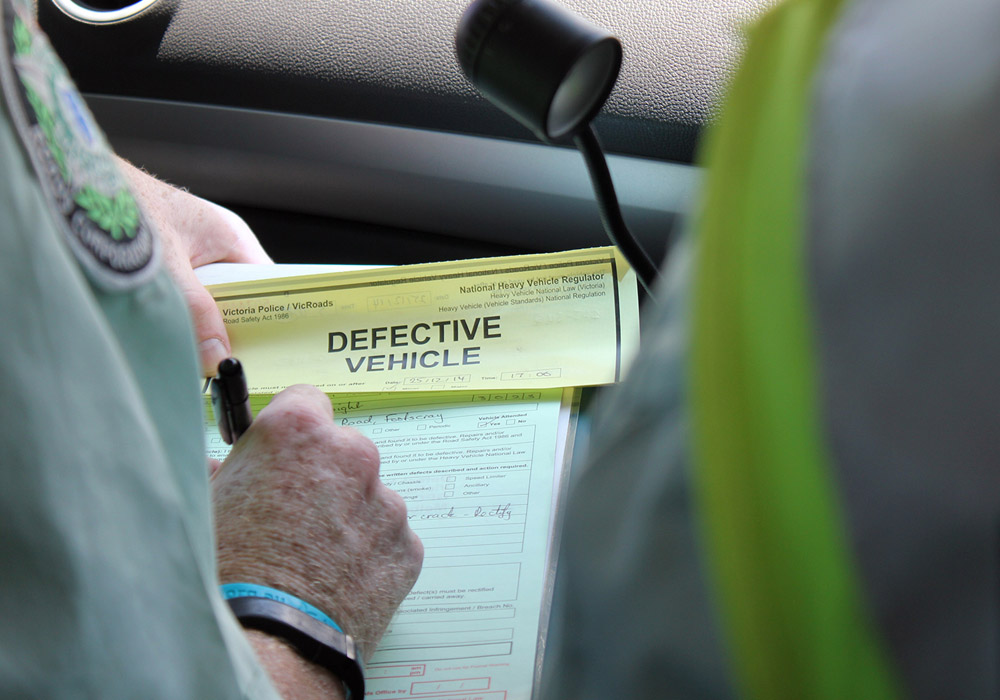
Whenever your car is taken in for a service at the dealership, you are given what is known as a Repair Order. This is essentially the official document detailing the complaint you reported and the action they took dealing with it. Given to you at the end of your visit you probably take a look at it and store it away, but you really need to give it a closer look.
The part you’re concerned with when checking out is the “customer states” part where the service advisor writes down what you told him. If you said my car was stalling on the highway at high speeds, but he wrote my car occasionally hesitates at highway speeds, well too bad you’re stuck officially with what they wrote unless you tell them to change it to reflect your specific words. The “customer states” part is a potential court document that you are trying to protect as best as possible.
Be sure that the technician’s findings actually refer to the same issue you are experiencing. We couldn’t find a problem with your vehicle, or could not duplicate, can be disappointing to see, but it’s not the end of the world. In fact, it’s more evidence that you experienced the issue on that date. This document is part of what you’re building.
How To Defeat The “Could Not Duplicate” Defense
The response “Could Not Duplicate” – often shortened to CND – is one of the most aggravating replies a customer can get… and one of the most frequently deployed strategies for warranty avoidance. The defect is intermittent. The tech drives it for ten minutes, nothing happens, they write CND. You pick it up and it fails the next day.
Your counter to this has to be multimedia evidence with timestamps.
When the defect occurs, record it. Use your phone to video or audio the symptom while parked, or have a passenger video while you drive carefully in a safe place. Do not try to record driving the vehicle yourself – pull over if possible. Details to convey during the recording: the symptom, the conditions (speed, temperature, incline, load), the date and time shown in the video, and your current mileage if you can state that.
Immediately after the event, email a clear written description to the dealer and manufacturer. You now have a timestamped written record that predates any argument about when you reported it. Bring a printout of your email with the keys when you drop the car off.
This does not only protect you – it helps a mechanic reproduce the problem by giving them conditions to test under.
Track Every Day The Car Is Out Of Service
Many lemon law frameworks also have a companion trigger consumers aren’t often aware of: cumulative days out of service. If the manufacturer never hits the number of repair attempts required, a car that’s been in the shop for a total of 30 or more days – over multiple visits – can independently still qualify for protection. That’s one reason you want to avoid waiving your rights before the problem is fixed.
The cumulative days out of service provision will often apply if an issue arises during the first 12-18 months, or 12-18,000 miles, and you encounter either an especially persistent problem that’s been back multiple times but never resolved (perhaps because the manufacturer insists it’s “normal”) or a problem that you just can’t be without a car for while waiting on a fix.
That clock ticks on weekends. It ticks on days waiting for a part. It ticks anytime the vehicle is in the dealer’s possession rather than yours, whether or not they actually worked on it that day.
You’re looking at a pad of grid paper. Draw a line across the top margin and in the similar place from the bottom, effectively dividing the sheet in half. Label the top row dates in and out; the bottom, total days. Write a VIN in the corner. Repeat for each of your repair attempts. Keep repair orders and rental car agreements in your file. Most laid-out like that with the dates in descending order, but they don’t always give you those subtleties. Sometimes the RO isn’t cut until the next morning, and the car sat over a weekend. Your personal contemporaneous log fills those gaps.
This is also the point where building a complete documentary file starts to look less like “keeping receipts” and more like building a case. Consulting with consumer advocates like RockPoint Law can help you determine whether your documented downtime, combined with your repair orders, meets the statutory threshold for a buyback in your state.
Using NHTSA Data and Technical Service Bulletins To Prove The Defect Is Systemic
One of the most compelling arguments in any lemon law claim is the suggestion that your car’s defect isn’t a fluke – it’s a documented engineering failure with the potential to afflict thousands of units of the same model.
The National Highway Traffic Safety Administration keeps a public database of consumer safety complaints, recalls, and manufacturer communications. According to NHTSA, there are over 900 safety recalls accounting for over 30 million vehicles in the United States annually. Those are good odds that your specific defect has already been reported by other owners of the same vehicle.
Search the NHTSA complaints database by your vehicle’s year, make, and model. Look for complaints that sound like the same symptom you’re experiencing. Print or save those entries. They help establish that your problem isn’t the result of driver error or unusual wear – it’s a pattern.
Technical Service Bulletins go even further. TSBs are the instructions manufacturers send to dealership technicians describing how to correct a known flaw in a specific vehicle. It’s not a recall – no public announcement, no fix unless the customer squawks. But it’s a handy admission in writing that the company was aware of the defect.
You can find TSBs through NHTSA’s database, through automotive databases that aggregate service information, or by simply asking the dealer’s service manager whether any TSBs have been issued for your complaint. If it turns out that a TSB does exist and the dealer applied the repair without telling you about the TSB, or applied it improperly, that’s fodder for your claim.
Build A Communication Log From Day One
What’s in your Repair Orders is what the dealership writes down. What they skip goes in your Communication Log – often, a lot more than they write.
Each and every phone call with a service advisor or manufacturer customer service rep goes in your log with the date, time, the other person’s full name, their title, and exactly what you were told, advised, or promised. Enter this in the log within an hour of the call, while it’s fresh in your mind. If you get the “The part should be in by the end of the week” or the “I’m elevating your case to the regional service manager,” get it written with the date, plus the name.
Even better, send yourself an email after each significant call, detailing exactly what was said and promised in the conversation. This locks in their promise on your timeline and gives you something to hand your attorney if “the part is on order” turns into “There’s no record of that ever being promised to you.”
Manufacturer’s customer service hotline especially needs a paper trail. They can and will pull up your calls when you finally lawyered up. You need to be able to put their records on the table next to yours to catch missing or inaccurate entries on their end.
The Formal Notice To The Manufacturer
In many lemon laws, a written formal notice to the manufacturer is a flat requirement before you can bring a legal lemon claim at all. This notice is legally considered to be the “manufacturer’s final repair attempt”, the last chance they get to fix the vehicle’s problem before you can sue.
The letter must be sent to the manufacturer’s “corporate office” or “warranty address”, it should not be sent to the dealership. Send it certified mail return receipt requested (make sure you keep that green return receipt, without it the manufacturer could theoretically claim they never received it and then you’re stuck).
Your notice letter should contain the following information: your name and contact information, the vehicle’s VIN, a detailed description of the defect, the dates and results of all repair attempts, the total number of days your vehicle has been out of service, and finally a clear statement that you want the manufacturer to repair the vehicle or to provide you a buyback.
Manufacturer Arbitration Programs – What To Know Before You Participate
In the event that your claim escalates, you will often be directed by the manufacturer to an arbitration program it sponsors. This will undoubtedly be presented to you as a neutral, efficient form of alternative dispute resolution. And by definition, it is an alternative to a lawsuit.
That said, arbitration programs take many forms, and are run by many different organizations. When the organization funding and administering the program is a division of the defendant in your potential lawsuit, that certainly creates an alternative dynamic.
Participating in arbitration can also limit your legal options, depending on what you agree to, and the results can vary from awards that only partially cover your out-of-pocket costs to awards that include offers to compromise that subtract your use, or don’t fully account for incidental damages, rental expenses, or even depreciation based on diminished vehicle value.
But don’t take my word for it. Competent victim’s attorneys accept arbitration awards, with no fanfare, in many instances because they are satisfied that their client has been adequately compensated.
If you are at the arbitration stage and have retained an attorney, you have seen a potential roadmap – where does the program you are considering tend to go, and how do they treat claimants you know to be represented competently?
Finally, your letters and emails, repair orders, and evidence of dealer turnover and contracting, your days out of service, your NHTSA complaints and Technical Service Bulletins accumulated along the way, mean no more and no less in a formal legal proceeding than they do in this program.