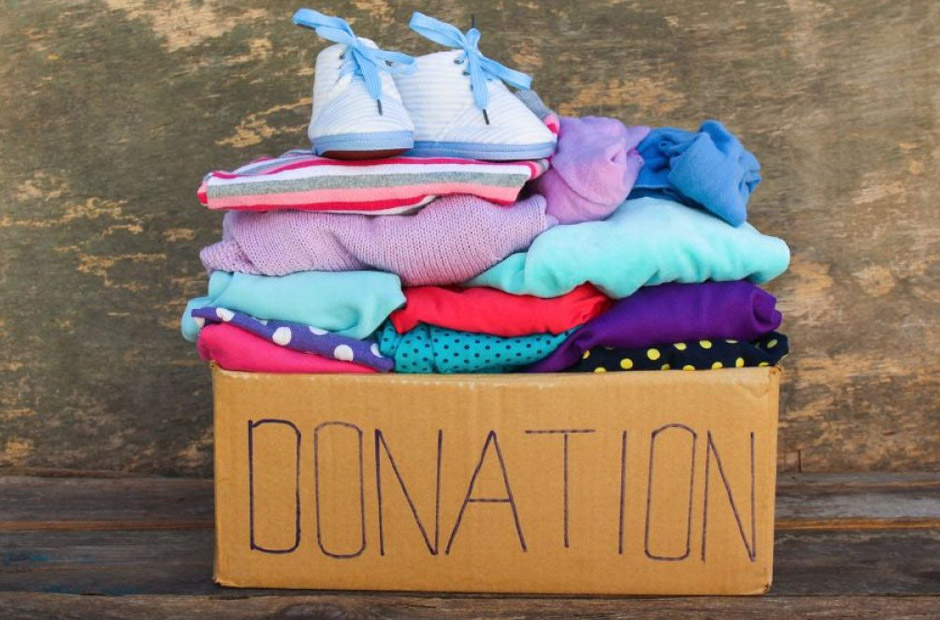
Organizing a back to school donation drive is simple to initiate and implement, but quite challenging to execute effectively. Fundamentally, anyone has the ability to put together a collection of loose-leaf paper, pens and erasers. What distinguishes a successful drive from one that will be quickly forgotten, is if the supplies truly all function collectively as a system, a complete kit that eliminates any gaps and subtly signals a student out as different from the rest of their peers on their first day.
The average family now spends close to $597 per student on back to school supplies (Deloitte, 2023 Back-to-School Survey). For a family where they just can’t absorb that cost, an ill-conceived donation bag that’s missing at least half the needed supplies doesn’t leave any less for them to try and scrounge up, it’s just which items they’re going to still have to source. That’s the minimum benchmark you’re planning against.
1. Backpacks: The Item That Holds Everything Else Together
A backpack isn’t like any other bag. It’s the centralized system that ensures every other donation item is actually useful. Loose supplies often get lost, but if they’re placed in a backpack, the problem is solved.
When you’re managing a donation drive for potentially hundreds of students, the bags must be built to last. Double zippered compartments, padded shoulder straps, reinforced base, are all non-negotiable features. Especially padded straps, a badly fitting backpack may cause mild back pain in adults, but for young students that pain can be terribly real and they’ll just ditch the backpack if they associate it with discomfort. For procurement managers who need to make sure their money goes far, Bags in Bulk Canada breaks down what your options are and the relative costs of each.
When you’re procuring at scale, size your bags by grade band. Kindergartners are tiny, they don’t need a full-size backpack. High school students probably need to be able to fit a laptop in with everything else.
2. Core Writing Instruments and the Right Mix of Them
Most pencil boxes come with No. 2 pencils. Some also have a bit more variety, but most are basically pencils. A few also-slightly-different pencil options would be what’s actually required for various writing tasks across K-12.
The functional standard no.2 pencils for the littlest kids and standardized test-takers and blue or black pens for older students who need to write in ink. A four-pack of highlighters. That covers note-taking, test-taking, and assignment annotation and never has you doubling up (as in on both pencil and pen week after week).
3. Grade-Differentiated Supplies
A blanket donation approach is not effective. A one-size-fits-all list leaves money on the table for those in need and creates waste elsewhere, as the supplies offered may not be suited to the real demand.
While building a donation list promoted to parents and community organizations, determine what types of supplies are age-specific needs versus what’s a fair bet for any grade level.
4. Organizational Tools That Keep Students Functional
While not glamorous, three-ring binders and pocket folders were the items that taught students how to manage their papers. We take them for granted because we grew up with the systems they create and enforce. But in order to do their job, they must be brand new. These portfolios provide an equity between students who can afford not to recycle single-subject notebooks and those who can’t.
Beyond binders and folders, a simple planner or agenda book quietly becomes one of the most powerful tools in a student’s kit. Deadlines, homework assignments, and test dates don’t become manageable by accident – they become manageable because a student has somewhere to write them down. For younger students, this habit is still forming; for older ones, the volume of work across multiple subjects makes it non-negotiable. A planner is also one of the last items donors think to include, precisely because adults have migrated to digital calendars and forgotten that most classrooms still run on paper-based accountability.
5. The Supplemental Items Families Rarely Budget For
Hygiene supplies have become a classroom standard so quietly that at this point, hand sanitizer and a small pack of tissues belong in every kit, no explanation needed, and teachers will voice that immediately. A reusable water bottle may sound inconsequential, but the reason you must include it is that many families wouldn’t prioritize buying one, no matter how badly a child needs it.
None of these items are part of the fun or excitement of the drive. They’re not what people post emotive pictures of on social media when excited about the drive. However, they are all things that, when missing, add up to the experience of being unmoored and under-resourced. And all of those anxiety-provoking moments are precisely what a well-run drive should be seeking to eradicate.
A drive works when what it is you aim to collect is not a group of items, but instead, a kit. Every single item must pass one litmus test: will this get a child through the door that first day, ready and able to participate, with no visible giveaway that they’re not exactly like every other kid in the class? If the answer is yes, then pack it up.