Rubber components appear in products that require sealing, cushioning, protection, or resistance to specific operating conditions. Material selection and manufacturing methods influence how each finished part performs within its intended application. Rubber molding forms components into precise shapes while accommodating different materials and production requirements. Here is more information on how material choices, molding methods, and other factors shape the finished product.
Select Rubber Materials
The properties of a molded part begin with the rubber compound selected for production. Natural rubber, nitrile, neoprene, EPDM, silicone, and Viton® have different performance characteristics, so the material must match the part’s operating conditions. When a component is exposed to fuels or temperature extremes, the compound must provide the required resistance
Nitrile is commonly selected for components that require resistance to oils and fuels. EPDM suits applications with prolonged weather exposure, while silicone is used for applications that require performance across a broad temperature range. Although these materials have different characteristics, the final selection also depends on the component’s geometry and function; the compound must meet both environmental and design requirements.
Part requirements also influence hardness and flexibility. A sealing component requires a material that provides the appropriate balance of flexibility and compression, while a bumper or support often requires greater resistance to deformation. Engineers evaluate the part’s function and operating environment before selecting the compound, and factors such as temperature, chemical exposure, and mechanical load help determine the required material properties.
Choose Molding Methods
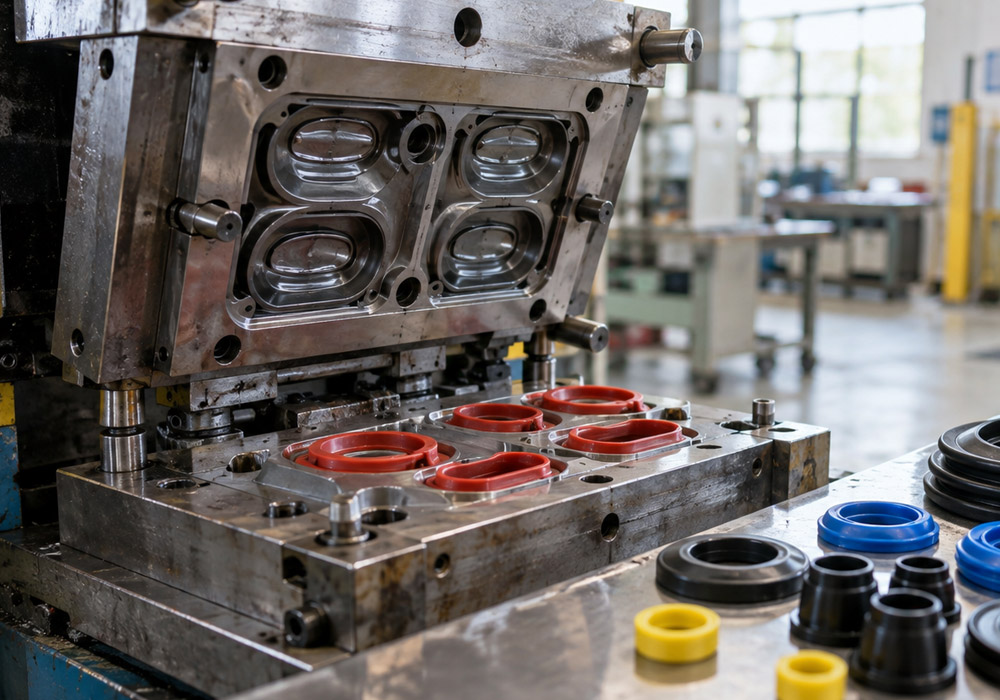
Different rubber molding methods shape rubber through distinct production processes. Compression molding places the rubber compound directly into a heated mold, while injection molding forces the compound into the mold cavity under controlled pressure. Transfer molding first places the compound in a separate chamber, and pressure then moves it into the mold cavity. The appropriate process depends on the part’s geometry, material, and production requirements. Complex parts often require different tooling and process controls than simple components. Mold design determines the shape and dimensions of the finished part. Selecting a molding method that matches the component’s design and production requirements supports consistent manufacturing.
Form Precision Components
Precision begins before the rubber enters the production equipment. Mold designs establish the required component dimensions; digital design files communicate those specifications throughout development. Once production begins, the molding equipment applies controlled pressure to shape the rubber within the mold. Several production factors receive attention during component development, and each one addresses a specific aspect of part quality:
- Part geometry: Mold cavities define the required shape and dimensions of the component.
- Clamping pressure: Press capacity provides the force required to close and hold the mold during production.
- Dimensional tolerances: Specified measurements establish the acceptable range of variation in finished parts.
- Material hardness: Durometer testing measures the hardness of the molded rubber.
- Visual inspection: Optical inspection equipment examines component surfaces and, where applicable, verifies critical dimensions.
The inspection process continues after the part leaves the mold. Measurements and material tests determine whether the finished component meets its specified requirements, and inspection results provide a record of part quality. Production records document process and inspection data for subsequent manufacturing runs.
Learn More About Rubber Molding
New product designs sometimes require parts with shapes that standard parts do not offer. Reviewing the material and production options helps determine how a custom rubber part will fit into the larger product. Rubber molding also supports the production of specialized parts as designs and requirements change. Contact a qualified rubber molding manufacturer to discuss your component requirements and explore material and production options.