In the construction world, safety and efficiency are paramount, especially when it involves working at height. One essential solution that addresses these priorities is temporary roof scaffolding. This type of scaffolding provides a versatile and secure platform, allowing construction work to proceed safely under various weather conditions.
What is Temporary Roof Scaffolding?
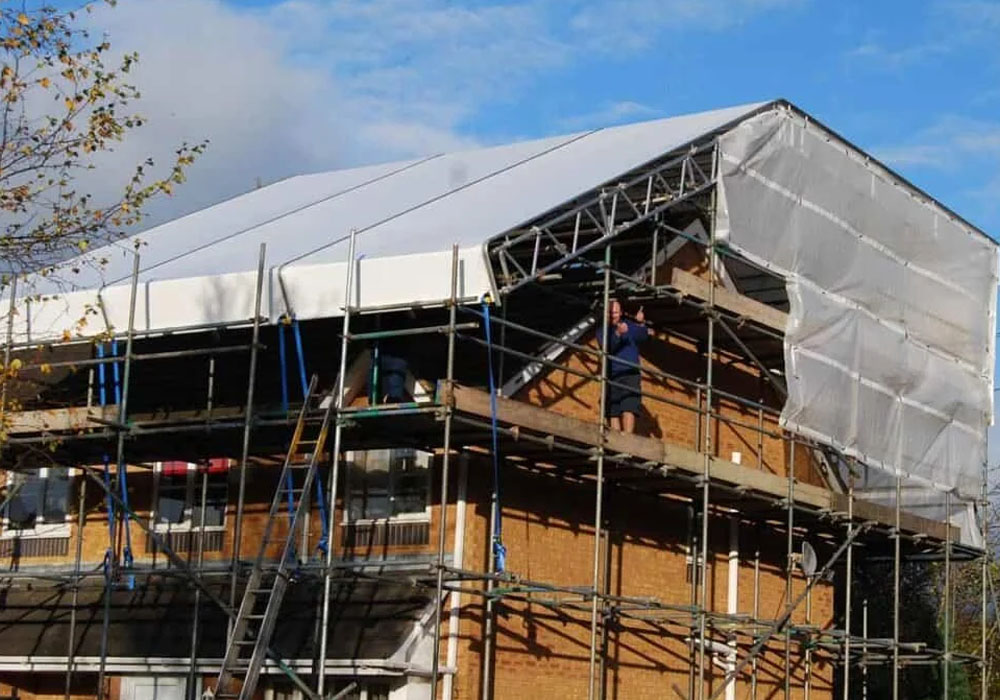
Temporary roof scaffolding is a specialised framework used in construction to provide overhead coverage and protection for workers and building structures. It usually comprises an assembly of tubes and fittings designed to create a stable structure that can support loads and withstand environmental elements such as wind and rain.
Key Components of Temporary Roof Scaffolding
The main components include the scaffolding platform, which offers a working surface; the guard rails, ensuring worker safety; and the temporary roof itself, typically made from robust materials such as aluminium or reinforced polyethene. These elements are carefully selected to maintain durability and flexibility.
Applications of Temporary Roof Scaffolding
This scaffolding type is widely used across various construction projects. It is ideal for roofing jobs, allowing workers to install or repair roofs without exposure to the elements. Moreover, it is indispensable during building restoration or when additional protection is required against weather conditions.
Benefits of Using Temporary Roof Scaffolding
The primary benefit is the protection it affords; work can continue in nearly all weather conditions, preventing delays and ensuring project timelines are met. Furthermore, it enhances safety by providing a controlled environment on construction sites.
Cost-Effectiveness
Investing in temporary roof scaffolding can also be cost-effective. By safeguarding against potential weather damage and minimising project delays, it can save money in the long term, highlighting its importance beyond immediate safety benefits.
Temporary Roof Scaffolding Versus Traditional Scaffolding
While traditional scaffolding offers support and access, temporary roof scaffolding goes further by providing coverage. This makes it essential for more comprehensive protection, particularly in inclement weather.
Installation Process
Installation must be carried out by professionals who ensure that the scaffolding system adheres to safety standards. Typically, the process involves precise planning and assembly, requiring expertise in structural systems to ensure maximised safety.
Duration and Flexibility
Its modular nature allows the scaffolding to be customised for different project requirements and timelines. This flexibility is vital for projects with unique demands or changing schedules.
Environmental Considerations
Modern temporary roof scaffolding solutions often incorporate eco-friendly materials and designs, reflecting the growing focus on sustainability in construction projects.
Health and Safety Regulations
Compliance with health and safety regulations is critical. Scaffolding systems must be inspected regularly to ensure integrity and safety, aligning with legal standards set by relevant construction authorities.
The Role of Professional Scaffolding Services
Hiring qualified scaffolding services can make a significant difference in the project’s outcome. Professional companies bring experience and expertise, which can optimise both the safety and efficiency of scaffolding solutions.
Challenges in Temporary Roof Scaffolding
Despite its advantages, there are challenges such as the need for regular maintenance and potential weather-related damage. Addressing these challenges requires ongoing attention and resource allocation.
Future Trends
Advancements in materials and technology promise to enhance the functionality of temporary roof scaffolding, introducing innovations that improve safety, efficiency, and environmental footprint.
Conclusion
Temporary roof scaffolding plays an indispensable role in modern construction, offering unparalleled protection and flexibility. As construction demands continue to evolve, its importance will only increase, promising a safe and efficient means of project execution.