Key Takeaways
- Routine inspections help teams find small pump problems before they become disruptive failures.
- Preventive, predictive, and corrective maintenance each have a role in a practical program.
- Changes in vibration, noise, temperature, leakage, flow, pressure, and motor load deserve attention.
- Lubrication, sealing, alignment, and clean operating conditions strongly affect pump life.
- Safe isolation, lockout procedures, and guard replacement must be part of every repair.
- Pump performance and energy use depend on the whole system, not just the pump itself.
Pumps are central to many manufacturing, processing, agricultural, utility, and water-handling operations. Whether a facility operates a summit pump or another industrial unit, a failure can interrupt production, waste product, damage connected equipment, or expose workers to process hazards.
A dependable maintenance program does not have to be overly complex. It should give operators and technicians a clear way to inspect equipment, document changes, prioritize work, and correct developing issues before an unexpected shutdown forces a rushed repair.
Why Pump Maintenance Deserves More Attention
A pump rarely works alone. Its condition is affected by the motor or driver, coupling, baseplate, seals, piping, valves, controls, fluid properties, and operating demands. A pump may appear to be the source of a problem when the root cause is restricted suction piping, a changed process requirement, poor alignment, or strain from connected piping.
Maintenance is most effective when it is treated as an operating strategy rather than a response to failure. The Department of Energy offers pump-system assessment resources that emphasize maintenance, system efficiency, pump selection, and matching equipment to operating requirements.
What a Practical Maintenance Program Includes
Most facilities need a balanced approach that combines three types of maintenance:
- Preventive maintenance: Scheduled cleaning, lubrication, inspection, adjustment, and replacement of wear items.
- Predictive maintenance: Condition checks that use vibration, temperature, pressure, flow, sound, motor load, or oil condition to identify deterioration.
- Corrective maintenance: Repairs performed after a defect is discovered or equipment fails.
Maintenance frequency should reflect pump criticality. A unit that supports a production bottleneck, handles hazardous fluid, or has no installed backup generally needs closer monitoring than a lightly used standby pump.
Build a Simple Inspection Routine
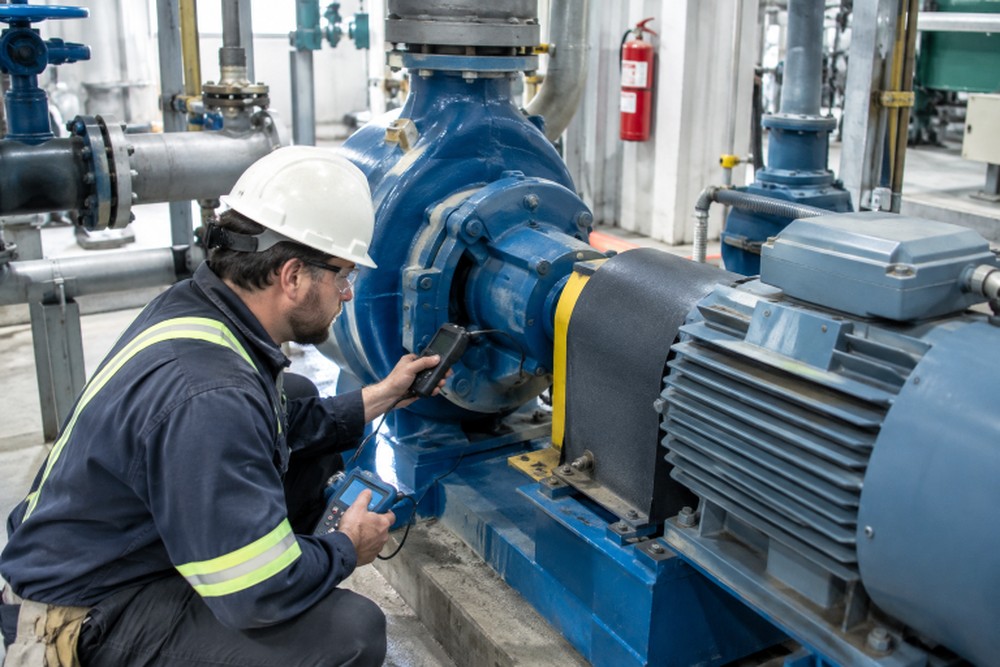
Daily or weekly rounds create a foundation for reliable pump operation. Operators should be trained to recognize normal conditions so that new or worsening symptoms stand out.
- Look for leaks at seals, flanges, fittings, vents, drains, and piping connections.
- Listen for unusual rattling, grinding, squealing, pulsing, or cavitation-like sounds.
- Check for abnormal heat at bearings, housings, motors, couplings, and seals.
- Review the available pressure, flow, speed, and motor load readings.
- Inspect guards, fasteners, baseplates, supports, and surrounding housekeeping.
- Record changes even when the pump is still operating normally.
A single reading may not explain much on its own. Trends are usually more valuable. For example, gradually rising vibration, temperature, or current draw can provide an early indication that a component or operating condition needs investigation.
Common Warning Signs and Possible Causes
These symptoms are useful starting points for troubleshooting, not final diagnoses:
- Higher vibration: Misalignment, imbalance, looseness, worn bearings, soft foot, or piping strain may contribute.
- Reduced flow: Look for restrictions, suction problems, worn internal components, air entry, or changed system settings.
- Excessive noise: Cavitation, poor lubrication, damaged components, or unstable flow conditions may be involved.
- Seal leakage: Check seal wear, shaft condition, installation quality, fluid compatibility, and pressure conditions.
- Rising motor current: Investigate overload, friction, increased fluid viscosity, changed process demands, or mechanical binding.
- Overheating: Review lubrication, bearing condition, alignment, flow conditions, and cooling arrangements where applicable.
Focus on Lubrication, Seals, and Alignment
Lubrication, sealing, and alignment are recurring causes of avoidable pump trouble. Use the lubricant type, quantity, and service interval specified for the equipment and operating environment. Too little lubricant can accelerate wear, while over-lubrication can contribute to heat and bearing problems.
Inspect mechanical seals, packing, gaskets, and nearby surfaces for leakage or damage. Small leaks can worsen over time, especially when the pump handles corrosive, hot, abrasive, or otherwise hazardous fluids.
Alignment Checklist
- Confirm that the base and mounting surface are stable and secure.
- Inspect coupling condition, spacing, and guard fit.
- Use appropriate alignment tools and follow manufacturer tolerances.
- Recheck alignment after tightening mounting fasteners.
- Verify that connected piping is not pulling the pump or driver out of position.
Use Condition Monitoring Before Failure
Condition monitoring helps teams schedule repairs when they are manageable, rather than reacting to emergencies. Vibration analysis, infrared temperature checks, motor-current readings, oil analysis, and pressure or flow trending can all provide useful information when measurements are taken consistently.
Facilities do not need to start with expensive tools on every asset. A disciplined log of basic operating readings can reveal patterns. Advanced monitoring can then be focused on pumps with the greatest production, environmental, maintenance, or safety consequences.
Connect Maintenance With Energy Efficiency
Reliable equipment is not automatically efficient equipment. Worn parts, blocked strainers, poor alignment, excessive throttling, unnecessary runtime, and changed system resistance can increase the energy required to move fluid.
- Confirm that pumps are not running when the process does not require flow.
- Review whether current flow-control methods match production needs.
- Investigate excessive pressure loss across valves, strainers, and piping.
- Compare present flow, pressure, and motor load with expected operating conditions.
- Reassess the system after piping changes, process upgrades, or control modifications.
Make Safety Part of Every Repair
Pump work can involve rotating equipment, electricity, stored pressure, hot surfaces, chemicals, and unexpected startup. OSHA notes that safe servicing includes notifying affected employees, isolating energy, applying lockout or tagout, relieving stored energy, verifying isolation, and restoring safeguards before equipment returns to service.
Create a Schedule and Keep Useful Records
Set inspection intervals based on operating hours, fluid characteristics, pressure, temperature, environmental conditions, pump criticality, and failure history. Daily checks can cover leaks, sounds, heat, and readings. Monthly reviews may examine trends, lubrication practices, and guards. Planned outages are the right time to inspect internal wear, bearings, shafts, bushings, seals, and clearances.
Each maintenance record should include the equipment identifier, date, operating condition, symptom, measurement, work completed, parts used, and follow-up action. Tracking downtime, repeat repairs, seal and bearing replacements, and motor load trends helps teams identify recurring causes rather than repeatedly replacing parts.
Questions to Ask Before Replacing a Pump
- Did the failure result from wear, installation error, operating practice, or a process change?
- Have fluid viscosity, temperature, abrasiveness, or chemistry changed?
- Have required flow or pressure conditions changed since installation?
- Are suction conditions, piping, valves, controls, and foundation contributing to the issue?
- Would repair, system adjustment, redesign, or a different operating point address the real cause?
Conclusion
A strong pump maintenance program relies on consistent inspections, informed troubleshooting, safe repairs, and accurate records. By acting on early warning signs and reviewing the complete pumping system, maintenance teams can reduce surprise failures, improve planning, and make better decisions about reliability and energy use.