Caring for a loved one with memory loss brings both emotional and practical challenges. Families want to keep their relatives safe while also protecting their comfort and dignity. A familiar home can offer a strong sense of security, which becomes more important as memory declines.
Many families now choose in-home support because it allows individuals to remain in a place they recognize. This approach builds confidence and reduces confusion during daily routines. This article explains how in-home dementia care improves safety, strengthens emotional well-being, and supports families through structured assistance.
Creates a Safe Daily Routine with Personalized Support
In-home assistance focuses on building steady routines that match the individual’s habits and needs. Caregivers help with daily tasks such as meals, hygiene, and medication reminders, which reduces the risk of accidents. With structured schedules, individuals feel more secure and less overwhelmed.
Professional support also connects families to dementia care programs that guide care plans based on specific stages of memory loss. These programs ensure that caregivers follow proven methods to manage behaviors and maintain consistency. As a result, loved ones experience fewer disruptions and a stronger sense of control in their day.
Familiar Spaces Reduce Confusion and Anxiety
A known environment plays a major role in emotional stability. When individuals remain at home, they recognize rooms, furniture, and personal items that carry meaning. This familiarity reduces stress and helps them stay oriented throughout the day.
Caregivers enhance safety by adjusting the home without removing its comfort. They may improve lighting, remove tripping hazards, and organize spaces for easy access. These small changes protect individuals while keeping the surroundings warm and recognizable.
Practical Safety Measures That Make a Difference
In-home care includes several protective steps that prevent harm and support independence. Caregivers stay alert and respond quickly to changes in behavior or health.
- They monitor movement to prevent falls and wandering
- They assist with safe meal preparation and proper nutrition
- They ensure medications are taken correctly and on time
- They provide supervision during bathing and mobility tasks
These actions create a secure setting where individuals can move freely without constant fear. At the same time, families gain peace of mind knowing that someone reliable stays present.
Builds an Emotional Connection Through One-on-One Care
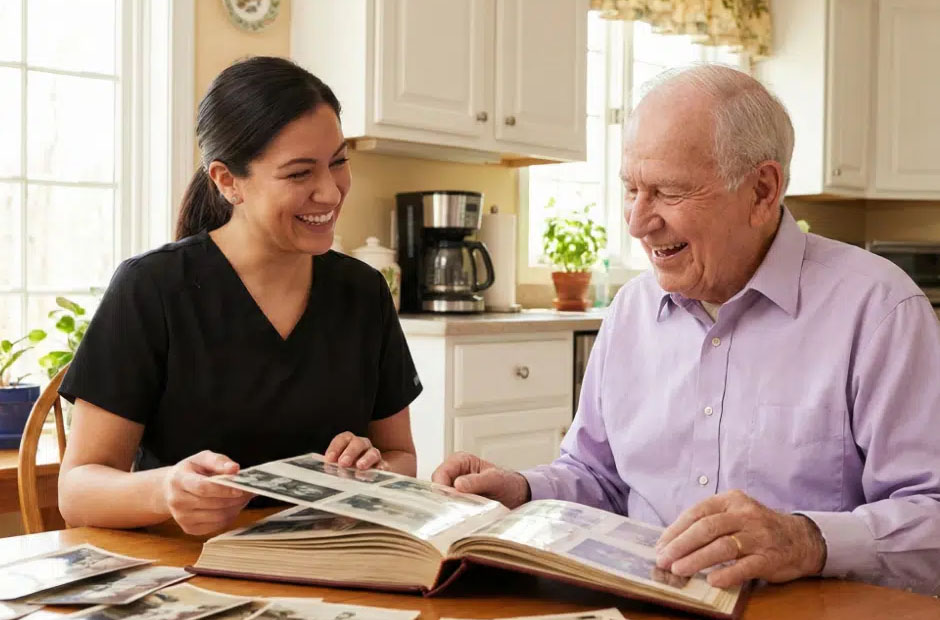
Personal attention strengthens trust and emotional comfort. Unlike group settings, in-home care offers focused interaction that matches the individual’s pace and personality. Caregivers engage in meaningful conversations, simple activities, and memory-based exercises that encourage participation.
This connection helps reduce feelings of isolation and frustration. It also supports better communication, even when verbal skills decline. Through consistent interaction, individuals feel valued and understood, which improves their overall mood and behavior.
Supports Families with Guidance and Relief
Family members play an important role in care, but they also need time to rest and manage other responsibilities. In-home support provides relief by sharing daily tasks and offering expert guidance. Caregivers help families understand changes in behavior and suggest ways to respond calmly.
Many services also connect families to dementia care programs that provide education and long-term planning support. These resources prepare families for future needs while ensuring that current care remains effective and compassionate. With the right support, families can focus more on meaningful moments rather than constant stress.
In-home dementia care offers a balanced approach that protects safety while preserving comfort. Combining structured routines, familiar surroundings, and personal attention, it helps individuals maintain dignity and emotional stability. This method supports both the individual and their family, creating a safer and more reassuring path forward.