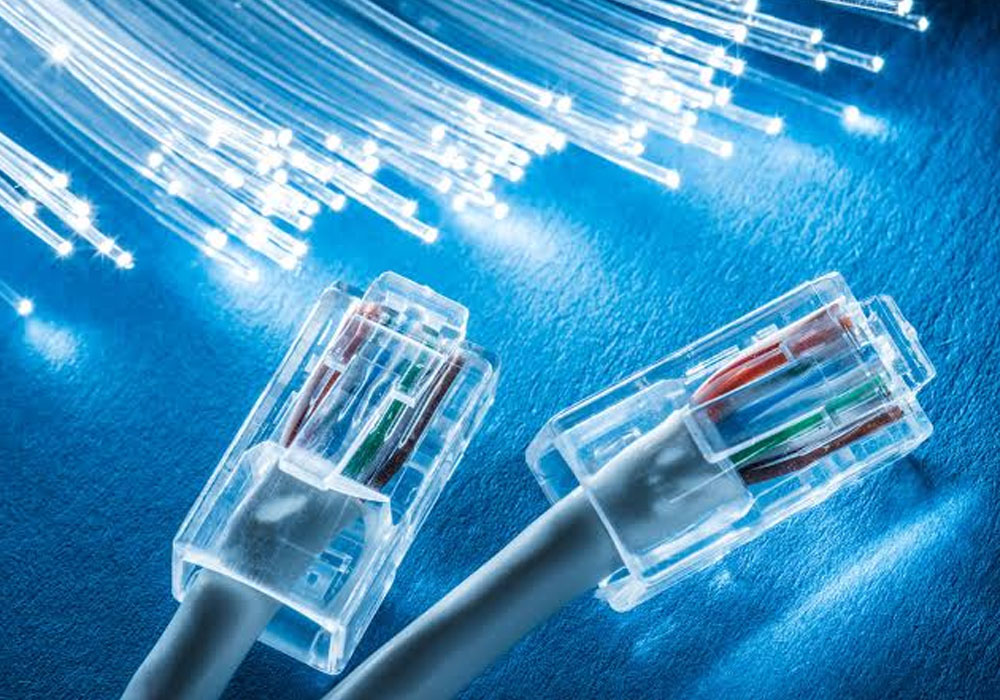
Picking the right type of connection to the Internet can be tricky sometimes, given that there is more than enough choice of connections today. Consumers and businesses tend to make use of cable and fiber as the means of getting connected to the Internet. Where cable uses old-fashioned copper wires to carry information through the Internet, fiber uses tiny glass fibers to send huge amounts of information in the form of light signals. This information on how they work and how they shape up our internet every day will help you pick the right broadband package.
When you choose advanced digital tools, it really changes the way you can work or connect online. If you work with a good internet company like Clear Networx, it means your house or office will have the best web setup. Their team knows what they are doing and will help you get smooth and fast data speeds. This is very important now, with how much we use and depend on the internet each day.
The Core Technology: Light vs. Electricity
To know why fiber optics are better than the old ways, you need to see how the main setup works.
- Traditional Cable Connections: This method sends data using electrical signals on copper coaxial lines with insulation. The copper wires in these cables can wear down over time. They also lose a lot of signal when the data has to travel long distances.
- 100% Fiber-to-the-Premises (FTTP): Data transmission is done using glass fiber strands. Light moves much faster than electricity. It can take a very high amount of data over a long distance without slowing down or getting weak.
| Performance Feature | Traditional Cable | 100% Fiber Optics |
| Data Transmission Method | Electrical signals over copper | Light pulses through glass strands |
| Download Speeds | Up to 1,200 Mbps | Up to 2,000+ Mbps |
| Upload Speeds | Significantly slower than downloads | Fully Symmetrical (matching downloads) |
| Weather/Signal Interference | Vulnerable to rain, heat, and cold | Completely immune to weather changes |
Symmetrical Speeds: The Fiber Advantage
One big problem with cable networks is uneven bandwidth. Often, cable companies make download speeds much faster than upload speeds. For instance, a cable plan may give you a download speed of 500 Mbps; however, the upload speed can be only 20 Mbps.
Fiber broadband allows you to enjoy equal speed for uploading and downloading. This means when you upload big files or share video projects, it is just as fast as downloading. You can also stream live content with no wait. Also, because the upload and download speeds match, big uploads will not slow down anyone’s downloads at home.
Ultimate Reliability Under Heavy Demands
Cable connections use a shared local loop. This means you and your neighbors all use the same data pipe. When a lot of people go online, like in the early evening, the speed can get slow. You may see more screen buffering, and there can be sudden lag as well.
Or, you can get a special FTTP setup. It gives your place its own direct line to the main data hub. This setup stops slowdowns in the area. Glass lines don’t carry electricity, so they do not have problems from signal noise, hard storms, or very hot or cold weather.
The Productivity Factor: For local operations, unmatched network reliability translates directly to zero lost hours, flawless video conferencing, and uninterrupted access to cloud databases.
Conclusion
Old cable systems did good work in the past, but they can’t match the data needs of today. Moving to a glass-based setup gives you very fast and equal speeds both ways. This helps to make sure your way of using the internet works well in the future. Some people need strong home internet for 4K streaming. Others want strong systems for big business data. With Clear Networx, you get top speed and all the data your place needs.