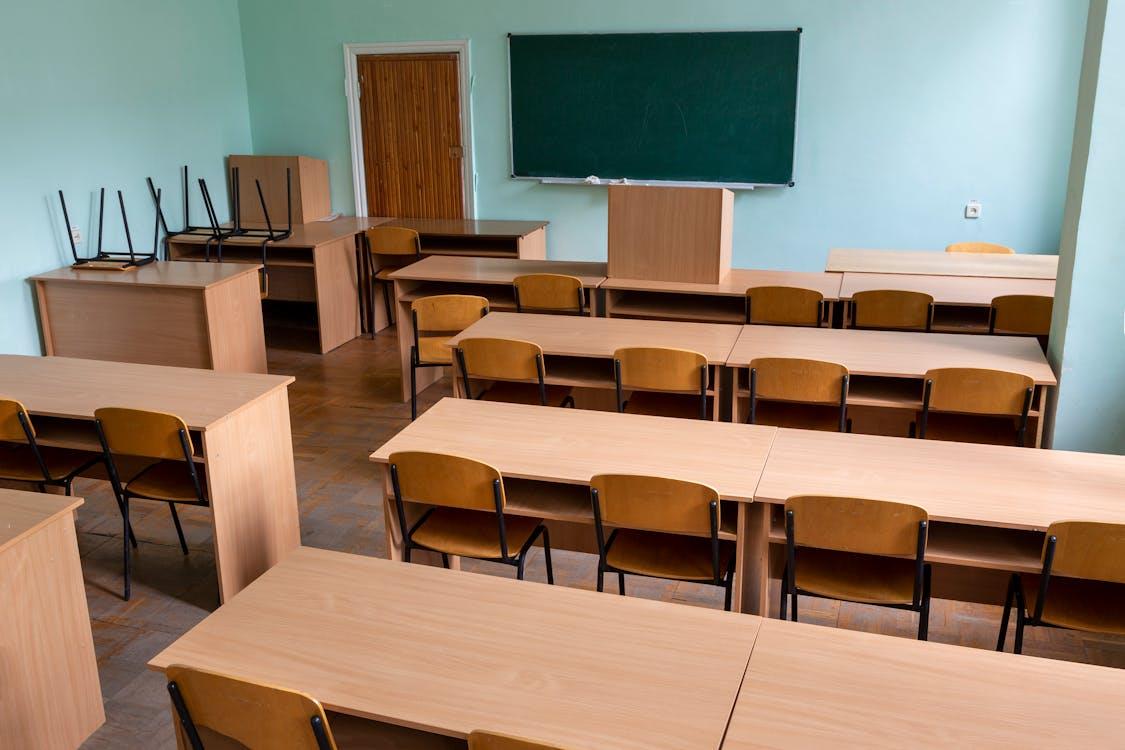
Want to create a classroom that actually works for every student?
Teachers have a dilemma. They face 30 students who each learn differently. Some need a quiet atmosphere to concentrate. Others learn best through collaboration. And a few just can’t sit still for 6 hours a day.
Here’s the problem:
Traditional classrooms are built for one type of learner. The rest are left behind.
Enter flexible classroom design. By making simple changes to your space, you can help your students learn better, focus more and succeed in your class.
Let’s jump in!
What you’ll discover:
- Why Flexible Classrooms Matter
- Understanding Different Learning Styles
- 5x Smart Design Strategies For Flexible Classrooms
- Choosing The Right Furniture
Why Flexible Classrooms Matter
Flexible classrooms are more than a buzzword. They are data driven and have results to prove it.
Design your classroom around your students and not the other way around and you will create a revolution in student engagement. They will take responsibility for their own learning. They will want to be in the room.
Did you know that 78% of teachers think flexible learning environments have a positive effect on student learning outcomes? That’s a big number and it’s a telling sign of where education is going.
Flexible classrooms also help with:
- Behavioural engagement: Students spend more time interacting and collaborating instead of being passive.
- Cognitive engagement: Students get to choose how they learn, which builds focus.
- Emotional comfort: A calm space creates less anxiety (hello, maths).
So, if you’re still trundling along with ranks of identical desks and fixed seating, it’s time to rethink. Flexible classrooms need a wide range of school chairs to fit every learner. Soft seating for cosy reading corners, ergonomic student chairs for industrious task work, the right furniture is the foundation of any flexible classroom.
Understanding Different Learning Styles
Before you design a classroom, you have to ask who you are designing it for. Not all students learn the same way.
Most teachers will agree that students fall into a few main learning style groups:
- Visual learners: They learn best by seeing — diagrams, charts, and videos.
- Auditory learners: They learn through listening — discussion, lectures, and audio.
- Kinesthetic learners: They learn by doing — movement and hands-on activities.
- Reading/writing learners: They prefer text-based content and note-taking.
Here’s the kicker…
The vast majority of classrooms only address one or two of these styles. If your room is set up for the visual and auditory, you are neglecting your kinesthetic students.
A flexible classroom has the solution. With a variety of zones and furniture, you can accommodate every learner simultaneously.
5x Smart Design Strategies For Flexible Classrooms
Okay, now on to the good stuff. These 5 tips are the simplest way to begin converting your classroom into a flexible learning environment. There’s no need to break the bank — you can begin small and add to it as you go.
Create Different Learning Zones
The first step is to break your classroom into zones.
Imagine your classroom as a coffee shop. There are cozy nooks for reading, large tables for collaboration and counter seats for individual work. Your classroom should be the same.
Try setting up zones for:
- Quiet, independent work
- Group collaboration
- Hands-on projects
- Reading and reflection
Different zones should have different furniture to fit the purpose of the zone. Group zones should have flexible tables and student chairs to easily move in seconds. Quiet zones should have comfortable single seating. Hands-on zones should have wipe-clean surfaces and stools to move around.
Use Movable Furniture
This one is huge.
Moveable furniture is key in a flexible classroom. If your tables and chairs are too heavy to rearrange, you’ll never change the room.
Look for furniture with:
- Wheels for easy movement
- Stackable designs to save space
- Lightweight materials
- Modular shapes that fit together in different layouts
The objective is to be able to move your room in less than 5 minutes. This way you can go from lecture mode to group work mode without losing energy.
Add Soft Seating Options
Not every student learns best sitting upright at a desk.
Adding soft seating — beanbags, floor cushions, or low sofas — gives your students choice. Some kids will focus better curled up with a book than they ever will at a desk.
This is more important than most teachers realise. Research has found that 73% of the student progress in maths credited to classroom design was linked to flexibility and student ownership.
Wow, that’s huge. By simply allowing students some control over where they sit, you can greatly enhance their learning.
Bring In Standing Desks
Some kids just cannot sit still. And forcing them to is not helping anyone.
Standing desks are a wonderful tool to have in any flexible classroom. They provide kinesthetic learners the movement they crave without distracting the rest of the class.
Standing desks help with:
- Better focus for restless students
- Improved posture
- Higher energy levels throughout the day
- Less fidgeting and disruption
You also don’t need one for every child either. Having 2 or 3 standing desks at the back of the room can make a big impact.
Make Storage Smart and Accessible
A flexible classroom is only effective when it is well-organised. Classrooms can quickly become cluttered when students are moving around the room. Clever storage solutions keep materials organised.
Have mobile trolleys, wall shelves, under-desk drawers and labelled bins for shared resources. If students can help themselves (and replace items) with no assistance, your classroom will run far more smoothly.
Choosing The Right Furniture
Furniture is the cornerstone of any flexible classroom. Mess this up and nothing else will run right.
When choosing chairs and desks, look for:
- Comfort: Kids spend hours in these chairs. Comfort matters.
- Durability: School furniture takes a beating. It needs to last.
- Ergonomics: Good posture supports focus and learning.
- Flexibility: The ability to move, stack, and rearrange easily.
Cheap furniture will save you money year one but cost you year two and after. Spend your money on quality items that will last for decades.
Bringing It All Together
Flexible classrooms are not a “nice to have”. They are a necessity for any school that is serious about providing for every learner. By zoning, using moveable furniture and allowing choice of where and how students learn, you can revolutionise your classroom into a space that actually works.
The best part? You can do it a little at a time. Start with one zone. Add some soft seating. Replace a few fixed desks with mobile ones. Do it over time.
Your students will thank you. And so will your test scores.