Key Takeaways
- An asthma action plan turns changing symptoms into clear, personal next steps.
- Green, yellow, and red zones help identify routine control, worsening symptoms, and urgent situations.
- A complete plan includes medicines, symptoms, triggers, contact details, and emergency instructions.
- Short symptom notes and peak flow readings, when used, can help identify patterns over time.
- Plans should be reviewed with a health care professional after treatment changes or serious flare-ups.
Asthma symptoms can change with illness, activity, seasons, and environmental exposures. A written asthma action plan gives you, your family, and other caregivers a practical guide for responding before symptoms worsen. Some people may also wish to explore whether an asthma clinical trial is appropriate for them by discussing research opportunities with a qualified health care professional. An action plan is not a substitute for medical care. It is a personalized document created with your clinician that explains what to do when you feel well, when symptoms begin to worsen, and when urgent help is needed. Clear written instructions can reduce uncertainty when breathing becomes difficult or stressful.
Why Asthma Action Plans Help
Asthma does not always look the same from one day to the next. A plan organizes your usual treatment, early warning signs, and emergency steps in one place. The green, yellow, and red asthma zones provide a familiar structure for discussing symptoms and treatment instructions with a health care professional. Written guidance is especially helpful when more than one person may need to respond. Parents, caregivers, school staff, coaches, roommates, and travel companions can use the same current plan rather than relying on memory or assumptions. Each person with asthma needs an individual plan, even when family members have similar symptoms.
What to Include in a Personal Plan
Your clinician should tailor the plan to your diagnosis, medicines, symptoms, and daily routine. Do not copy another person’s medication schedule, doses, or emergency directions. A useful plan commonly includes:
- Daily medicines, including their names, timing, and instructions.
- Quick-relief medicine instructions, if prescribed.
- Your own early warning symptoms, such as cough, wheeze, chest tightness, or shortness of breath.
- Peak flow ranges, if your clinician recommends peak flow monitoring.
- Known triggers and realistic ways to reduce exposure.
- Phone numbers for your health care provider, emergency contact, and preferred emergency department.
- Directions for caregivers, school personnel, or workplace contacts.
How the Three Zones Work
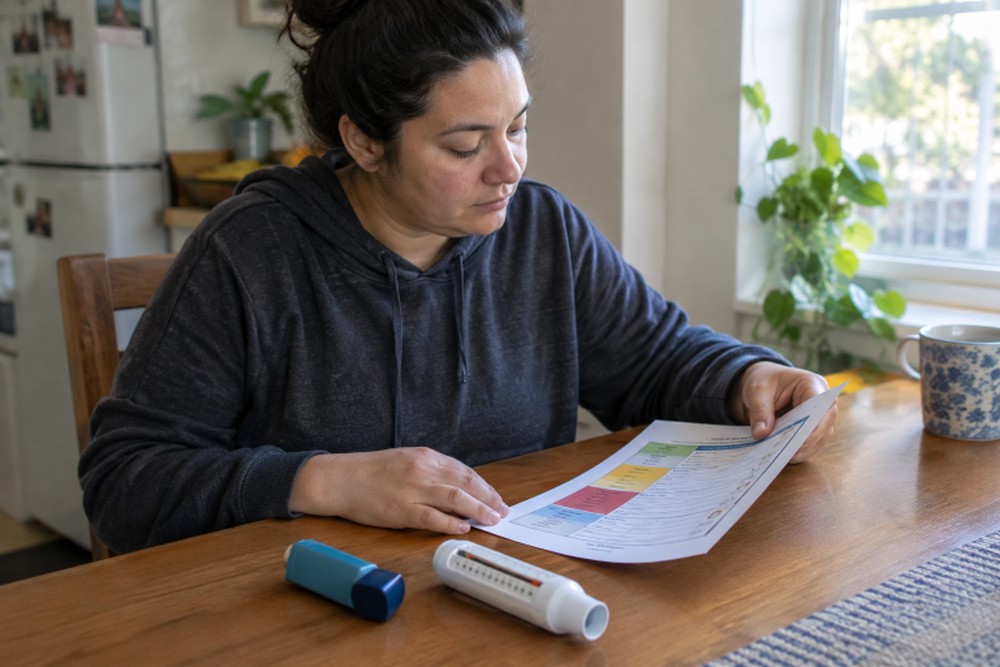
The traffic-light format helps separate everyday management from a possible flare-up. Your personal zones may be based on symptoms, peak flow readings, or both.
Green Zone: Doing Well
In the green zone, you can generally do your usual activities without asthma symptoms interfering. Continue the routine treatment listed in your plan, even if you feel well, unless your prescriber gives different instructions.
Yellow Zone: Symptoms Are Getting Worse
The yellow zone signals caution. You may be coughing, wheezing, waking at night, feeling chest tightness, or having more trouble with exercise, work, or school. Follow the added steps in your plan and contact your provider when the plan directs you to do so.
Red Zone: Medical Alert
The red zone means symptoms are severe or are not improving as expected. Difficulty talking, walking, or performing normal activities can be a warning sign. Follow your emergency instructions immediately and seek urgent medical care as directed.
How to Track Symptoms and Triggers
A simple symptom log can give your health care professional more useful information than trying to remember several weeks at once. Keep it brief enough that you will actually use it. Record:
- The date and time the symptoms occurred.
- The symptom you noticed and how it affected activity or sleep.
- What you were doing before symptoms began.
- Possible exposures, including smoke, dust, pollen, mold, fumes, fragrance, or respiratory illness.
- Medicine used and whether it helped.
For example, you may notice symptoms after using strong cleaning products, during outdoor exercise, or after a cold. The purpose is not to diagnose the cause on your own. It is to identify possible patterns to discuss at a medical visit.
Where Peak Flow Readings Fit
A peak flow meter measures how quickly you can blow air out of your lungs. Some people use readings as part of their action plan, while others rely primarily on symptoms and daily function. If peak flow monitoring is part of your care, ask your clinician how to establish a personal best, use a consistent technique, and record results. One number does not tell the whole story. Symptoms, how you feel, and the instructions in your personal plan still matter. Use the same meter when possible and bring your log to appointments if your clinician asks you to track readings.
Using a Plan at Home, School, and Work
Keep a current copy readily accessible, and share it only with people approved to help. Families can give copies to caregivers, while parents may share a child’s plan with school nurses, teachers, coaches, and after-school staff. Adults may choose to inform a manager, a trusted colleague, a roommate, or a travel companion. Check that medicines are stored as directed and are not expired. Children should be taught age-appropriate words to describe breathing symptoms and know which adult can help. The instructions for home and school asthma plans can help families prepare for situations in which caregivers need the same information.
When to Review or Update the Plan
An action plan should change when your health needs or daily life changes. Review it during regular visits and after a serious flare-up, a medication change, a new diagnosis, a move, a new school year, a job change, a renovation, or a new pet. Confirm that phone numbers, medicine names, emergency contacts, and instructions are still correct.
When to Seek Urgent Medical Help
Severe breathing trouble, trouble speaking, bluish lips or face, confusion, fainting, or symptoms that do not improve according to your red-zone directions can require emergency care. Follow your personal plan and call 911 or local emergency services when immediate help is needed. Do not delay emergency care to search for information online.
Common Questions About Asthma Action Plans
Does everyone with asthma need a written plan?
A written plan can be useful for people with different levels of asthma because symptoms and treatment needs can change. It is particularly helpful when caregivers, schools, or other adults may need to act quickly.
Can family members share one plan?
They can use the same format, but each person needs separate medicines, symptom patterns, peak flow ranges if used, and emergency instructions.
What if symptoms do not seem to match a color zone?
Follow the closest direction in your personal plan and contact your health care professional for clarification. Treat severe symptoms as urgent, even if you are unsure which zone applies.
Conclusion
An asthma action plan is more than a form. It is a practical communication tool that brings together symptoms, medications, known triggers, important contacts, and emergency steps in one clear, organized document. Having this information in one place can make it easier for individuals and their families to understand what to do when symptoms change or an asthma episode occurs. The plan should reflect the person’s specific needs, including their prescribed medications, warning signs, and instructions for different symptom levels. Keep it personal, current, easy to find, and accessible to the people who may need it, such as family members, caregivers, teachers, or other appropriate contacts. Review the plan regularly, especially when medications, symptoms, or treatment instructions change, and discuss any questions with a qualified health care professional. A clear, up-to-date plan can help everyone respond more consistently and recognize when additional medical attention may be needed.