Key Takeaways
- Routine reviews help commercial properties catch hazards before they become emergencies.
- Every checklist should reflect the building’s occupancy, layout, operations, and fire risks.
- Clear exits, functioning protection systems, trained occupants, and complete records are all essential.
- Visual checks by property staff do not replace required inspection, testing, maintenance, or repairs by qualified professionals.
- Seattle businesses should account for local fire code requirements and site-specific conditions.
Seattle commercial properties face a wide range of fire safety needs, from downtown offices and mixed-use buildings to warehouses, restaurants, medical facilities, and retail spaces. A reliable checklist helps owners and managers identify small issues before they interfere with evacuation, detection, or fire suppression. Professional fire alarm services can also help businesses address system concerns that go beyond a routine visual review.
Fire safety is most effective when it is treated as an ongoing operating responsibility rather than a single annual task. Alarms, sprinklers, extinguishers, exit routes, fire doors, emergency lighting, employee training, and maintenance records all need to work together during an emergency.
Why Routine Fire Safety Checks Matter
A working alarm is important, but it is only one part of a safe building. A blocked stairwell, an obstructed sprinkler head, a damaged fire door, or an extinguisher hidden behind inventory can create serious problems during an evacuation. Seattle’s workplace fire safety guidance emphasizes that businesses need preparation for both employees and customers, with some occupancies subject to specific fire code requirements.
Regular walk-throughs create opportunities to correct straightforward problems, such as boxes in hallways, trouble signals at an alarm panel, damaged cords, or missing exit signage. They also create a clear path for escalating more technical concerns to the appropriate service provider.
Start With a Property-Specific Risk Review
No single checklist fits every commercial building. A Pike Place retail shop, a South Lake Union office, and an industrial facility near a loading dock can have very different occupant loads, equipment, storage practices, and evacuation challenges.
Review These Building Factors
- Building size, age, floor plan, and number of levels.
- Occupant count, business hours, visitors, tenants, and contractors.
- Cooking equipment, hot work, flammable liquids, gases, or chemicals.
- Battery charging areas, electrical equipment, and high-value machinery.
- Recent remodeling, tenant changes, new storage layouts, or equipment upgrades.
- People who may need assistance during evacuation.
For example, a retail store may prioritize customer evacuation, stockroom housekeeping, and clear access to exits. A warehouse may need additional attention on rack storage, charging stations, loading areas, and clearance around sprinkler equipment.
Inspect Core Fire Protection Systems
Staff can perform basic visual reviews, but those reviews do not replace scheduled professional inspections, testing, maintenance, or repairs. Treat any alarm trouble signal, visible leak, damaged device, or inaccessible control as an issue that needs prompt follow-up.
Fire Alarms, Sprinklers, and Extinguishers
- Check alarm panels for trouble, supervisory, or fault indications.
- Keep pull stations, horns, strobes, and emergency contacts accessible and clearly identified.
- Keep sprinkler heads clear of storage, signage, lights, and decorations.
- Look for leaks, corrosion, impact damage, or missing sprinkler components.
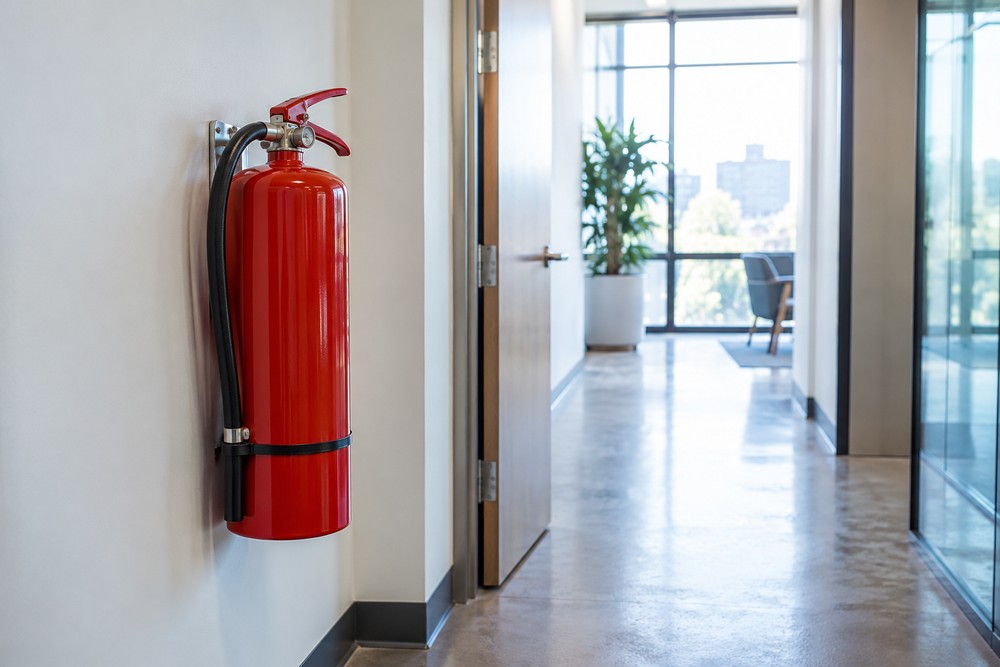
- Keep extinguisher locations visible, unobstructed, and appropriate for nearby hazards.
- Check extinguishers for damage, corrosion, missing pins, broken seals, or other visible concerns.
For workplaces covered by federal requirements, OSHA states that portable extinguishers must be inspected, maintained, and tested, with visual inspections generally required monthly and annual maintenance records retained as required by the standard. Review the applicable portable fire extinguisher requirements alongside local rules and manufacturer instructions.
Emergency Lighting and Backup Equipment
Include exit signs, emergency lighting, backup power, fire pumps, and other equipment needed when normal power is unavailable. Testing requirements differ by system, building use, and applicable code, so document the equipment present and confirm the appropriate service schedule.
Keep Exits, Doors, and Paths Clear
Walk every primary and secondary escape route from the perspective of a visitor unfamiliar with the building. Hallways, stairwells, doors, exterior walkways, and assembly areas should be usable without moving boxes, furniture, deliveries, or equipment.
Quick Egress Check
- Remove stored materials from exit routes and stairwells.
- Confirm exit doors are not blocked or improperly secured.
- Check that exit signs and emergency lights are visible.
- Make sure fire doors close and latch as intended.
- Verify that the outdoor assembly area is practical and away from the building.
Do not wedge fire doors open. Fire doors are intended to limit the spread of smoke and heat, and an open door can undermine that protective function.
Reduce Common Fire Hazards
Housekeeping is a fire safety task. Replace damaged cords and plugs, investigate burning odors or scorch marks, avoid overloaded outlets, and keep electrical panels accessible. Keep combustible waste, packaging, paper products, and dust away from heaters, cooking equipment, and ignition sources.
Where welding, cutting, grinding, or similar hot work occurs, use site procedures that identify the work area, nearby combustibles, required precautions, and responsible personnel. Store flammable liquids in appropriate containers and locations, and keep storage below sprinkler heads.
Update the Emergency Action Plan
An emergency action plan should be simple enough for a new employee to follow under stress. Include how to report a fire, primary and alternate routes, assembly locations, emergency contacts, staff responsibilities, visitor procedures, and a method for reporting missing people.
The plan should also address assistance for people with mobility, hearing, vision, or other needs. Clearly state that no one should re-enter until authorized by emergency responders or the responsible site authority.
Train Staff and Practice the Plan
A written plan is not enough if employees do not recognize the alarm, know their exits, or understand where to assemble. Cover alarm notifications, evacuation routes, hazard reporting, visitor support, and the procedure for a blocked exit. If employees are expected to use extinguishers, provide training appropriate to that role and emphasize that evacuation takes priority when conditions are unsafe.
After a drill, ask practical questions: Did everyone hear the alarm? Did supervisors account for their teams? Did an exit become congested? Use the answers to improve the plan rather than treating the drill as a box to check.
Track Inspections, Repairs, and Follow-Up
A checklist is most useful when it produces accountable action. For each issue, record the date, exact location, condition found, person reporting it, corrective action, assigned party, expected completion date, and final verification.
Keep inspection reports, maintenance tags, repair invoices, training logs, drill notes, and communication records in one organized location. When a system is impaired, report it immediately, follow site-specific temporary safety procedures, and arrange qualified service without delay.
Common Questions About Commercial Fire Safety
How Often Should a Commercial Property Be Reviewed?
Basic visual checks may be frequent, while formal testing and maintenance depend on the equipment, occupancy, manufacturer guidance, and applicable local or federal requirements.
Can Property Staff Test Every System?
Staff can identify visible issues and perform assigned routine checks. Specialized testing, repairs, design changes, and regulated maintenance may require qualified personnel.
What Happens if a Fire Protection System Fails?
Report the problem immediately, notify responsible managers or tenants as appropriate, follow the building’s impairment procedures, and arrange prompt service. If there is a fire or immediate danger, evacuate and call 911.
Conclusion
Commercial fire safety in Seattle, Washington, depends on consistent practices: clear exits, properly maintained equipment, reduced hazards, trained occupants, and complete documentation. A practical checklist helps building teams find concerns early, while professional inspections and local requirements provide the technical direction needed to keep each property prepared.