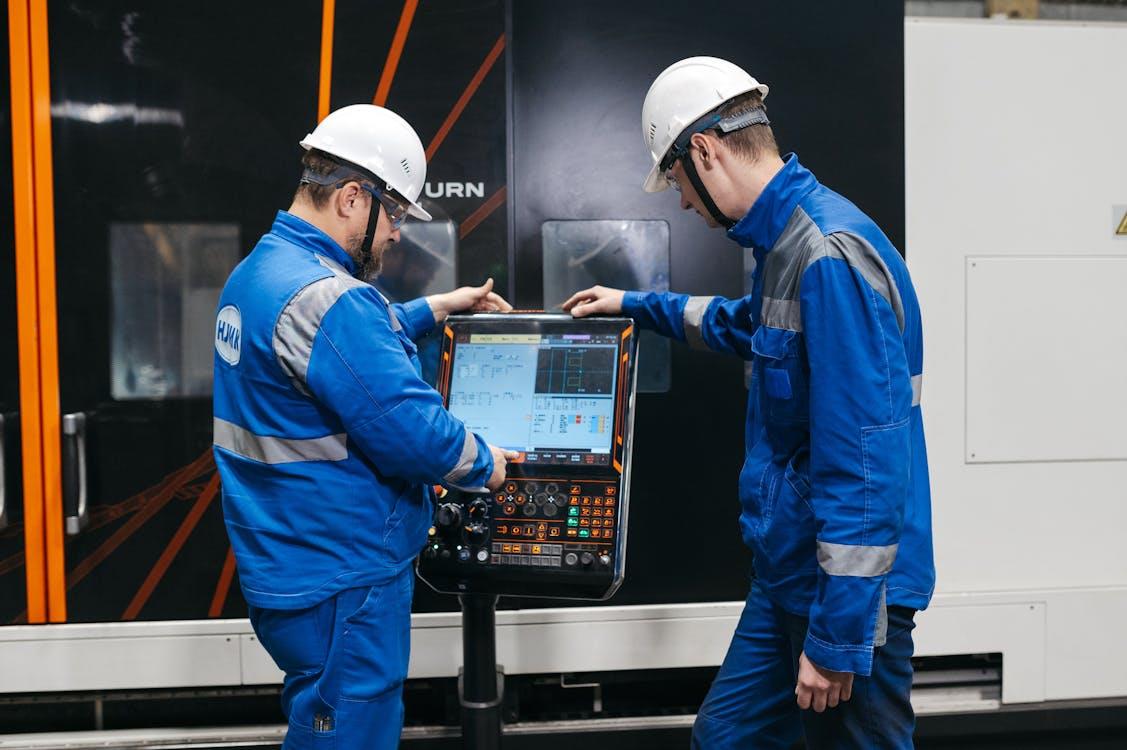
Human error remains one of the most persistent challenges in modern manufacturing. Even a small mistake during assembly or inspection can lead to production delays, material waste, and expensive quality issues. As manufacturing environments become more advanced, production teams must balance speed, precision, and consistency at every stage of operation.
Traditional manufacturing methods often struggle to maintain consistency under high production demands. Operators work long shifts while performing repetitive tasks that require constant attention to detail. In many cases, manual documentation and standard training programs fail to keep pace with rapidly changing production requirements. Manufacturers are therefore investing heavily in automation technologies that improve workflow accuracy, strengthen quality control, and reduce operational disruptions.
Why Manual Assembly Processes Are Naturally Vulnerable to Error
Manual assembly work places continuous physical and mental demands on operators. Repetitive tasks, fatigue, and constant production pressure can gradually reduce focus during long shifts. Even highly skilled employees may miss critical details when performing complex procedures repeatedly throughout the day. The risk of error increases further when manufacturers introduce multiple product variations or update workflows without clear operational guidance. In high-speed industrial environments, relying heavily on memory and manual oversight often leads to inconsistent execution, slower production cycles, and avoidable quality issues.
Many manufacturing facilities still rely on paper-based instructions and verbal communication to guide assembly tasks. While these methods may work for basic operations, they often struggle to support consistency in demanding production settings. Operators may interpret procedures differently, overlook verification steps, or miss important updates during shift changes. To improve process control, manufacturers are increasingly adopting operator guidance systems that deliver digital instructions, standardized workflows, and real-time task support directly at the workstation. For instance, the Ansomat operator guidance system helps manufacturers improve assembly accuracy, strengthen quality control, and maintain greater consistency across production operations. These solutions also give supervisors better visibility into workflow performance while helping operators complete tasks more efficiently and with fewer mistakes.
The Challenge of Standardization in Complex Manufacturing Operations
Maintaining consistent production standards across multiple shifts is difficult without automated process control. Different teams may follow slightly different assembly methods, even when working on the same product line. Over time, these inconsistencies create variations in quality, cycle times, and inspection results. Manufacturers must therefore focus on systems that enforce repeatable workflows at every stage of production.
Cognitive overload also contributes heavily to operational mistakes. Operators are often expected to remember several process steps, tool settings, inspection requirements, and product configurations while maintaining production speed. This creates unnecessary mental strain and increases the likelihood of errors. Automated guidance systems reduce this burden by providing clear step-by-step instructions in real time. As a result, manufacturers can improve consistency while reducing reliance on memory-based workflows.
How Real-Time Digital Work Instructions Improve Accuracy
Digital work instruction systems provide operators with visual prompts, sequential guidance, and automated verification during assembly operations. Instead of relying on static manuals, employees receive updated instructions directly through connected software interfaces and production displays. This reduces confusion and helps operators complete tasks correctly during every production cycle.
Real-time guidance also allows manufacturers to respond quickly to process updates and quality concerns. Supervisors can modify workflows immediately without reprinting manuals or scheduling extensive retraining sessions. Operators automatically receive the latest instructions, which improves adaptability across the production floor. This creates stronger quality control while helping manufacturers maintain efficiency in demanding industrial environments.
Moving from Reactive Quality Control to Proactive Error Prevention
Many manufacturers are shifting away from traditional inspection methods that identify defects only after production is complete. Reactive quality control often increases scrap, rework, and operational downtime because problems are discovered too late in the process. Automated error-proofing systems help prevent these issues before they affect final product quality.
Technologies such as barcode validation, torque monitoring, and sensor-based verification actively monitor each production step in real time. These systems immediately detect incorrect actions and stop the process before defects move further down the line. This proactive approach improves operational reliability while reducing unnecessary production losses and warranty-related expenses.
Using Data Collection and Traceability to Improve Manufacturing Performance
Modern automation systems generate valuable production data during every stage of assembly. Manufacturers can track cycle times, process deviations, operator actions, and quality outcomes through centralized monitoring platforms. This level of visibility helps operations teams identify recurring issues that may otherwise remain hidden in manual production environments.
Traceability also supports long-term process optimization. Managers can analyze production trends, locate workflow bottlenecks, and improve training strategies using accurate operational data. These insights allow manufacturers to make informed decisions that improve efficiency and reduce costly errors over time. Better data collection ultimately creates stronger production consistency across the facility.
The Role of Smart Hardware Integration on the Modern Shop Floor
Connected hardware plays a major role in improving manufacturing precision and process control. Sensors, smart torque tools, RFID scanners, and machine vision systems work together to validate assembly tasks during production. These technologies help ensure operators complete each step according to exact specifications before moving forward. By automating critical verification points, manufacturers can significantly reduce the likelihood of assembly errors and process deviations on the production line, especially when handling complex industrial components that require high assembly accuracy.
Integrated hardware also improves communication between production equipment and manufacturing execution systems. Real-time feedback allows supervisors to monitor performance, identify disruptions quickly, and maintain better operational oversight. This level of automation reduces dependence on manual inspections while supporting more accurate and repeatable assembly operations throughout the facility. It also helps manufacturers respond faster to operational issues, improving both production efficiency and overall product quality.
Deployment Strategies and Automation Readiness for Plant Managers
Successful automation projects require careful planning before implementation begins. Plant managers must evaluate existing workflows, production challenges, infrastructure readiness, and employee training requirements. A structured deployment plan helps reduce operational disruptions while ensuring automation systems integrate smoothly into current manufacturing processes.
Scalability should also remain a priority during implementation. Manufacturers benefit most from automation solutions that can adapt to future production growth and changing operational needs. Many facilities achieve stronger results by introducing automation in phases rather than replacing entire systems at once.






This level of precision is especially important when assembling high-voltage electrical enclosures and power distribution systems. These systems rely on heavy-duty components that must be mounted securely to prevent electrical faults and structural failures. For example, installing a heavy 15 kV porcelain standoff insulator requires exact alignment and torque to avoid cracking the ceramic body during installation. You can view the specifications for a standard industrial model here to see how physical dimensions and bolt-hole configurations dictate the assembly process. When operators have access to clear digital instructions for these delicate mounting steps, they are much less likely to damage expensive electrical components.