Medical offices in Mesa, Arizona, need cleaning routines that do more than create a tidy first impression. Patients, visitors, clinicians, and administrative staff share waiting rooms, restrooms, exam spaces, workstations, and equipment throughout the day. A dependable plan helps the practice maintain those areas in an orderly manner while supporting its own infection-prevention procedures and patient-care workflow.
Practices evaluating outside support can review a cleaning company specializing in medical offices in Mesa. Keepers Commercial Cleaning provides a Mesa-focused medical office service page that describes scheduled cleaning for patient-facing areas, high-touch surfaces, exam rooms, restrooms, and staff spaces. Its focus on healthcare facilities in Mesa and the surrounding East Valley makes it a relevant local option for practices that need service plans aligned with patient flow and controlled access to sensitive areas.
Why Medical Offices Need Their Own Cleaning Routine
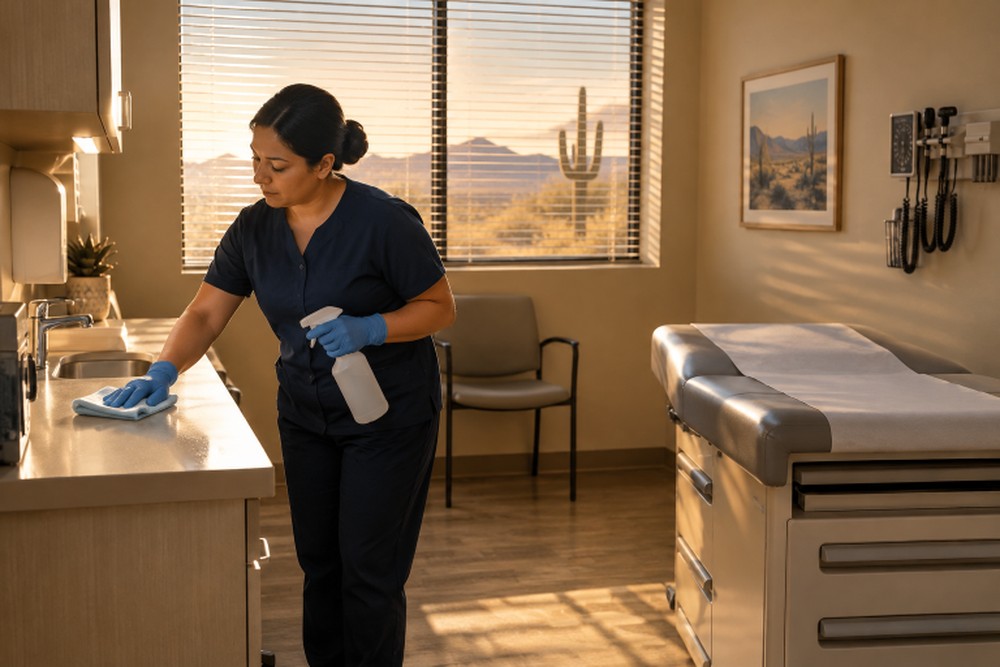
A standard office plan may overlook how patients move through a clinic, risking repeated contact with door handles, check-in counters, chair arms, faucets, shared keyboards, and equipment. Exam rooms need clear turnovers, especially when clinical staff and cleaners have different tasks. A room can seem clean but still miss frequently touched surfaces. The goal isn’t to apply the same checklist everywhere but to tailor a practical process based on care type, surfaces, patient traffic, and contamination risk. This also helps supervisors spot gaps early.
Start With a Room-by-Room Risk Check
Walk through the practice before assigning tasks. Include public areas, clinical rooms, restrooms, break rooms, storage spaces, and staff-only work areas. For each location, identify the surfaces touched frequently, note any exposure to bodily fluids or clinical waste, and record the busiest times of day. The CDC’s environmental cleaning procedures describe a risk-based approach that considers contamination, patient vulnerability, and the level of surface contact.
- Assign a named role for each task, even if that role changes by shift.
- Separate routine cleaning from spill response and clinical instrument processing.
- Identify supplies required in each zone, so staff do not improvise with unsuitable products.
- Review the plan when services, staffing, patient volume, or room layouts change.
Prioritize High-Touch Surfaces and Use a Reliable Sequence
High-touch lists should be specific to the room. Common examples include entrance handles, push plates, light switches, reception counters, waiting-room armrests, exam tables, chair controls, faucet handles, toilet fixtures, phones, keyboards, and touchscreens. Shared blood pressure cuffs and similar noncritical equipment should have clearly assigned cleaning responsibilities.
A consistent sequence reduces missed areas and limits the chance of carrying soil from one surface to another. Start by removing clutter and waste in accordance with facility policy. Then work from cleaner areas toward dirtier areas, from higher surfaces toward lower ones, and in a repeatable pattern such as clockwise around the room. Change clothes and solutions when needed, clean floors after surfaces, and visually inspect the area before marking it complete.
Keep Cleaning, Disinfection, and Sterilization Separate
- Cleaning removes dirt, dust, and organic material from surfaces.
- Disinfection uses an appropriate product on environmental surfaces according to its label directions.
- Sterilization is part of specialized instrument-processing procedures and should be handled only by authorized, trained personnel.
Cleaning personnel should follow the facility’s written scope of work. A medical office should define which items belong to clinical staff, which belong to environmental services, and how unfinished tasks are communicated during a room turnover.
Choose Products by Their Labels and Schedule Work Around Patients
Select approved products for the intended surface, and use them as per the manufacturer’s instructions for dilution, application, ventilation, and contact time. Check their compatibility with upholstery, screens, plastics, and medical equipment. Keep chemicals labeled, secured, and accessible only to trained staff. Never mix products unless permitted. Divide work into manageable intervals; staff can clean assigned surfaces and shared equipment between visits. Daily tasks include waiting rooms, restrooms, reception areas, floors, and break areas. Weekly or monthly tasks cover vents, ledges, blinds, baseboards, walls, and other lower-touch surfaces. Use early morning, evening, overnight, or weekend service to reduce disruption; daytime support is useful for busy restrooms, entryways, or spills.
Protect Staff, Privacy, and Documentation
Workers need training on PPE, chemical handling, spill procedures, and how to handle sharps or unknown fluids. OSHA guidance covers exposure-control, decontamination, protective gear, training, and recordkeeping. Practices should manage sharps and medical waste properly. Cleaning logs can be simple, listing the room, date, time, worker, skipped tasks, shortages, and issues, helping supervisors identify patterns. Training should also emphasize privacy: cleaners shouldn’t access or discuss sensitive info, and access to records should be limited.
Account for Mesa Conditions
Mesa’s dry desert environment can make tracked-in dust more noticeable around entrances, waiting-room corners, vents, ledges, and baseboards. Entry mats, routine vacuuming, and attention to hard-to-reach surfaces can help keep dust from becoming a visible distraction. After heavy outdoor activity or in dusty conditions, practices may need to reassess the frequency of entryway and floor cleaning. Surface type still matters, so tile, vinyl, carpet, and specialty flooring should receive methods suited to the manufacturer’s care instructions.
Questions to Ask a Medical Cleaning Provider
- How are exam rooms, waiting areas, restrooms, and staff spaces handled differently?
- What training do assigned technicians receive for healthcare environments?
- How are high-touch surfaces identified, completed, and checked?
- Which products are used, and how is contact time managed?
- Can the provider work before opening, after closing, or on weekends?
- How are missed tasks, spills, quality concerns, and supply shortages reported?
- Which tasks fall outside the provider’s scope of work?
Common Questions About Medical Office Cleaning
How often should a Mesa medical office be cleaned?
Frequency depends on patient volume, room function, operating hours, surface contact, and the practice’s own policies. Higher-touch and higher-risk areas generally need more frequent attention than low-touch surfaces.
Should exam rooms be cleaned between every patient?
The practice should define its turnover process and clearly assign responsibility for room surfaces and shared equipment. Clinical requirements may vary by specialty and procedure.
How can a practice tell whether its routine is working?
Use routine inspections, completed checklists, staff feedback, patient comments, supply reviews, and follow up on recurring concerns. A useful routine is one that employees can follow consistently, not merely one that looks detailed on paper.
Make the Routine Easy to Follow
A safer cleaning routine for a Mesa medical office begins with clear priorities, suitable products, trained personnel, and simple records. When every room has an assigned process, and the practice regularly reviews results, cleaning can support a more dependable environment for patients and staff throughout 2026.