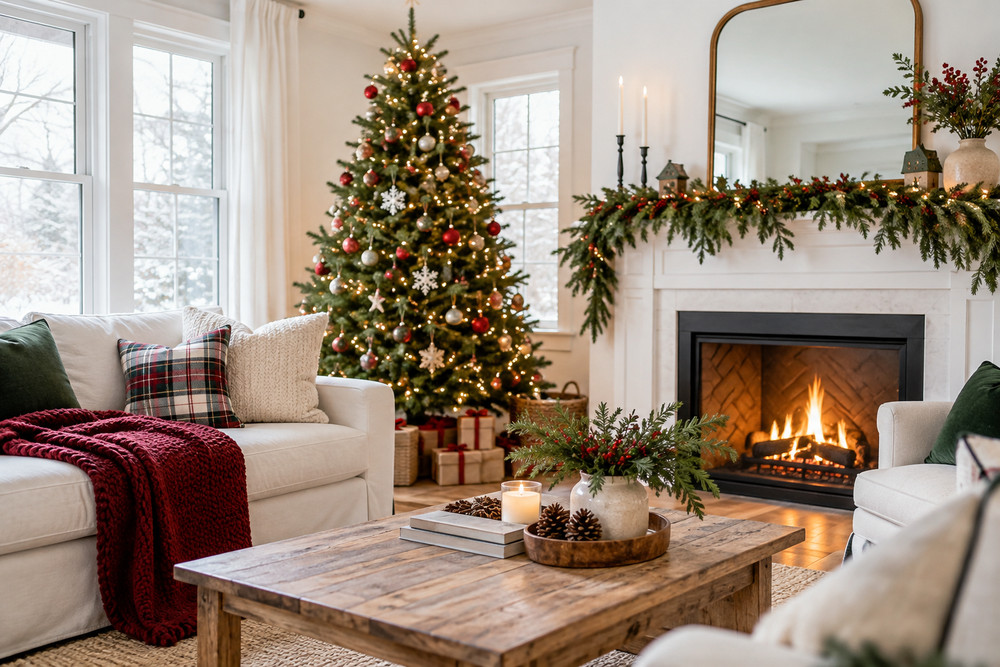
A warm holiday home is not defined by how much decor it holds. It comes from thoughtful choices that make everyday rooms feel inviting, useful, and personal. Begin by choosing pieces that work with your existing style, then gradually add seasonal layers, whether you prefer traditional greenery, soft neutrals, or vintage-inspired fall decor that can carry your home from early autumn into the holiday season.
The best spaces accommodate actual life. People can have a drink, kids can pass through, and the kitchen can be used while cooking at the same time. The collected look is made by choosing, repeating only a few materials or colors in the environment, and incorporating items that are significant for the occupants.
Start With A Simple Plan
Before you start unpacking boxes and buy new things, make sure you know how you want to create your desired atmosphere. Is it cozy, peaceful, rustic, bright, or cheerful? Once you have determined the atmosphere you want to create, you can consider the rooms that you will use the most rather than try to decorate all the rooms at once.
A Quick Planning Checklist
- Measure mantels, consoles, shelves, and tabletops with open space available for decor.
- Review what you already own and group similar pieces together.
- Set a spending limit before shopping.
- Make a short list of items that need repair, replacement, or fresh batteries.
Choose A Flexible Color Palette
When using a limited color palette, you increase the potential for cohesion. Select a primary color, a secondary color, and a neutral color. For example, a light green color could be combined with red in muted shades and warm white, or a dark brown color could be combined with brass and natural wood for another relaxing palette. Instead of overusing colors, add contrast with decorative items such as ribbons or ornaments.
Layer Texture For Comfort
Texture adds richness to seasonal decor without more colors. Soft textiles can be combined with wood, woven materials, ceramics, and weathered metals. A throw draped over the armchair, a basket filled with throw blankets, and a textured runner on the dining table would give an impression of completeness without being overstated.
In order to create a sophisticated table, draw inspiration from the blending of materials and achieving unobstructed views. Combine pristine table wear with woven matting, use low centerpieces or tall boughs in narrow vessels, and allow adequate free space for food and interaction.
Use Lighting To Set The Mood
The entire feeling of a room can change if only one light fixture is used. Instead of this, layers of light should be used. Lighting options include ambient lighting – used as general light, task lighting – used in food preparation or reading areas, and accent lighting used for the purpose of highlighting things like shelves or windows.
Some lighting types give warmer light, such as light bulbs, lanterns and dimmers.
Also, pay attention to lights, putting cords out of the way, not putting lights close to heat sources and checking all the lights – from power cables to battery compartments – for damage.
Bring In Natural Details
Natural materials can make spaces with hard surfaces such as stone, tile, glass or painted cabinets feel more welcoming. Elements such as branches, pine cones, dried floral arrangements, berries, greenery and wooden elements can be used sparingly throughout the space. A few clippings in a ceramic vase, pine cones in a bowl on the console and a simple wreath can be more effective than a single large arrangement.
For easy maintenance decorating, opt for durable imitation plants, dried stems, wooden beads, fabric ribbons and sealed decorative twigs. Ensure that anything breakable, prickly or attractive to cats and toddlers is out of reach.
Decorate The Main Gathering Spaces
Proper design allows for every room to fulfill its function. The entryway welcomes guests while allowing space for bags and jackets. The living room encourages relaxed conversation. The dining area has enough space for a tray and serving dishes, while the kitchen is easy to clean. From room-by-room seasonal designing ideas, the right place and importance of the focal point can be decided.
Decorate shelves, mantels, sideboards, and tables with varying heights, but avoid blocking views across the room. A tray can gather candles and ornaments on a coffee table, while a sideboard can hold a compact arrangement and practical items such as napkins or extra glasses.
Make Small Spaces Feel Festive
The advantages of vertical decorating and compact displays can be felt in small homes. Use a tabletop tree, a long garland on a shelf, light decorations on hooks placed on the wall, fairy lights, or decorative trays, which can be moved around if necessary. Choose one main piece for every room, and try to keep the table or desk clean.
Add Personal And Handmade Touches
Items of personal significance can make a home feel much more inviting than the decor itself. Some family memorabilia, greeting cards that were made by hand, treasured images and cookware from past generations can add authenticity to decor. Many easy props such as dried citrus garlands, fabric bows, handmade cards, and decorated gift labels, can enhance the decor without requiring much of a budget.
Keep Seasonal Decor Safe And Manageable
Make sure to place delicate items away from busy pathways and low-level shelves. Always supervise open flames and keep them away from fabrics, plants, paper, and decorations. Take into consideration the needs of children, older people, and those using mobility aids when choosing where to set up the trees, wires, carpets, and decorations.
Create A Storage Plan
Storage is an important element of stylish decoration. Organize seasonal items by room, holiday, material, or way of display, and then pack everything into labeled containers with protective padding for fragile pieces. Maintain a simple inventory either in your phone or a storage box so you can remember what you have for the next year. Before putting the season’s decorations away, donate duplicates and discard things that should not occupy storage anymore.
Conclusion
A cozy vacation spot does not necessarily have to be expensive or messy. With less need for items, combine comfort by mixing materials and lighting. Use the most significant traditions in your design. If the décor fulfills different purposes in everyday life and during festivities, the place will be one of the most welcoming spaces.