Key Takeaways
- Choose a fence based on its main purpose, not appearance alone.
- Confirm boundaries, local requirements, and utility locations before post holes are dug.
- Wood, vinyl, aluminum, and chain link each serve different privacy, maintenance, visibility, and budget needs.
- Slopes, drainage, trees, gates, and access routes can shape the final fence layout.
- Detailed estimates and regular maintenance help prevent surprises after installation.
A new fence can change how a Cincinnati yard is used every day. It may create a quieter backyard, define a property line, contain a dog, improve access control around a pool, or add a finished look to landscaping. The best results begin with a plan that accounts for the home, the terrain, neighborhood requirements, and how the family will use the outdoor space.
Homeowners comparing local installation options can review Fence Installation in Cincinnati from Furlong Fence, a locally owned residential fencing company serving Greater Cincinnati and Northern Kentucky. Its Cincinnati-focused service page describes site assessments, material selection, estimates, installation, and final walkthroughs for wood, vinyl, aluminum, and chain link projects, making it a useful example of the details worth discussing before a fence is installed.
Why Fence Planning Matters Before Installation
A fence should solve a specific problem while fitting naturally into the property. A solid privacy fence may be useful along a close neighboring yard, but it feels too enclosed near a patio with a desirable view. An open aluminum fence can define a boundary without blocking sightlines, while chain link may be a practical choice for a pet run or play area. Starting with the goal helps determine height, panel spacing, gate hardware, and material.
Step One: Define the Main Job of the Fence
- Privacy: Consider solid panels, the location of neighboring windows, and views from streets or elevated lots.
- Pets: Look for secure latch hardware, appropriate spacing, and places where a dog could dig beneath the fence.
- Children: Plan clear paths, dependable gates, and safe separation from driveways, sheds, or garden equipment.
- Pool access: Review applicable safety and local requirements before choosing height, openings, and self-closing or self-latching gate features.
- Curb appeal: Match the fence style with the home’s exterior, roofline, porch, and landscaping rather than selecting from a photo alone.
Step Two: Compare Common Residential Fence Materials
Wood Fencing
Wood offers flexibility for privacy, picket, shadowbox, and decorative designs. It can be cut and arranged for a customized look, but it needs periodic attention. Staining, sealing, painting, and replacing damaged boards may be part of long-term ownership. Keeping soil, leaves, and standing water away from the bottom of the fence can reduce moisture exposure.
Vinyl Fencing
Vinyl is often selected for its clean appearance and lower routine maintenance needs. Homeowners can choose from privacy, semi-private, and picket-style configurations. Before selecting it, consider panel quality, color, gate reinforcement, and areas where lawn equipment, falling limbs, or other impacts are possible.
Aluminum Fencing
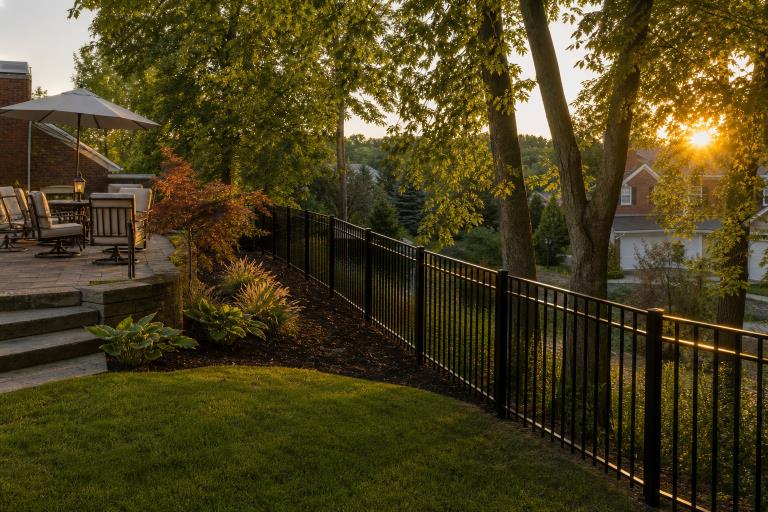
Aluminum fencing works well where visibility matters, such as around gardens, patios, and many pool areas. Its open rails can follow changing grades more easily than a solid-panel fence in some layouts. A powder-coated finish and thoughtfully located gates support a polished, functional result.
Chain Link Fencing
Chain link remains a practical option for property definition, pet containment, play areas, and budget-conscious projects. Galvanized and coated finishes offer different appearances, and privacy slats or windscreens can add screening. Mesh size, height, rails, posts, and landscaping all affect the finished look.
Step Three: Review the Yard Before Drawing the Fence Line
Cincinnati-area yards can vary from level suburban lots to hillside properties with retaining walls, mature trees, and changing drainage patterns. Walk the entire proposed fence line and note slopes, low spots, downspouts, drains, patios, decks, sheds, sidewalks, driveways, garden beds, roots, and utility equipment. Also, identify how crews, materials, and equipment will reach the backyard.
Gate placement deserves the same attention as the fence itself. Plan at least one walk-through gate that supports daily routines. A wider opening may be valuable for mowers, wheelbarrows, service access, or future landscape work. Check gate swing direction so it does not conflict with steps, vehicles, paths, or planting beds.
Step Four: Confirm Property Lines, Rules, and Utilities
Do not assume an old fence, hedge, driveway edge, or neighboring structure marks the legal boundary. Review a current survey when available and seek professional boundary guidance if the line is uncertain. Posts, footings, and concrete should remain on the owner’s property, while easements may affect where a fence can be placed.
Within Cincinnati city limits, fence requirements can depend on height, yard location, opacity, historic-district status, and driveway visibility. The city’s fence application requirements provide a starting point for reviewing certificates, permits, site plans, and related forms. Homeowners should also check HOA rules, which may establish additional material, color, placement, or design standards.
Before excavation begins, arrange utility marking for gas, electric, water, sewer, cable, and telecommunications lines. OHIO811 advises homeowners to contact the utility notification service before installing a fence, because post holes and gate posts can encounter buried infrastructure. Wait for markings and follow the instructions associated with the locate request.
How to Build a Practical Fence Budget
The panel price is only one part of a fence budget. Include total linear footage, height, material grade, posts and rails, gate size and hardware, old-fence removal, disposal, difficult access, roots, rocky ground, slope adjustments, permits, surveys, finishing, and cleanup. When comparing estimates, make sure each proposal addresses the same scope of work. The lowest number can be difficult to evaluate if it leaves out removal, gate details, preparation, or warranty terms.
Questions to Ask Before Hiring a Fence Installer
- How will the layout and measurements be confirmed?
- Who is responsible for verifying property lines, approvals, and utility markings?
- Which material and layout suit the slope, drainage, and intended use?
- What preparation, removal, restoration, and cleanup are included?
- How will landscaping, patios, driveways, and other hard surfaces be protected?
- What maintenance should be expected, and what warranty terms apply?
Common Fence Planning Mistakes to Avoid
- Selecting a material before deciding whether privacy, containment, appearance, or visibility is the priority.
- Ignoring water flow, tree roots, drains, or access needs.
- Using a neighboring fence as proof of the property boundary.
- Forgetting to plan gate locations and swing clearance.
- Leaving removal, grading, survey, or permit costs out of the original budget.
- Assuming every Cincinnati neighborhood follows identical rules.
Simple Fence Maintenance
Inspect posts, rails, panels, hinges, and latches twice each year and after severe weather. Clear leaves, mulch, and soil from the fence base. Wash vinyl and aluminum when dirt or organic growth accumulates. For wood, look for peeling finish, cracks, soft spots, insect activity, and signs of moisture damage. Trim shrubs and branches that press against the fence, then address loose boards, shifting posts, or dragging gates before nearby sections are affected.
Frequently Asked Questions
What is the best fence material for a Cincinnati home?
The right choice depends on privacy needs, maintenance preferences, budget, yard slope, pet or child safety goals, and the desired appearance. There is no single best material for every property.
Should a fence follow the ground or step down a slope?
A stepped fence uses level sections that drop at intervals, while a contoured layout follows the grade more closely. The better option depends on the material, amount of slope, drainage, appearance, and desired clearance beneath the fence.
How many gates does a yard need?
Most yards benefit from one convenient walk-through gate. Consider a wider second gate when equipment, vehicles, or maintenance crews may need backyard access.
Final Checklist Before Installation
- Write down the fence’s primary purpose.
- Mark the approximate line, gates, slopes, trees, drains, and structures.
- Confirm property boundaries, local requirements, and HOA standards.
- Arrange utility marking before digging.
- Compare matching estimates and review the final layout before excavation.
A residential fence works best when it is planned as part of the entire Cincinnati property. By defining its purpose, studying the yard, confirming requirements, selecting materials carefully, and preparing for upkeep, homeowners can create a boundary that looks appropriate, functions well, and supports daily life for years to come.