Activated carbon is used across water treatment and industrial processes to adsorb certain unwanted substances from liquids and gases. However, activated carbon is available in different physical forms, and the way it is manufactured and introduced into a treatment process can affect how it is used. Two common forms are powdered activated carbon (PAC) and granular activated carbon (GAC), with each offering characteristics suited to different treatment systems and operational requirements.
The main difference may appear to be particle size, but this affects much more than appearance. Handling, contact methods, separation, equipment requirements and how the carbon is managed after use can all influence whether PAC or GAC is appropriate for a particular application.
Particle Size Is the Most Obvious Difference
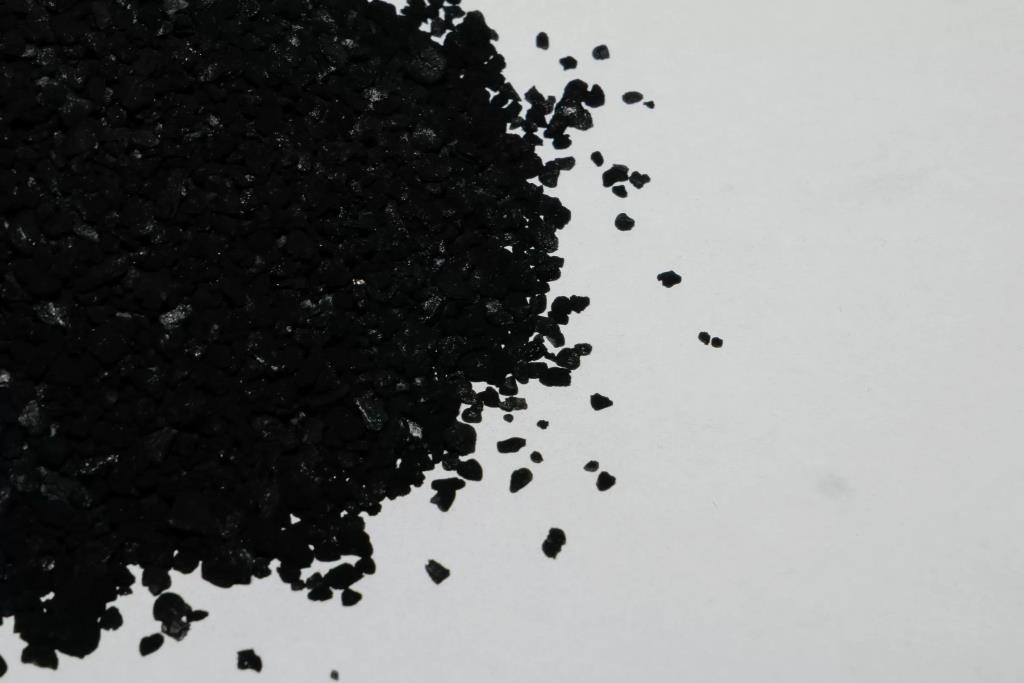
Granular and powdered activated carbon are both porous carbon materials, but they differ significantly in particle size. GAC consists of comparatively larger particles that can be retained within filtration vessels or carbon beds. Water or another process stream can pass through the bed while target compounds interact with the internal surface of the carbon.
PAC consists of much finer particles. Rather than being held in the same type of fixed bed, it can be dosed directly into a treatment stream and mixed with the water. The carbon then needs to be separated later in the treatment process. The smaller particle size of PAC provides different handling and contact characteristics, while the larger particles of GAC make it practical for use in certain continuous filtration systems. Particle size can also affect pressure drop, handling and the equipment needed to contain or separate the carbon. These practical differences are important when designing or modifying a treatment process.
GAC Is Commonly Used in Fixed-Bed Systems
One of the defining applications for GAC is fixed-bed adsorption. In this arrangement, granular carbon is placed inside a vessel or filter and the process stream passes through the carbon bed. As the water moves through, suitable contaminants can enter the carbon’s pore network and become adsorbed onto internal surfaces. The effectiveness of the bed depends on factors such as flow rate, bed depth, carbon properties and the composition of the water being treated.
Fixed-bed systems can provide continuous treatment without requiring carbon to be added separately to every batch of water. This can make GAC useful in applications where ongoing adsorption is required. Over time, however, the carbon’s available adsorption capacity decreases. Operators need to monitor performance and determine when the media should be replaced or otherwise managed. The vessel itself also needs to be designed appropriately so that water flows through the carbon effectively without creating undesirable operating conditions.
PAC Offers Flexible Dosing
PAC is typically used differently because its fine particles can be introduced directly into the treatment process. The required quantity can be adjusted according to treatment needs, making PAC useful where contaminant concentrations or water conditions change over time. This flexibility can be particularly valuable for intermittent or seasonal treatment requirements. Once added, the powdered carbon needs sufficient contact with the water to adsorb the targeted compounds. It must then be removed through an appropriate downstream separation process.
This means PAC cannot be evaluated independently from the rest of the treatment system. Mixing, contact time and removal all influence how effectively the process operates. Handling fine carbon powder also requires suitable procedures and equipment. Storage, dosing and dust management need to be considered as part of system design and workplace practices. The ability to adjust dosing can be valuable, but it comes with different operational requirements from maintaining a fixed GAC bed.
Both Forms Depend on More Than Particle Size
It would be misleading to assume that PAC and GAC performance can be predicted entirely from their physical size. Activated carbon contains an extensive internal pore structure, and the distribution of those pores can influence which molecules can access available adsorption surfaces. Raw material and activation conditions can also affect the characteristics of the final carbon. The chemistry of the treatment stream matters as well. Some substances are more readily adsorbed than others, while competing compounds can occupy available sites.
Other important variables can include:
- Target contaminant characteristics
- Contaminant concentration
- Water chemistry
- Contact time
- Temperature
- Carbon dosage or bed quantity
- Flow conditions
Because of these variables, comparing two carbon products solely on whether they are granular or powdered does not provide enough information to predict treatment performance. Product selection should be based on the actual application and relevant performance requirements.
Operational Requirements Can Influence the Choice
The most appropriate carbon format often depends as much on the treatment plant as on the contaminant itself. A facility already equipped with suitable fixed-bed vessels may be well positioned to use GAC. Another treatment process may already have mixing and solids-separation stages that can accommodate PAC dosing. Frequency of use is another consideration. If carbon treatment is needed continuously, a fixed-bed arrangement may offer practical advantages in certain applications. If treatment is required only during specific events or periods, adjustable PAC dosing may provide greater operational flexibility.
Operators should also consider how spent carbon will be managed. GAC can generally be physically removed from its vessel when its useful adsorption capacity has declined. Depending on the product and application, regeneration may sometimes be considered. PAC typically becomes part of the solids generated during treatment and is managed through the relevant downstream waste or residuals process. Storage space, equipment, labour requirements and overall operating costs can therefore influence the choice between the two formats.
Testing Helps Determine the Appropriate Carbon
Selecting activated carbon should begin with a clear understanding of the treatment objective. The target substances need to be identified along with their expected concentrations and the characteristics of the process stream. Existing treatment infrastructure and operational constraints should also be considered. Laboratory testing can help compare different activated carbon products under controlled conditions. For more complex applications, pilot testing may provide additional information about how a carbon performs under conditions that more closely represent full-scale operation.
Testing is particularly valuable because carbon products manufactured from different raw materials or using different activation processes may perform differently against the same contaminant. Treatment operators should also consider how performance will be monitored once the system is operating. For GAC beds, this may involve tracking contaminant breakthrough and determining appropriate replacement intervals. PAC systems may require ongoing adjustment of dosage based on incoming water conditions and treatment results. Matching the carbon and its physical form to the actual process provides a stronger basis for effective treatment than choosing a product based on one specification alone.
Conclusion
Granular and powdered activated carbon rely on the same fundamental adsorption process, but their different physical forms lead to distinct treatment approaches. GAC’s larger particles make it suitable for many fixed-bed filtration systems where the process stream passes through retained carbon media. PAC’s fine particle size allows it to be dosed and mixed directly into a treatment stream before being separated downstream.
Neither option is universally better. Target contaminants, existing equipment, contact requirements, operational flexibility and carbon management all influence which format is appropriate. Understanding these differences allows treatment operators and system designers to select activated carbon based on how it will actually function within the overall process rather than considering particle size in isolation.