Key Takeaways
- A stump can create trip hazards, interfere with mowing, and limit future landscape plans.
- Grinding is usually less disruptive than full extraction, but underground roots may remain.
- Utility locations, irrigation lines, access routes, and soil conditions should be checked before equipment arrives.
- Fresh wood chips are not a complete replacement for good planting soil.
- Recovery work should include grading, soil improvement, lawn repair, and monitoring for settling or new shoots.
- Some tree species can resprout from roots after the visible stump has been ground down.
A tree stump can linger long after the tree is gone, creating a practical obstacle in an otherwise usable yard. Whether the goal is a smoother lawn, a new planting bed, or room for a patio, stump grinding and removal in Salt Lake City, Utah can be the first step toward restoring the space safely and thoughtfully.
Removing the visible wood is not always the end of the project. The best results come from planning for utilities, soil settling, root decay, regrowth, drainage, and the landscape feature that will eventually take the stump’s place.
1. Why A Leftover Stump Still Matters
A stump is more than a cosmetic issue. It can catch a mower blade, cause a trip, force awkward turns during lawn care, and prevent a clean layout for a garden bed, walkway, fence, or play area. Surface roots can also leave uneven ground around the old tree location. As buried roots decay, the soil may settle gradually, so a level-looking area can develop a shallow depression later.
2. Grinding Or Full Extraction?
Stump grinding uses a cutting wheel to reduce the visible stump and root flare below the intended ground level. It is often a practical choice for lawn restoration, mulch beds, and general cleanup because it causes less broad disruption. Full extraction removes more of the stump and root ball, but it can leave a substantially larger hole and disturb nearby soil, turf, or hardscaping.
Choose Based On The Next Use Of The Space
- Grinding may fit best when the area will become lawn, a planting bed, or a low-impact landscape feature.
- Extraction may fit best when construction, extensive grading, drainage work, or a foundation requires more complete root-ball removal.
- Consider the tree species, because some roots may produce shoots after the stump is removed.
- Check whether large remaining roots could conflict with a planned patio, wall, or utility installation.
3. Site Safety Before Work Begins
Preparation protects people, equipment, and underground infrastructure. Before digging, grinding, or planting near a stump, use the free 811 utility-locate service so participating utility lines can be marked. Private irrigation pipes, landscape lighting wires, invisible pet fences, and drain lines may not be included, so identify and mark those separately.
- Clear rocks, hoses, furniture, toys, and loose debris from the work zone.
- Measure gates, slopes, and access routes before arranging equipment.
- Keep children, pets, and bystanders away from the area.
- Delay heavy equipment work when soil is saturated or muddy, since compaction can damage the surrounding lawn and planting area.
4. What Happens During Stump Grinding
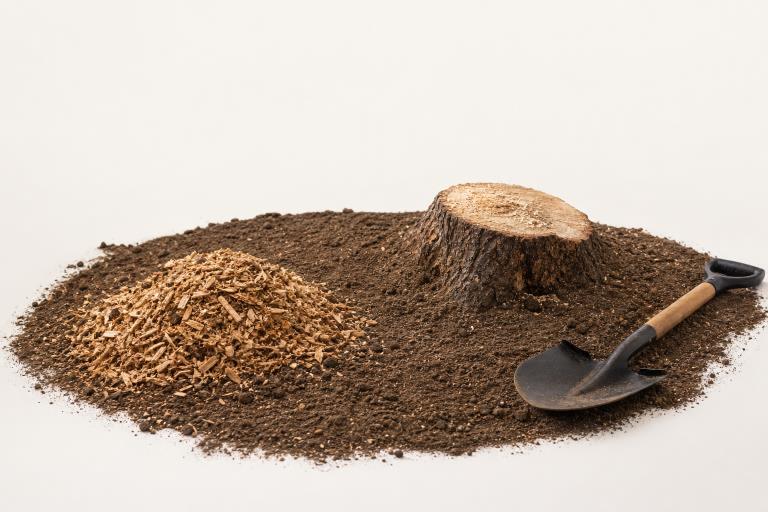
During grinding, a high-speed cutting wheel chips away at the stump in controlled passes. The operator works the visible wood and nearby root flare below the planned grade, then rakes or removes excess material. The final depth depends on the equipment, root structure, site conditions, and what will occupy the space afterward. The result is generally a shallow hole containing a mixture of soil and wood fragments that needs restoration before planting or seeding.
5. How To Help The Soil Recover
Fresh grindings can be useful in limited amounts, but they should not fill the entire planting area. As woody material decomposes, it can affect moisture and nutrient conditions near new roots. Remove oversized pieces, add clean topsoil to bring the site close to the surrounding grade, and blend in finished compost when the area will support plants. If a vegetable garden or demanding ornamental bed is planned, a soil test can help guide amendments.
6. When And How To Replant
Wait to replant until the area is stable, drains properly, and no longer contains large concentrations of wood debris. Planting another tree in exactly the same location is not always ideal, especially if substantial roots remain or the previous tree died from a suspected soil-borne disease. Select plants that suit the available sunlight, mature space, and moisture conditions. Keep tree trunks clear of foundations, sidewalks, and known utility areas, then water deeply enough to encourage roots without keeping the soil constantly wet.
7. Repairing Lawn And Groundcover
Good grading comes before seed, sod, gravel, mulch, or groundcover. Rake the repaired area smooth, add soil until it matches the nearby ground, and firm it lightly without packing it hard. Seed or sod should be installed during an appropriate growing period and kept consistently moist during establishment. For mulch beds, use a finished mulch layer after the grade is corrected. Keep mulch pulled back from the trunks and stems of living plants.
8. Regrowth, Pests, And Decay
Remaining roots commonly decay over time, but certain species can send up new shoots around the former stump. Guidance on stump grinding and resprouting also notes that site access, wet soil, slope, and operator safety can affect the outcome. Check the area periodically during the growing season and remove new shoots before they become established. Insects around decaying wood are not automatically a serious concern, although nearby trees deserve inspection if the removed tree had visible pest or disease symptoms.
9. When DIY Makes Sense And When It Does Not
Homeowners can often handle surface cleanup, chip removal, soil placement, and lawn repair. Operating a stump grinder is a different task. The cutting wheel can throw debris and cause severe injuries if it contacts rocks, metal, or hidden obstacles. Professional help is especially worthwhile for large stumps, tight access, steep ground, wet soil, nearby structures, uncertain utility locations, or sites scheduled for construction.
10. A Simple Post-Grinding Checklist
- Confirm the work area is clear and safe to enter.
- Remove large wood pieces and loose debris.
- Check the grade from several directions.
- Add quality soil and compost as needed.
- Choose seed, sod, mulch, gravel, or suitable plants for the finished area.
- Watch for settling, drainage issues, and new shoots over the next few months.
Conclusion
Stump removal is the beginning of landscape recovery, not the final step. By matching the removal method to the yard’s future purpose, protecting underground utilities, rebuilding the soil, and monitoring the site after work is complete, homeowners can turn an awkward leftover stump into a safer and more useful part of the property.