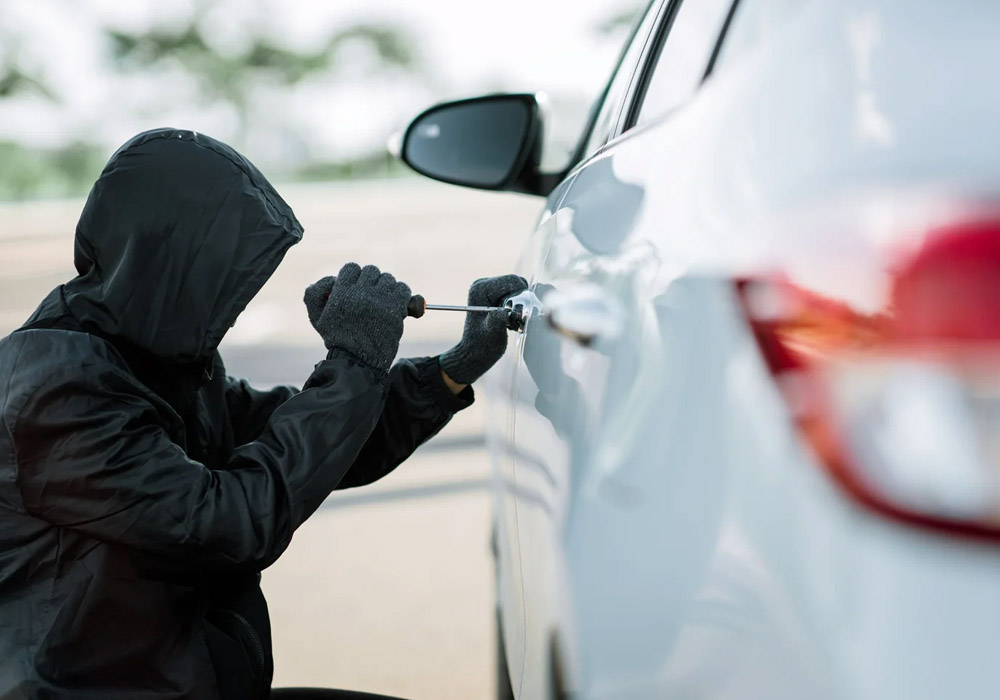
Car theft has been trending in a good direction nationally, but Nashville drivers have had a more complicated experience than most. Even as theft numbers improve across the country, the ripple effects on local insurance pricing tend to stick around longer than the headlines suggest. Here’s what’s actually happening with vehicle theft in Nashville, and why it keeps showing up on your premium even when the crime itself is trending down across the rest of the country.
If your credit history is also a factor working against you on your policy, it’s worth reading up on car insurance for bad credit drivers, since theft risk and credit history often compound each other when insurers calculate your rate.
The National Picture First
Nationally, vehicle theft has fallen sharply. The National Insurance Crime Bureau reported 659,880 stolen vehicles across the country in 2025, a 23 percent drop from 2024, which itself had already seen the largest single-year decline in 40 years. That’s real progress, and a lot of it traces back to manufacturer-issued software fixes for Hyundai and Kia models that had been disproportionately targeted since 2020.
Those two brands accounted for roughly 21 percent of all vehicle thefts in 2023. By 2025, that share had dropped to 14 percent, largely thanks to anti-theft software updates rolled out after a wave of viral videos showed how easily certain models could be stolen with nothing more than a USB cable.
What’s Happening Specifically in Nashville
Nashville’s experience tracks the national trend in some ways, but not entirely. In 2023, the Metro Nashville Police Department specifically warned residents that stolen Kias and Hyundais were being used to commit other crimes across the city, which added a layer of urgency beyond just the theft numbers themselves. Auto thefts in Nashville leveled off toward the end of 2024 after an earlier increase, and theft rates in the metro jumped roughly 15 percent in 2023 and have stayed elevated since.
More recently, a newer concern has emerged. Authorities in Nashville’s suburbs have reported a rise in catalytic converter theft, driven by demand for the precious metals inside them. This is a separate problem from the Hyundai and Kia issue, and it affects a much wider range of vehicles, since almost any car with a catalytic converter is a potential target regardless of make or model.
Why This Keeps Showing Up on Your Bill
Theft claims fall under comprehensive coverage, which is the part of a policy that handles damage from causes other than a collision. When theft rates rise in a city, insurers adjust comprehensive pricing for everyone in that area, not just the people who actually filed claims. That’s part of why Nashville drivers, especially those with vehicles on the frequently targeted lists, tend to see comprehensive costs that run higher than in less theft-prone parts of the state.
Pricing also tends to lag behind the actual crime trend. Even as national theft numbers improve, an insurer’s rate for your specific ZIP code and vehicle model is based on a rolling window of claims history. A neighborhood or vehicle type that saw a spike in theft two or three years ago can still carry that pricing today, even if the immediate risk has genuinely dropped. That lag is frustrating for drivers who feel like their neighborhood has quieted down, but insurers are working with data that takes time to fully update.
Vehicle type matters more than people expect too. Older Hyundai and Kia models without the software fix still carry elevated theft risk and elevated comprehensive pricing, even as newer models from the same brands have caught up with standard anti-theft technology. If you’re driving one of the affected older models, it’s worth checking whether the manufacturer’s security update has actually been applied, since that alone can influence what you’re quoted.
What Nashville Residents Are Experiencing
People who’ve actually dealt with this firsthand tend to have specific, frustrating stories. “My Hyundai got broken into twice in one year near my apartment in East Nashville,” said Devon, a longtime resident. “After the second time, my renewal quote jumped noticeably, even though nothing was actually stolen either time, just smashed windows and a mess to clean up.” Another driver, Simone, who lives in a Nashville suburb, said catalytic converter theft caught her completely off guard. “I had no idea that was even a thing people stole until it happened to my car in a grocery store parking lot in broad daylight. The repair cost more than I expected, and my insurer definitely noticed.”
What You Can Actually Do About It
A few practical steps can help offset theft-related pricing, even if you can’t control the citywide trend. Parking in well-lit areas, using a visible steering wheel lock, and installing an aftermarket alarm or tracking device can all reduce your actual risk and sometimes qualify you for a discount. If you drive an older Hyundai or Kia, confirming that the manufacturer’s anti-theft software update has been applied is worth doing regardless of what it does to your premium, simply because it lowers your real chance of becoming a target.
Comparing quotes matters here more than people expect too. Insurers weigh theft data differently depending on their own claims history and underwriting models, so pricing for the same car and address can vary meaningfully between companies. Looking into auto insurance quotes in Nashville from a few different providers, rather than accepting a single renewal number, is one of the more effective ways to make sure you’re not overpaying for a risk that may have already started improving in your specific neighborhood.
Theft trends shift as fast as the tactics thieves use, and Nashville’s numbers will likely keep changing as catalytic converter theft either gets addressed or continues to grow. Checking in on your coverage periodically, especially after any local news about a theft spike in your area, remains one of the simplest ways to stay ahead of it, rather than finding out about a rate increase only after your renewal notice arrives.