When you brush your teeth twice a day and you still end up with cavities, it’s not because you’re not trying hard enough. It’s because of the way you approach the problem. Many people try to combat tooth decay with the incorrect method, insufficient timing, or inadequate equipment. No matter how hard you try, you won’t get the desired results if these aspects are not addressed.
What’s Actually Happening When A Cavity Forms
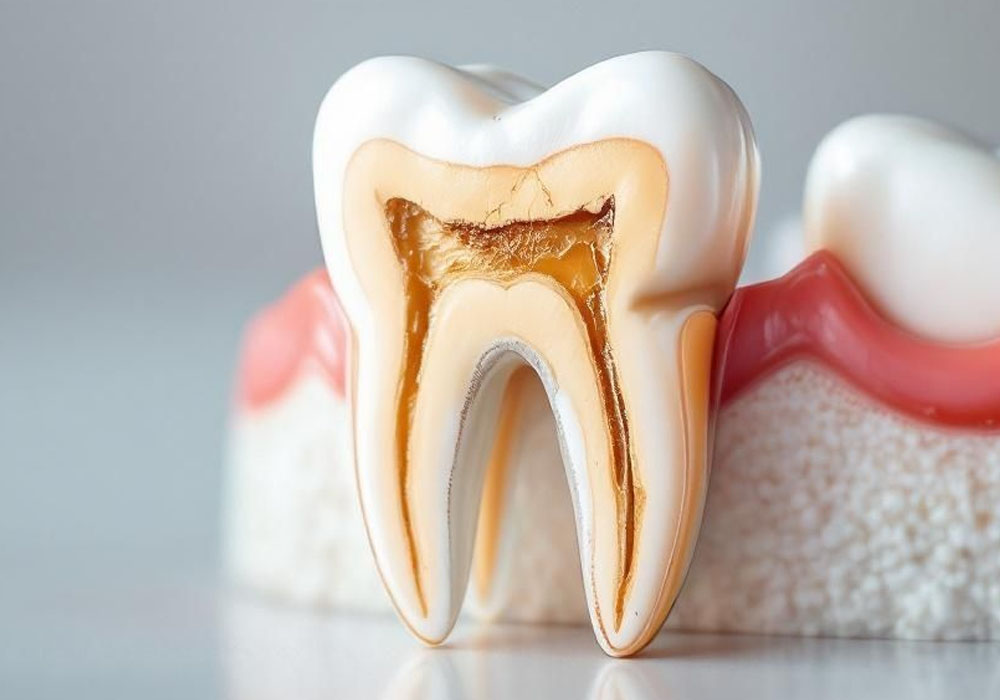
An area of damage in a tooth is not a result of decay caused by food but a by-product of a living layer of bacteria that forms on your teeth shortly after you brush: dental plaque biofilm. The bacteria in this biofilm consume sugars and starches and as they eat, they excrete acid. The acid dissolves calcium and phosphate out of the enamel of a tooth in a process known as demineralization.
Here’s the part nobody tells you: this is a two-way street. Acid from bacteria dissolves mineral from enamel, but saliva washes mineral back in via a process called remineralization. Fluoride speeds this up and makes the rebuilt enamel more acid-resistant than the original. A cavity only exists when the mineral loss outpaces the mineral gain. The tipping point is when enough mineral is lost that the enamel collapses, creating a physical hole for bacteria to invade deeper into the tooth.
At this exact point, a real cavity forms, but not one second before. If you got a cavity overnight, it’s because something overwhelmed your mouth’s natural repair ability. This could be consistent overfeeding of sugar or starches, consistent mouth drying (saliva decline), consistent demineralization-through-medication, or diet changes that make you a more hospitable environment for tooth-eating bacteria. If you got it over a period of months or years, it’s because your mouth was repeatedly pushed into demineralization, perhaps once per meal.
This is why the “brush, floss, see your dentist” advice, while true, doesn’t actually help anyone. It tells you what to do without explaining the battlefield. Once you understand the demineralization-remineralization balance, every recommendation below makes obvious sense. Booking a comprehensive check-up with a practice such as The Dental Place Warwick every six to twelve months, depending on your individual risk, is the part of the routine that catches what you can’t see or feel yet.
Brushing Technique Matters More Than Brushing Harder
The recommended time to brush your teeth is two minutes, twice a day, using an adult fluoride toothpaste that contains 1,350 to 1,500ppm fluoride. Most toothpaste available in supermarkets either reaches the lowest level of that range or falls below it.
When it comes to cleaning your teeth, proper technique is more effective than applying more pressure. The Modified Bass technique, where you place the bristles at a 45-degree angle towards the gumline and make small vibrating strokes, removes plaque from the vulnerable area where the gum meets the tooth. This is where most decay and gum infections begin. You miss this zone when you brush harshly from side to side with a firm brush, which can lead to the erosion of enamel and gum.
Always use a toothbrush with soft bristles. Worn out brushes lose their shape and fail to reach the surface of teeth, becoming ineffective as cleaning tools.
Replace your toothbrush every three to four months.
This is the one habit that negates your good intentions after brushing your teeth: rinsing your mouth with water shortly after spitting out the toothpaste. The fluoride in toothpaste needs some time in contact with the surface of your teeth to work. When you rinse your mouth with water, you’re washing away the fluoride before it has a chance to protect your teeth. Just spit out the foam after brushing your teeth and leave that residual film of fluoride on your teeth. It might feel a bit strange at first, but this small habit change is relatively easy and doesn’t cost a thing.
Floss Isn’t Always The Right Tool
Interdental brushes are more effective and easier to use than floss, which is often used incorrectly or skipped altogether by most people. Water flossers are also a good alternative, especially for individuals with orthodontic appliances or limitations in hand mobility.
The overall goal of interdental cleaning is to disrupt the biofilm in the areas where your toothbrush simply can’t fit. About a third of the surface of your teeth is in between them. If not cleaned, you are just not cleaning a third of your mouth every time.
Sizing matters more than people realize. Interdental brushes come in a range of diameters, and using one that’s too small won’t disturb the biofilm, while one that’s too big can damage the gum. A dentist or hygienist can tell you which sizes fit which gaps, since it’s common to need two or three different sizes across your mouth. Do this once a day, ideally before bed, since the overnight hours are when saliva flow drops and bacteria get the longest uninterrupted run at your enamel.
Saliva And pH: The Part Nobody Talks About
Your mouth utilizes a buffering system based on saliva. In normal conditions, the pH of your mouth is almost neutral. Whenever you have something with sugar or starch, plaque bacteria in your mouth generate acid, which lowers your pH. Once it drops below 5.5, your enamel starts losing minerals at a higher rate than saliva can remineralize it.
Saliva will usually bring your pH back up within 20-40 minutes of eating. The issue isn’t eating. The issue is continuous exposure. If you have 3 meals a day, your mouth gets 3 low-pH exposures, and 3 recovery periods. If you sip that sugary coffee for 2 hours, or constantly snack, your teeth remain in a low-pH state with no recovery periods. You could brush perfectly and still get cavities; the bacterial acid byproducts are just too much.
This is also why when people drink soda all day long, they’re not hurting their teeth because of the sugar. They’re hurting their teeth because every sip, over 8 hours, is another hit. This is also what makes dry mouth (poor saliva flow), caused by medication, mouth breathing during sleep, or dehydration, such a big risk for cavities. If you wake up with a dry mouth regularly, that’s worth mentioning at your next check-up, since it’s a genuine risk factor and not just a discomfort.
This is also why Xylitol gum and lozenges are a legitimate addition, not a gimmick. Xylitol is not really metabolized by Streptococcus mutans, so you starve them every time you chew on that instead of feeding them, and it increases saliva flow so they get washed away. Best used after meals when you can’t brush – on a flight, at work, after eating out. It doesn’t replace brushing, but it’s a halfway decent supplement until you can.
Timing Your Brushing Around What You Eat And Drink
It’s not a good idea to brush your teeth right after consuming acidic foods or drinks like citrus, wine, soft drinks, or even some sparkling waters. This is because acid makes the outer layer of enamel softer for a short amount of time. If you brush your teeth while the enamel is in this state, the softened mineral can be brushed away before saliva is able to buffer and remineralize it. Wait for about 30 minutes after consuming acidic foods or drinks before you brush your teeth.
This advice also applies when you’ve been sick and vomited. Stomach acid is much stronger than acid in food, and again, brushing immediately after can cause more enamel damage. Instead, rinse your mouth with water, and brush your teeth later on. It’s important to differentiate between enamel loss due to acid (from your diet or from acid reflux) and tooth decay (from bacterial acid and plaque) because treating one issue can make the other worse if you don’t realize which one you’re treating.
Mouthwash Is A Supplement, Not A Substitute
Many people treat mouthwash as a replacement for brushing when they’re in a hurry or feel too lazy. That’s particularly unhelpful, as rinsing right after you’ve brushed with fluoride toothpaste means you immediately wash away the concentrated fluoride that strengthens your teeth. Better to wait half an hour after brushing before you rinse, to give the fluoride time to do its work.
Not all mouthwashes do the same job, either. Fluoride rinses help with remineralization, while antibacterial or antiseptic rinses target the bacteria population directly, and cosmetic rinses mostly just mask odor for an hour or two. If cavities are your main concern, a fluoride rinse used at a different time of day than brushing, such as after lunch, adds a top-up dose of protection without interfering with your toothpaste. Alcohol-based rinses can also dry out your mouth with regular use, which works against you given how much saliva matters for keeping pH stable.
Don’t Forget Your Tongue
Plaque and bacteria accumulate on the surface of the tongue as well, which leads to bad breath and reinforces the bacterial community responsible for cavities and gum disease. It’s easy to scrape your tongue for about 15 seconds using a tongue scraper or the brush on the back of most toothbrushes.
The back third of the tongue tends to collect the most buildup, since it’s the area people naturally avoid due to the gag reflex, so try to reach as far back as you comfortably can. Scraping is generally more effective than brushing the tongue, since a brush tends to just push the bacterial film around rather than lifting it off. Doing this in the morning, before your first meal or coffee, deals with the overnight buildup and tends to make the biggest difference to breath freshness through the day.
Why Home Care Alone Is Never Enough
Even if you brush and floss like a pro, you can’t prevent every dental problem. Plaque that isn’t removed can mineralize into tartar, a hardened deposit that no amount of brushing or interdental cleaning will shift. Only a professional scale and polish removes it. Left alone, tartar irritates the gumline and creates bacterial-filled gaps that only heap more fuel on the fire.
When plaque and tartar aren’t regularly removed from the surface of your teeth and along the gumline, your sensitive gum tissues become increasingly inflamed. Eventually, this results in gingivitis or inflamed gums, with red and swollen gum tissue that bleeds easily. Luckily, gingivitis usually clears up without any lingering damage, so long as you amp up your daily oral cleaning and visit your dentist to get tartar and any plaque-laden pockets around the gumline removed.
Keeping gingivitis from progressing is the strongest argument for regular dental cleaning and check-ups because once things deteriorate even a little bit further into bone loss, that’s a very different, much harder problem to fix. Radiographs catch cavities forming between teeth long before they’re visible or symptomatic, and an oral exam picks up early signs of problems you’d never notice yourself.
Fluoride’s role here isn’t just about toothpaste, either. Community water fluoridation programs have been shown to reduce tooth decay by around 25% in children and adults, which gives a sense of just how much systemic fluoride exposure contributes to the same remineralization process your toothpaste supports at a local level. Between water, toothpaste, and professional fluoride varnish when needed, you’re stacking multiple small advantages that add up over a lifetime.
The Economics Of Doing This Consistently
A soft-bristled toothbrush, some decent toothpaste, and interdental brushes cost very little over a year. A filling costs more. A root canal or crown costs an order of magnitude more than that, and neither returns a tooth to its original strength. Every habit in this article is cheap and reversible while the damage is still at the demineralization stage. Once a cavity cavitates, you’re paying to manage a permanent loss, not to prevent one.
None of this requires perfection. It requires understanding what’s actually happening in your mouth chemically, so the habits stop feeling like arbitrary rules and start feeling like the logical response to a process you can see clearly for the first time. That shift is usually what turns an inconsistent routine into one that actually holds up over decades.